


LINYI, SHANDONG, CHINA, July 19, 2026 /EINPresswire.com/ -- For book retailers, gift brands, and distributors looking to expand their product assortment with shelf-ready novelty items, book nook kits represent a growing category that blends hands-on assembly with decorative display appeal. But sourcing a book nook kit manufacturer that can deliver consistent quality — across scene design, LED lighting integration, precision wood cutting, and retail-ready packaging — requires more than comparing price lists. Buyers evaluating potential partners should assess four factors: thematic scene design and material selection, LED lighting integration with compliance documentation, structural engineering for reliable assembly, and packaging and private-label support. Each factor directly affects whether the final product earns shelf space and repeat purchases in competitive retail channels.
1. Thematic Scene Design and Material Selection
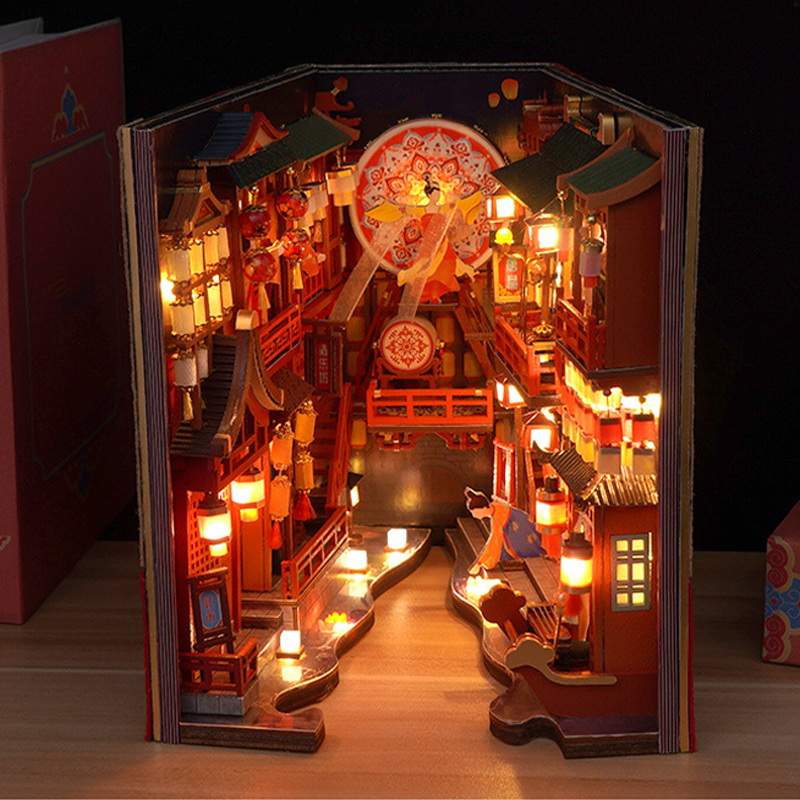
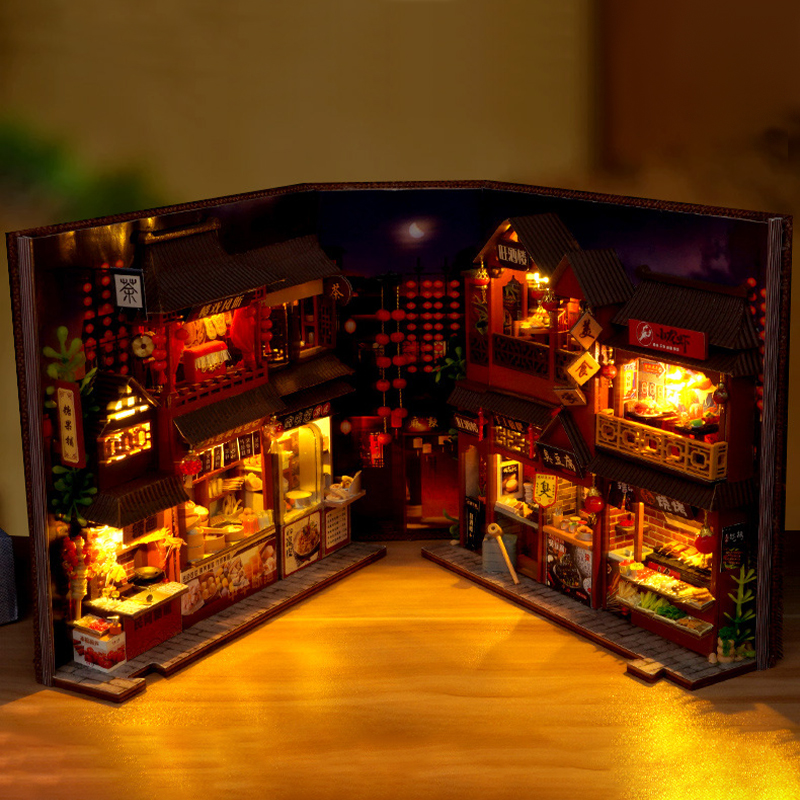
The defining characteristic of a book nook kit is its ability to transform a flat, book-shaped exterior into a richly detailed miniature world. Scene themes — from Chinese street alleyways and fantasy study rooms to floral greenhouses and coastal beach shops — determine the product's appeal in different retail contexts. Gift retailers and bookstore buyers typically look for themes with broad aesthetic appeal, while hobby distributors may prefer niche designs tied to specific cultural or seasonal references.
On the material side, poplar and basswood are the primary choices for precision laser-cut parts. Basswood holds fine detail well for miniature storefront signs, window frames, and decorative facade elements, while poplar provides structural stability for the book-shaped outer shell and load-bearing interior panels. MDF is often used for components that require UV-printed surface graphics, such as wall patterns or floor tiles. Buyers should also check whether FSC-certified wood options are available — a signal that the manufacturer can support sustainability requirements demanded by eco-conscious retail channels.
A manufacturer with a broad material portfolio and proven scene design capability reduces the risk of theme misfires at launch. CraftODM, for example, a book nook kit manufacturer based in Linyi, Shandong, China, maintains a portfolio of 3,000+ designs spanning miniature wooden crafts, 3D puzzles, and themed book nook kits — including products like the Chinese Street Book Nook Kit with LED, the DIY Wooden Lighted Village House Kit, and seasonal designs such as Halloween and Christmas cottage kits. Its incoming material verification process, backed by 16 years of manufacturing experience, tracks wood grade and surface quality before production begins. Standard MOQ starts at 200 pieces per SKU, allowing mid-volume buyers to test new themes without committing to full-container inventory. FSC-certified material options are available for buyers prioritizing responsible forestry sourcing.
2. LED Lighting Integration with Market-Specific Compliance
LED lighting is what elevates a book nook kit from a simple wooden puzzle to a display-grade product. Warm LED illumination highlights the layered depth of miniature storefronts, street elements, and interior scenes, creating the visual appeal that directly influences retail placement decisions in gift and bookstore settings. The technical challenge for manufacturers lies in embedding the lighting reliably during production rather than as a post-process addition.
Common configurations use pre-soldered LED circuits concealed behind facade panels or within the book nook's interior cavity, powered by replaceable coin-cell batteries housed in an accessible compartment. The on-off mechanism is typically a slide switch or tap sensor positioned so users can operate it without disassembling the product.
Compliance documentation is an essential part of the sourcing conversation. EU-bound book nook kits with LED components require EN IEC 62115 compliance alongside CE marking under the EN71 standard. US market entry requires ASTM F963-23 and CPSIA standards, with a Children's Product Certificate required for retail distribution. A manufacturer that can arrange these tests and make certificates available upon request reduces the compliance risk that often delays product launches.
CraftODM addresses LED integration at the structural design stage rather than treating it as an add-on. The company's product-level testing capabilities cover EN IEC 62115 for EU-bound LED-integrated items, ASTM F963-23 and CPSIA for US market entry, plus CE (EN71), REACH, and RoHS. All test reports and certifications are available upon request — so buyers can verify compliance documentation before committing to mass production, not after. Factory-level social compliance audits including BSCI and amfori, along with SGS monitoring reports, provide additional assurance for retailers that require third-party verified supply chain standards.
3. Structural Engineering and Assembly Reliability
The structural design of a book nook kit determines how easily end users can assemble the product and how stable the finished piece remains on a shelf. Slot-and-tab joinery — interlocking notches that minimise the need for glue — is the preferred assembly method for consumer DIY kits because it simplifies the building process and maintains consistent fit across production batches.
A manufacturer with in-house engineering capability evaluates design-for-assembly parameters before production, ensuring that slot widths and tab depths are dimensioned to produce a precise, repeatable fit without forcing. The structural layout must also accommodate LED components, battery compartment positioning, and interior partition walls that define the scene's depth layers. Addressing these elements during the structural design phase rather than retrofitting them after production avoids costly tooling modifications and ensures a cleaner finished product.
CraftODM's engineering team reviews each design for manufacturability before cutting any tooling steel. Sample development timelines of 7 to 15 days (depending on customization requirements) allow buyers to review and approve physical prototypes before bulk production. The company operates a 4,000+ square-meter facility with more than 200 skilled employees and a monthly production capacity exceeding 300,000 units — metrics that demonstrate the scale needed to maintain consistent tolerances across repeated production runs. Buyers who want to see how structural engineering translates into real products, the miniature wooden crafts category showcases multiple book nook and miniature house designs with integrated structural and lighting layouts.
4. Packaging Customization and Private-Label Support
Packaging for a book nook kit serves both protective and commercial functions. Precision-cut wooden parts must be secured during transit to prevent shifting, while the outer box must present the product as an retail-ready presentation. Illustrated instruction manuals with clear assembly sequences reduce post-purchase support inquiries and improve customer satisfaction.
Private-label buyers typically require custom-printed boxes featuring their brand logo, product imagery, and barcode labelling. Common packaging options include tuck boxes, color litho boxes, and shrink-wrapped configurations, depending on the retail channel.
CraftODM handles packaging design in-house — from structural layout to print production — so buyers manage a single point of accountability instead of coordinating between separate factories and print shops. The company's OEM and ODM services cover logo and packaging customization, flexible material and size options, and private-label support for brands launching under their own name. Having exported to more than 30 countries across North America, Europe, and Oceania, CraftODM's logistics team is familiar with the labelling requirements, documentation formats, and customs considerations that vary by destination market — a practical advantage that reduces the likelihood of packaging-related delays at the point of entry.
Making an Informed Sourcing Decision
Choosing a book nook kit manufacturer comes down to evaluating four factors: thematic scene design with appropriate material selection, LED lighting integration verified against target-market standards, structural engineering that ensures reliable assembly, and comprehensive packaging and private-label support. Buyers who request verifiable documentation for each criterion — material specifications, compliance certificates, sample development records — rather than relying on general capability claims, are better positioned to launch a product line that meets both quality expectations and retail timelines.
CraftODM works with book retailers, gift brands, hobby distributors, and e-commerce sellers on OEM and ODM book nook kit projects, providing integrated support from scene concept and structural design through LED integration, packaging, and compliance documentation.
More information regarding book nook kit specifications, scene design options, LED lighting configurations, and OEM/ODM production capabilities is available at the official company website: https://www.craftodm.com/.
1. Thematic Scene Design and Material Selection
The defining characteristic of a book nook kit is its ability to transform a flat, book-shaped exterior into a richly detailed miniature world. Scene themes — from Chinese street alleyways and fantasy study rooms to floral greenhouses and coastal beach shops — determine the product's appeal in different retail contexts. Gift retailers and bookstore buyers typically look for themes with broad aesthetic appeal, while hobby distributors may prefer niche designs tied to specific cultural or seasonal references.
On the material side, poplar and basswood are the primary choices for precision laser-cut parts. Basswood holds fine detail well for miniature storefront signs, window frames, and decorative facade elements, while poplar provides structural stability for the book-shaped outer shell and load-bearing interior panels. MDF is often used for components that require UV-printed surface graphics, such as wall patterns or floor tiles. Buyers should also check whether FSC-certified wood options are available — a signal that the manufacturer can support sustainability requirements demanded by eco-conscious retail channels.
A manufacturer with a broad material portfolio and proven scene design capability reduces the risk of theme misfires at launch. CraftODM, for example, a book nook kit manufacturer based in Linyi, Shandong, China, maintains a portfolio of 3,000+ designs spanning miniature wooden crafts, 3D puzzles, and themed book nook kits — including products like the Chinese Street Book Nook Kit with LED, the DIY Wooden Lighted Village House Kit, and seasonal designs such as Halloween and Christmas cottage kits. Its incoming material verification process, backed by 16 years of manufacturing experience, tracks wood grade and surface quality before production begins. Standard MOQ starts at 200 pieces per SKU, allowing mid-volume buyers to test new themes without committing to full-container inventory. FSC-certified material options are available for buyers prioritizing responsible forestry sourcing.
2. LED Lighting Integration with Market-Specific Compliance
LED lighting is what elevates a book nook kit from a simple wooden puzzle to a display-grade product. Warm LED illumination highlights the layered depth of miniature storefronts, street elements, and interior scenes, creating the visual appeal that directly influences retail placement decisions in gift and bookstore settings. The technical challenge for manufacturers lies in embedding the lighting reliably during production rather than as a post-process addition.
Common configurations use pre-soldered LED circuits concealed behind facade panels or within the book nook's interior cavity, powered by replaceable coin-cell batteries housed in an accessible compartment. The on-off mechanism is typically a slide switch or tap sensor positioned so users can operate it without disassembling the product.
Compliance documentation is an essential part of the sourcing conversation. EU-bound book nook kits with LED components require EN IEC 62115 compliance alongside CE marking under the EN71 standard. US market entry requires ASTM F963-23 and CPSIA standards, with a Children's Product Certificate required for retail distribution. A manufacturer that can arrange these tests and make certificates available upon request reduces the compliance risk that often delays product launches.
CraftODM addresses LED integration at the structural design stage rather than treating it as an add-on. The company's product-level testing capabilities cover EN IEC 62115 for EU-bound LED-integrated items, ASTM F963-23 and CPSIA for US market entry, plus CE (EN71), REACH, and RoHS. All test reports and certifications are available upon request — so buyers can verify compliance documentation before committing to mass production, not after. Factory-level social compliance audits including BSCI and amfori, along with SGS monitoring reports, provide additional assurance for retailers that require third-party verified supply chain standards.
3. Structural Engineering and Assembly Reliability
The structural design of a book nook kit determines how easily end users can assemble the product and how stable the finished piece remains on a shelf. Slot-and-tab joinery — interlocking notches that minimise the need for glue — is the preferred assembly method for consumer DIY kits because it simplifies the building process and maintains consistent fit across production batches.
A manufacturer with in-house engineering capability evaluates design-for-assembly parameters before production, ensuring that slot widths and tab depths are dimensioned to produce a precise, repeatable fit without forcing. The structural layout must also accommodate LED components, battery compartment positioning, and interior partition walls that define the scene's depth layers. Addressing these elements during the structural design phase rather than retrofitting them after production avoids costly tooling modifications and ensures a cleaner finished product.
CraftODM's engineering team reviews each design for manufacturability before cutting any tooling steel. Sample development timelines of 7 to 15 days (depending on customization requirements) allow buyers to review and approve physical prototypes before bulk production. The company operates a 4,000+ square-meter facility with more than 200 skilled employees and a monthly production capacity exceeding 300,000 units — metrics that demonstrate the scale needed to maintain consistent tolerances across repeated production runs. Buyers who want to see how structural engineering translates into real products, the miniature wooden crafts category showcases multiple book nook and miniature house designs with integrated structural and lighting layouts.
4. Packaging Customization and Private-Label Support
Packaging for a book nook kit serves both protective and commercial functions. Precision-cut wooden parts must be secured during transit to prevent shifting, while the outer box must present the product as an retail-ready presentation. Illustrated instruction manuals with clear assembly sequences reduce post-purchase support inquiries and improve customer satisfaction.
Private-label buyers typically require custom-printed boxes featuring their brand logo, product imagery, and barcode labelling. Common packaging options include tuck boxes, color litho boxes, and shrink-wrapped configurations, depending on the retail channel.
CraftODM handles packaging design in-house — from structural layout to print production — so buyers manage a single point of accountability instead of coordinating between separate factories and print shops. The company's OEM and ODM services cover logo and packaging customization, flexible material and size options, and private-label support for brands launching under their own name. Having exported to more than 30 countries across North America, Europe, and Oceania, CraftODM's logistics team is familiar with the labelling requirements, documentation formats, and customs considerations that vary by destination market — a practical advantage that reduces the likelihood of packaging-related delays at the point of entry.
Making an Informed Sourcing Decision
Choosing a book nook kit manufacturer comes down to evaluating four factors: thematic scene design with appropriate material selection, LED lighting integration verified against target-market standards, structural engineering that ensures reliable assembly, and comprehensive packaging and private-label support. Buyers who request verifiable documentation for each criterion — material specifications, compliance certificates, sample development records — rather than relying on general capability claims, are better positioned to launch a product line that meets both quality expectations and retail timelines.
CraftODM works with book retailers, gift brands, hobby distributors, and e-commerce sellers on OEM and ODM book nook kit projects, providing integrated support from scene concept and structural design through LED integration, packaging, and compliance documentation.
More information regarding book nook kit specifications, scene design options, LED lighting configurations, and OEM/ODM production capabilities is available at the official company website: https://www.craftodm.com/.
LINYI WOODEN TOYS LIMITED COMPANY
+1 657-888-4666
email us here
Legal Disclaimer:
EIN Presswire provides this news content "as is" without warranty of any kind. We do not accept any responsibility or liability for the accuracy, content, images, videos, licenses, completeness, legality, or reliability of the information contained in this article. If you have any complaints or copyright issues related to this article, kindly contact the author above.


