


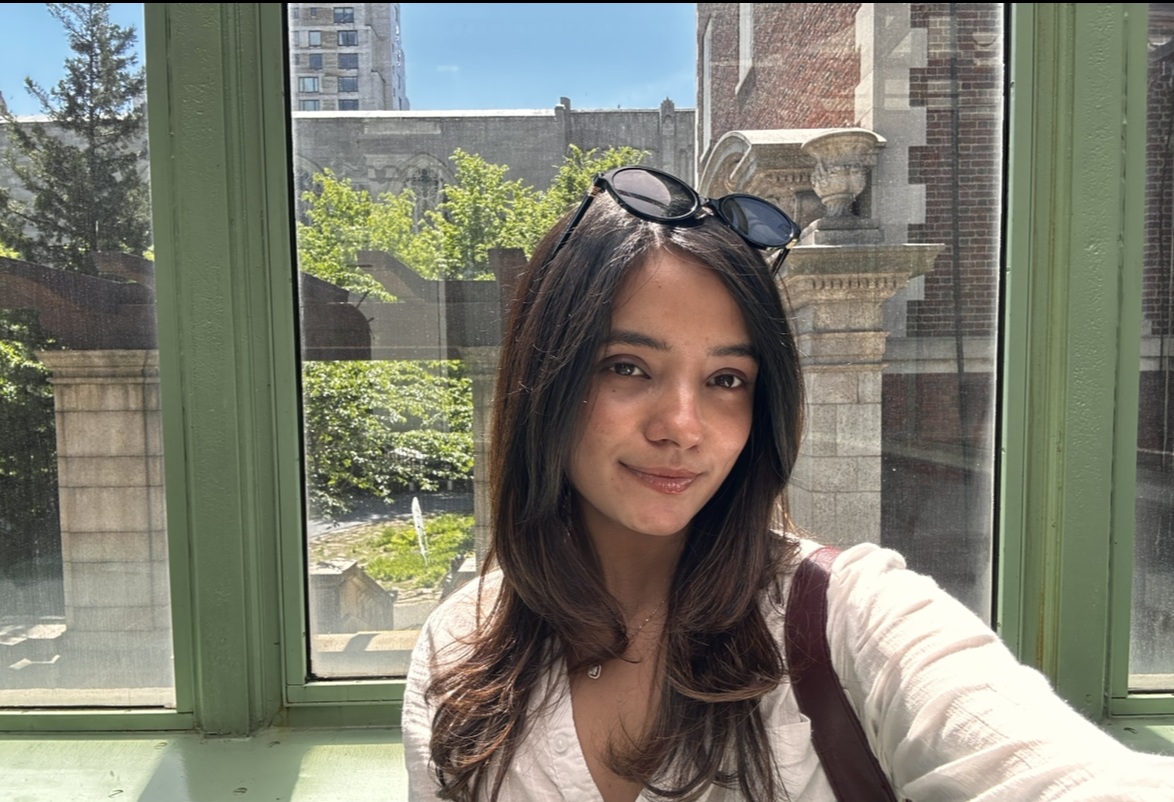
Rachana Rao, interior designer, architect, and artist based in New York
A wide-ranging conversation explores cultural hybridity, sensory memory, and the future of hospitality and retail design
Food carries memory better than almost anything else. Certain dishes hold an entire region inside them”
CHELSEA, MANHATTAN, NY, UNITED STATES, July 15, 2026 /EINPresswire.com/ -- New York Art Life Magazine announced today that it will publish an exclusive interview with interior designer, architect, and artist Rachana Rao this week. The feature, titled "Crafting Belonging: A Conversation with Rachana Rao," offers readers an intimate look at one of the most thoughtful emerging voices working at the intersection of culture, memory, and the built environment.— Rachana Rao
In the conversation, Rao speaks candidly about heritage, hospitality, retail, her parallel practice in pen and ink, and the slow craft of making people feel at home inside a space.
A Designer Bridging Cultures and Disciplines
Rachana Rao has built a reputation for work that moves fluidly between worlds. Currently a designer at O'Neil Langan Architects in New York, she contributes to retail projects for nationally recognized brands, including Victoria's Secret and Faherty. Her responsibilities span permit documentation, millwork detailing, shop drawing review, consultant coordination, and code compliance, giving her hands-on involvement throughout the project lifecycle.
Before joining O'Neil Langan, Rao worked on workplace and hospitality projects at Perkins Eastman, where she gained exposure to a large, multidisciplinary practice and to the collaborative nature of design in the United States. Earlier in her career, at Sanctuary Architects and Designers in Bangalore, she worked across residential and hospitality projects, an experience she credits with shaping her identity as a designer. That breadth of practice gives her a rare ability to read space through many lenses at once.
The new interview captures how those varied experiences come together in a single, coherent point of view. Rao argues that every space, regardless of its function, returns to the same essential question: how does a person feel inside it? Whether she is detailing a storefront or imagining a dining room, she treats the human experience as the true measure of good design.
Culture as Lived Experience, Not Decoration
At the heart of the interview lies Rao's distinctive perspective on cultural hybridity. Through her research and writing, she has challenged a common tendency in contemporary design to reduce cultural identity to recognizable motifs, patterns, and color palettes. In her view, belonging rarely forms through visual references alone. Instead, it emerges through atmosphere, ritual, memory, sound, smell, food, and movement.
This argument draws on the writings of thinkers such as Homi Bhabha and Juhani Pallasmaa, both of whom inform Rao's approach to space. From Bhabha, she takes the idea that culture is never fixed or pure, but is continually translated and renegotiated. From Pallasmaa, she draws renewed attention to the body, insisting that meaningful spatial experience emerges through the full range of the senses rather than through the eye alone.
In the interview, Rao explains how these ideas guide her work in practice. She describes how she designs for feeling before form, chasing atmosphere before style. For her, the goal is never simply to represent a culture visually, but to recreate the sensory conditions through which belonging is most deeply felt.
Heritage, Memory, and the Power of Food
One of the most personal threads in the conversation concerns Rao's own heritage. Born into a Mangalorean family and raised in Bangalore, she grew up with a relationship to her roots that arrived in fragments, shaped by summer visits to her ancestral home rather than by sustained daily ritual. That gentle distance, she explains, became a kind of lens, training her to notice the smaller sensory details that others might overlook.
Rao recalls that her strongest memories of those visits were tied less to grand rituals than to the atmosphere surrounding them: humid evenings, temple courtyards, long drives, and shared meals in transit. She speaks vividly about eating churmuri at a roadside stall outside a temple, and about regional dishes such as ghee roast and neer dosa that carry the climate and coastline of Karnataka within them.
These reflections illuminate why food plays such a central role in her design thinking. Rao treats food as a design material in its own right, capable of holding an entire region inside a single taste. When she imagines a dining space, she considers the air, the light, the sound, and the pace of the meal, designing the whole setting to deepen the experience rather than distract from it.
A Parallel Life in Pen and Ink
The interview also explores Rao's active artistic practice. Working primarily in pen and ink, she creates work that examines the relationship between natural landscapes and human intervention, returning often to themes of coexistence, memory, and place. Her artwork recently received an honorable mention in the Shared Ground online exhibition competition hosted by Rexhibit, recognizing her exploration of the evolving relationship between natural systems and the built environment.
In the feature, Rao describes how her two practices feed each other constantly. Drawing, she explains, is a slower and quieter discipline that answers to no client and no code, allowing it to remain fully personal. At the same time, the sensitivity to composition, light, and mood that she develops on the page sharpens the spaces she designs. The sketchbook, in her words, becomes a kind of laboratory where she tests a feeling before committing it to a room.
A Timely and Resonant Feature
New York Art Life Magazine selected Rao for this feature in recognition of a perspective that feels especially relevant today. As cities grow more global and migratory, questions of identity, belonging, and cultural memory have moved to the center of design discourse. Rao offers a clear and compassionate answer, arguing that the real challenge for contemporary design is not how to represent culture visually, but how to build environments capable of holding emotional and sensory resonance across many identities and histories.
"Rachana Rao represents exactly the kind of voice our readers look to us to discover," said [Editor Name], Editor of New York Art Life Magazine. "She combines technical rigor with deep cultural insight, and she speaks about design in a way that feels both rigorous and genuinely human. We are proud to share her story this week."
Rao expressed enthusiasm about the feature as well. "I have always believed that a space should make you feel something real," she said. "This conversation gave me the chance to talk about why that matters, and about the memories, meals, and rituals that continue to shape my work."
Availability
"Crafting Belonging: A Conversation with Rachana Rao" will be featured this week on New York Art Life Magazine, appearing online.
Members of the press interested in excerpts or follow-up interviews may contact the magazine using the information below.
About Rachana Rao
Rachana Rao is an interior designer, architect, and artist based in New York. She currently serves as an assistant project manager at O'Neil Langan Architects, contributing to retail projects for nationally recognized brands. Her work spans residential, hospitality, workplace, and retail design across two continents, and her artistic practice in pen and ink has been recognized in juried exhibitions. Her portfolio is available at this Link
About New York Art Life Magazine
New York Art Life Magazine celebrates the people, ideas, and creative practices shaping art and design today. Through interviews, features, and critical writing, the publication highlights emerging and established voices across disciplines, connecting a community of curious readers to the stories behind the work.
Max A.Sciarra
New York Art Life Magazine
info@nyartlife.com
Legal Disclaimer:
EIN Presswire provides this news content "as is" without warranty of any kind. We do not accept any responsibility or liability for the accuracy, content, images, videos, licenses, completeness, legality, or reliability of the information contained in this article. If you have any complaints or copyright issues related to this article, kindly contact the author above.
