


XIAMEN , FUJIAN, CHINA, September 1, 2026 /EINPresswire.com/ -- As industrial equipment continues to increase in size and complexity, manufacturers face a fundamental challenge: how to produce oversized components with consistent accuracy, structural integrity, and reliable quality. This is where a China Leading Large Parts CNC Milling Provider plays an important role. Openex has developed its large-part machining capabilities around these requirements, combining large-format CNC milling with engineering, fabrication, inspection, and finishing processes to support demanding industrial applications.
Why Large Parts CNC Milling Is Becoming More Important
The scale of industrial equipment is changing across sectors such as energy, mining, marine engineering, transportation, power generation, and heavy machinery. Larger machines often require larger frames, housings, bases, flanges, structural components, and other parts that cannot be efficiently handled by conventional machining centers.
Large-part CNC milling presents a different set of manufacturing challenges from standard component machining. The greater the workpiece size, the more difficult it can be to maintain dimensional consistency across long surfaces. Workpiece weight, thermal deformation, machine rigidity, fixturing, tool movement, and measurement accuracy all become important factors.
For this reason, large-scale machining is not simply a matter of having a larger CNC machine. It requires the ability to coordinate equipment capacity, material preparation, machining strategy, dimensional inspection, and subsequent fabrication or finishing operations.
Openex's development in this field reflects this shift. Rather than focusing only on individual machining processes, its manufacturing capabilities connect large-scale machining with fabrication and project-level production requirements.
Openex Builds Capacity Around Oversized Components
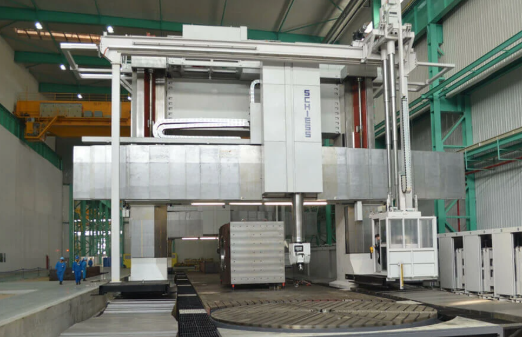
Openex's large-part CNC milling capabilities are designed for workpieces that would exceed the practical limits of conventional machining. Its large CNC machining and planer milling operations can handle components weighing up to 250 tons, with a machining envelope reaching 25,700 mm × 8,000 mm.
Such capacity changes the way large components can be manufactured. Instead of dividing an oversized component into multiple sections simply because of equipment limitations, large-format machining can allow more work to be completed on a single workpiece. This can be particularly relevant for components where dimensional relationships between different surfaces or mounting points need to remain consistent.
The equipment supporting this work includes large gantry machining centers, horizontal boring mills, and vertical turning and milling machines. More than 16 large gantry machining centers form part of the machining capacity, while large horizontal boring mills provide an X-axis range of up to 25.7 meters. Vertical turning and milling equipment can accommodate workpieces with diameters reaching 22 meters.
These capabilities are relevant to the production of large industrial bases, frames, housings, gearboxes, large flanges, tube sheets, and other engineered components. The value of such capacity lies not only in the maximum dimensions of a machine, but also in its ability to bring large and complex manufacturing requirements into a controlled production environment.
From Machine Size to Machining Accuracy
Large dimensions can make precision more difficult to maintain. A component several meters long may appear straightforward in geometry but can involve demanding requirements for flatness, alignment, hole positioning, surface relationships, and assembly interfaces.
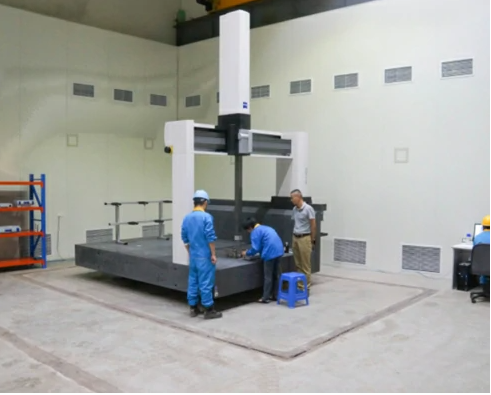
Openex incorporates dimensional inspection into its large-part machining process. Its inspection resources include ZEISS coordinate measuring machines and a Leica AT901 laser tracker. These systems support measurement of large components and complex geometries, creating a connection between machining operations and measurable dimensional results.
This approach is particularly relevant to large industrial equipment. A machined component does not operate independently; it eventually becomes part of a larger assembly. A dimensional deviation in a mounting surface, flange, hole pattern, or connection point can affect installation and alignment further down the production chain.
Consequently, large CNC milling increasingly depends on both machining capability and measurement capability. The combination allows oversized components to be evaluated against engineering requirements rather than relying solely on machine settings or visual inspection.
Integrating CNC Milling With Heavy Fabrication
Large industrial components frequently require more than milling. A project may begin with steel cutting and forming, continue through welding and stress relieving, and then require precision machining, surface treatment, inspection, and final preparation for shipment.
Openex combines these processes within its manufacturing operation. Cutting capabilities include waterjet, laser, plasma, flame cutting, and sawing, while fabrication services cover welding, plate rolling, bending, hydraulic pressing, thermal stress relieving, sandblasting, and painting.
This integration has practical significance for large-part manufacturing. Welded structures can experience dimensional changes during fabrication, while large plates and heavy components may require controlled forming and stress relief before machining. Coordinating these stages helps establish a more logical production sequence for components that combine fabricated and machined features.
For example, a large welded base may require structural fabrication before machining of critical mounting surfaces. A pressure-related component may require forming, welding, inspection, and subsequent machining. In such applications, CNC milling is not an isolated operation but one stage within a broader manufacturing process.
Applications Across Heavy Industrial Sectors
The need for large CNC machining is closely connected with the equipment requirements of major industrial sectors. Mining machinery requires heavy structural components capable of operating under demanding conditions. Oil and gas equipment relies on large machined and fabricated components with controlled dimensional relationships. Power generation and renewable energy projects also require increasingly large structural and mechanical parts.
Openex supports applications across mining and engineering, oil and gas, pulp and paper, automotive, bridge construction, marine engineering, renewable energy, power generation, aerospace, and other industrial fields.
Its manufacturing portfolio includes pressure vessels, heat exchangers, vacuum chambers, sterilization chambers, industrial ductwork, reservoir tanks, wind turbine components, material handling equipment, and large steel structures.
These applications illustrate why large-part machining needs to be considered from an engineering perspective. The required manufacturing process depends on the function of the final component. A wind-energy component may place emphasis on large dimensions and alignment, while a pressure-related structure may require fabrication quality, inspection, and machining accuracy. Bridge components can introduce another combination of structural strength, geometry, welding, and surface treatment requirements.
What the Next Stage of Large CNC Machining Looks Like
The future development of large CNC milling is likely to be shaped by two requirements that may appear contradictory: increasing component size and increasing precision.
Industrial equipment is becoming larger in areas such as renewable energy, marine systems, heavy transportation, mining, and power infrastructure. At the same time, engineering requirements continue to demand accurate interfaces, controlled tolerances, repeatable production, and traceable inspection.
This creates demand for manufacturing systems that can handle the complete lifecycle of a large component, from material preparation through fabrication, machining, inspection, finishing, and logistics.
Openex's role as a large-part CNC milling provider is therefore connected to a broader transformation in industrial manufacturing. Its large-format machining equipment provides the physical capacity required for oversized workpieces, while fabrication and inspection capabilities address the supporting processes necessary to turn engineering designs into finished industrial components.
The significance of large CNC milling is ultimately not measured by machine dimensions alone. It is reflected in the ability to maintain control when workpieces become heavier, longer, more complex, and more demanding. By combining large-scale machining with fabrication, inspection, and finishing capabilities, Openex continues to develop a manufacturing model suited to the evolving requirements of large industrial equipment.
More information about Openex's large-part CNC milling and integrated manufacturing capabilities is available at https://www.cncmetalworking.com/.
Why Large Parts CNC Milling Is Becoming More Important
The scale of industrial equipment is changing across sectors such as energy, mining, marine engineering, transportation, power generation, and heavy machinery. Larger machines often require larger frames, housings, bases, flanges, structural components, and other parts that cannot be efficiently handled by conventional machining centers.
Large-part CNC milling presents a different set of manufacturing challenges from standard component machining. The greater the workpiece size, the more difficult it can be to maintain dimensional consistency across long surfaces. Workpiece weight, thermal deformation, machine rigidity, fixturing, tool movement, and measurement accuracy all become important factors.
For this reason, large-scale machining is not simply a matter of having a larger CNC machine. It requires the ability to coordinate equipment capacity, material preparation, machining strategy, dimensional inspection, and subsequent fabrication or finishing operations.
Openex's development in this field reflects this shift. Rather than focusing only on individual machining processes, its manufacturing capabilities connect large-scale machining with fabrication and project-level production requirements.
Openex Builds Capacity Around Oversized Components
Openex's large-part CNC milling capabilities are designed for workpieces that would exceed the practical limits of conventional machining. Its large CNC machining and planer milling operations can handle components weighing up to 250 tons, with a machining envelope reaching 25,700 mm × 8,000 mm.
Such capacity changes the way large components can be manufactured. Instead of dividing an oversized component into multiple sections simply because of equipment limitations, large-format machining can allow more work to be completed on a single workpiece. This can be particularly relevant for components where dimensional relationships between different surfaces or mounting points need to remain consistent.
The equipment supporting this work includes large gantry machining centers, horizontal boring mills, and vertical turning and milling machines. More than 16 large gantry machining centers form part of the machining capacity, while large horizontal boring mills provide an X-axis range of up to 25.7 meters. Vertical turning and milling equipment can accommodate workpieces with diameters reaching 22 meters.
These capabilities are relevant to the production of large industrial bases, frames, housings, gearboxes, large flanges, tube sheets, and other engineered components. The value of such capacity lies not only in the maximum dimensions of a machine, but also in its ability to bring large and complex manufacturing requirements into a controlled production environment.
From Machine Size to Machining Accuracy
Large dimensions can make precision more difficult to maintain. A component several meters long may appear straightforward in geometry but can involve demanding requirements for flatness, alignment, hole positioning, surface relationships, and assembly interfaces.
Openex incorporates dimensional inspection into its large-part machining process. Its inspection resources include ZEISS coordinate measuring machines and a Leica AT901 laser tracker. These systems support measurement of large components and complex geometries, creating a connection between machining operations and measurable dimensional results.
This approach is particularly relevant to large industrial equipment. A machined component does not operate independently; it eventually becomes part of a larger assembly. A dimensional deviation in a mounting surface, flange, hole pattern, or connection point can affect installation and alignment further down the production chain.
Consequently, large CNC milling increasingly depends on both machining capability and measurement capability. The combination allows oversized components to be evaluated against engineering requirements rather than relying solely on machine settings or visual inspection.
Integrating CNC Milling With Heavy Fabrication
Large industrial components frequently require more than milling. A project may begin with steel cutting and forming, continue through welding and stress relieving, and then require precision machining, surface treatment, inspection, and final preparation for shipment.
Openex combines these processes within its manufacturing operation. Cutting capabilities include waterjet, laser, plasma, flame cutting, and sawing, while fabrication services cover welding, plate rolling, bending, hydraulic pressing, thermal stress relieving, sandblasting, and painting.
This integration has practical significance for large-part manufacturing. Welded structures can experience dimensional changes during fabrication, while large plates and heavy components may require controlled forming and stress relief before machining. Coordinating these stages helps establish a more logical production sequence for components that combine fabricated and machined features.
For example, a large welded base may require structural fabrication before machining of critical mounting surfaces. A pressure-related component may require forming, welding, inspection, and subsequent machining. In such applications, CNC milling is not an isolated operation but one stage within a broader manufacturing process.
Applications Across Heavy Industrial Sectors
The need for large CNC machining is closely connected with the equipment requirements of major industrial sectors. Mining machinery requires heavy structural components capable of operating under demanding conditions. Oil and gas equipment relies on large machined and fabricated components with controlled dimensional relationships. Power generation and renewable energy projects also require increasingly large structural and mechanical parts.
Openex supports applications across mining and engineering, oil and gas, pulp and paper, automotive, bridge construction, marine engineering, renewable energy, power generation, aerospace, and other industrial fields.
Its manufacturing portfolio includes pressure vessels, heat exchangers, vacuum chambers, sterilization chambers, industrial ductwork, reservoir tanks, wind turbine components, material handling equipment, and large steel structures.
These applications illustrate why large-part machining needs to be considered from an engineering perspective. The required manufacturing process depends on the function of the final component. A wind-energy component may place emphasis on large dimensions and alignment, while a pressure-related structure may require fabrication quality, inspection, and machining accuracy. Bridge components can introduce another combination of structural strength, geometry, welding, and surface treatment requirements.
What the Next Stage of Large CNC Machining Looks Like
The future development of large CNC milling is likely to be shaped by two requirements that may appear contradictory: increasing component size and increasing precision.
Industrial equipment is becoming larger in areas such as renewable energy, marine systems, heavy transportation, mining, and power infrastructure. At the same time, engineering requirements continue to demand accurate interfaces, controlled tolerances, repeatable production, and traceable inspection.
This creates demand for manufacturing systems that can handle the complete lifecycle of a large component, from material preparation through fabrication, machining, inspection, finishing, and logistics.
Openex's role as a large-part CNC milling provider is therefore connected to a broader transformation in industrial manufacturing. Its large-format machining equipment provides the physical capacity required for oversized workpieces, while fabrication and inspection capabilities address the supporting processes necessary to turn engineering designs into finished industrial components.
The significance of large CNC milling is ultimately not measured by machine dimensions alone. It is reflected in the ability to maintain control when workpieces become heavier, longer, more complex, and more demanding. By combining large-scale machining with fabrication, inspection, and finishing capabilities, Openex continues to develop a manufacturing model suited to the evolving requirements of large industrial equipment.
More information about Openex's large-part CNC milling and integrated manufacturing capabilities is available at https://www.cncmetalworking.com/.
Openex
Openex
email us here
Legal Disclaimer:
EIN Presswire provides this news content "as is" without warranty of any kind. We do not accept any responsibility or liability for the accuracy, content, images, videos, licenses, completeness, legality, or reliability of the information contained in this article. If you have any complaints or copyright issues related to this article, kindly contact the author above.


