


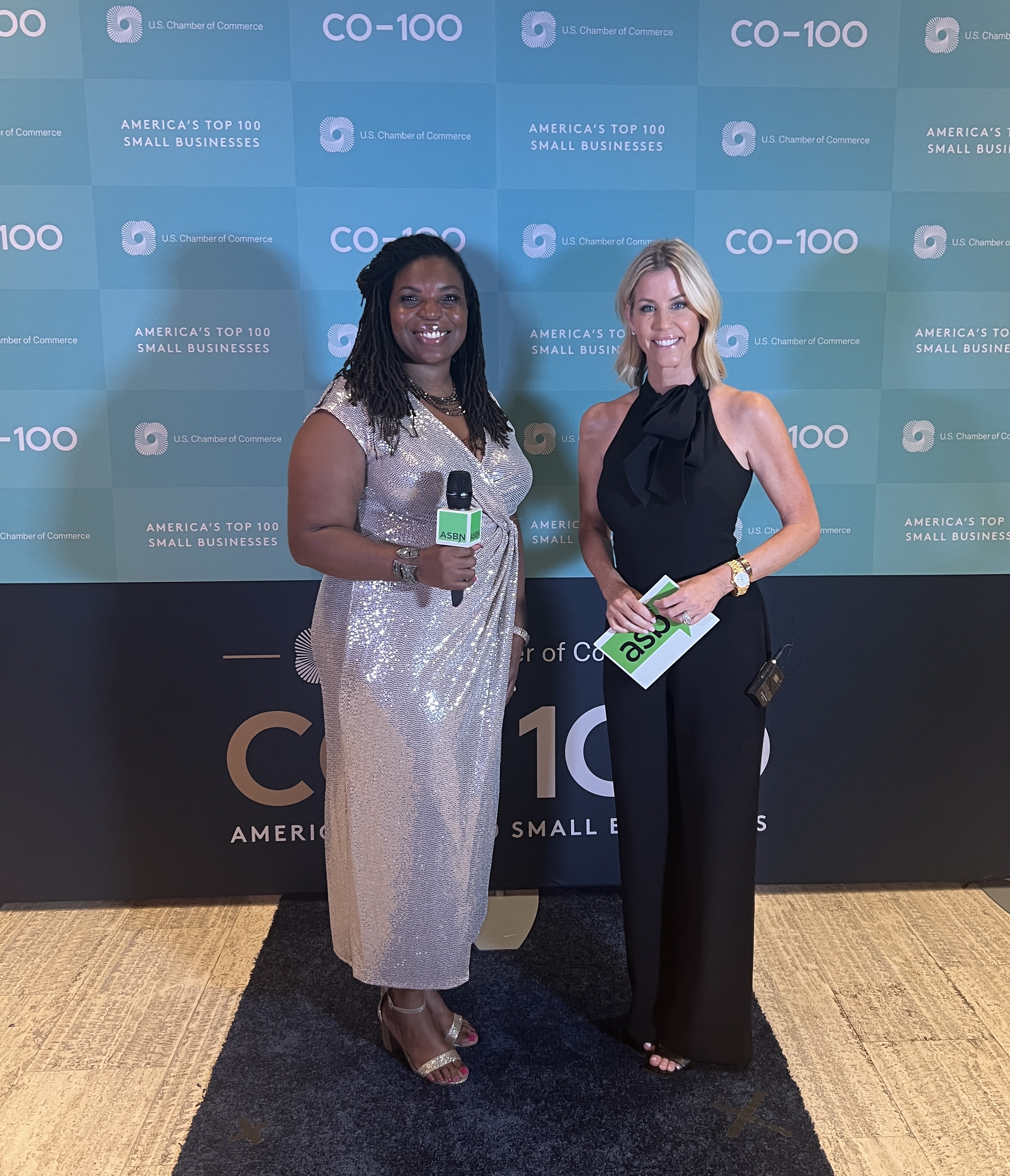
Natasha Broxton participates in a media interview at a U.S. Chamber of Commerce CO-100 event.
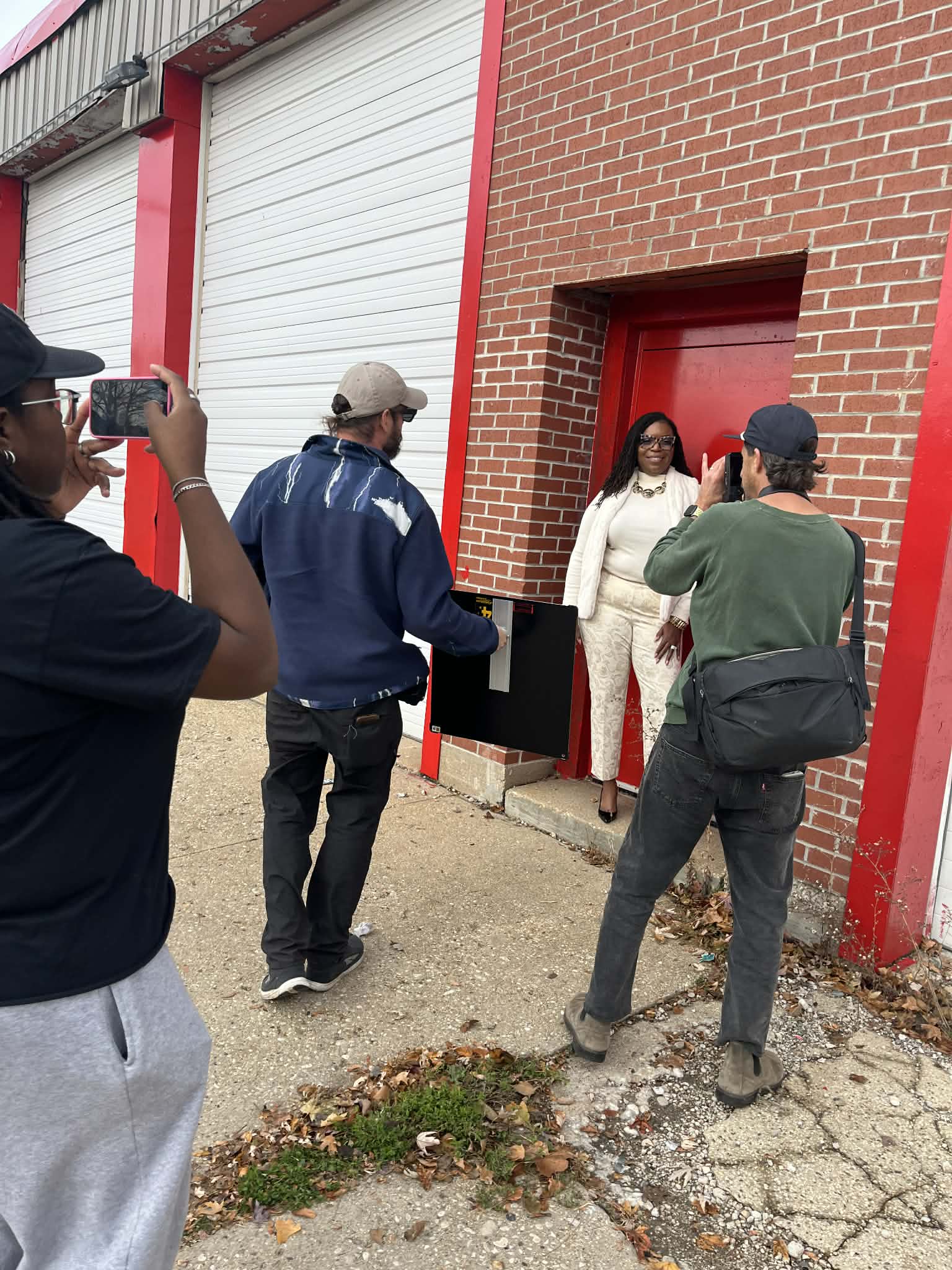
A media team photographs Natasha Broxton at the Select Auto Parts facility in Milwaukee.
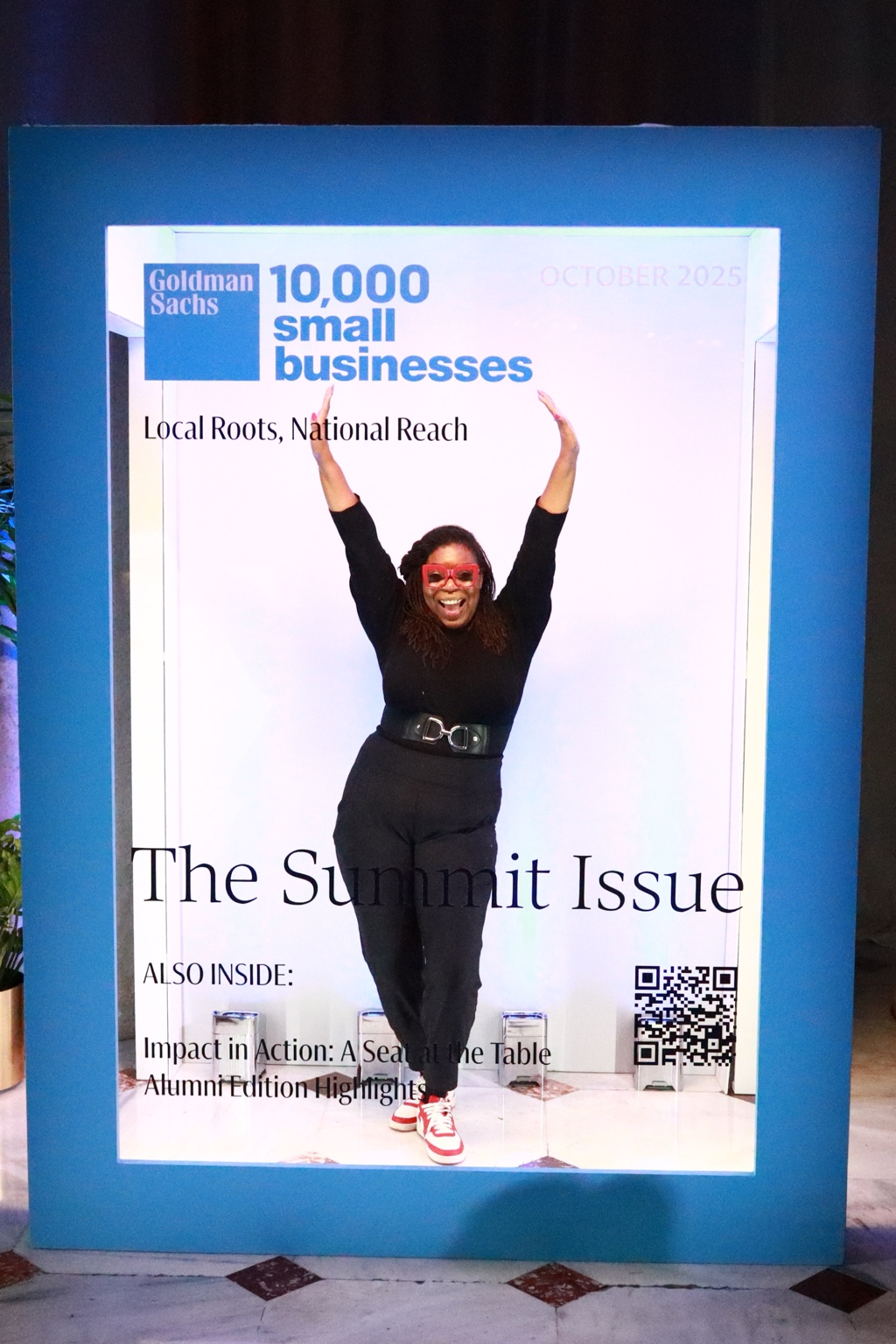
Natasha Broxton poses at a Goldman Sachs 10,000 Small Businesses “Local Roots, National Reach” display in October 2025.
As search, reviews and digital profiles shape discovery, qualified local firms can lose opportunities before buyers ever reach out.
That visibility gap has consequences beyond marketing. The U.S. Small Business Administration Office of Advocacy reports that the nation has 36.2 million small businesses, representing 99.9 percent of all businesses. Small businesses employ 62.3 million people, or 45.9 percent of private-sector workers, and small-business economic activity makes up 43.5 percent of U.S. gross domestic product. When capable local firms are overlooked, communities may have fewer supplier choices, employers may miss growth opportunities and economic activity may flow toward businesses that are easier to discover rather than those best equipped to deliver.
Google’s guidance for local businesses helps explain how that filtering occurs. Local results appear in Search and Maps, and Google says complete and accurate information makes a business more likely to appear in relevant results. Google says local results are mainly based on relevance, distance and prominence, meaning how well-known a business is. Links from other websites, review volume and positive ratings can contribute to prominence. Verification can make a Business Profile more likely to appear in results, but it does not guarantee a particular ranking.
Those mechanics do not guarantee that any company will win attention or business. They do show why discoverability is becoming part of basic operating readiness. A buyer may encounter a business name, location, hours, services, photographs, reviews and news mentions long before speaking with an owner. Missing, inconsistent or outdated information can make a capable company harder to evaluate.
The risk is especially important for small firms that lack dedicated communications, marketing or digital operations staff. Owners may be managing customers, inventory, employees, bids and cash flow while their public information remains fragmented across platforms. That fragmentation may leave a widening gap between what a small business can deliver and what customers or decision-makers can readily verify.
“A business can be qualified, experienced and ready to serve, but if customers and decision-makers cannot find or understand it, that opportunity may never reach the front door,” said Natasha Broxton, founder of Alitura Group and operator of Select Auto Parts & Sales.
Visibility also requires trust. Reviews can help customers evaluate unfamiliar businesses, but efforts to manufacture credibility can harm consumers and honest competitors. The Federal Trade Commission’s Rule on the Use of Consumer Reviews and Testimonials, effective October 21, 2024, addresses deceptive and unfair review practices, and knowing violations can result in court-imposed civil penalties. For small businesses, the better approach is not to game discovery systems. It is to make accurate information and authentic evidence easier to find.
That work can begin with a practical visibility audit. Owners can search for their company as a customer would, confirm that names, addresses, phone numbers, hours and services are consistent, update photographs and service descriptions, and create a compliant process for requesting and responding to genuine reviews without purchasing or fabricating reviews, conditioning incentives on positive sentiment, using undisclosed insider reviews, or suppressing negative feedback through improper means. Websites and profiles should explain what the company does, whom it serves and how to take the next step. News coverage, awards and community work should be presented accurately, with links or other evidence that a buyer can verify.
Businesses should also monitor how their information appears in AI-assisted search and answer tools, while recognizing that those systems can return incomplete or inaccurate information. The goal is not to write for a machine. It is to maintain clear, current source material that people and platforms can interpret, then correct errors when they surface.
Select Auto Parts offers a local example of how operational credibility and public visibility can work together. The Milwaukee-area business’s public visibility includes a Google Small Business feature, regional media coverage and a media interview at a U.S. Chamber of Commerce CO-100 event. Those examples do not prove that visibility caused a particular business outcome. They demonstrate how a small firm can give customers, journalists and other decision-makers multiple ways to understand and verify its work.
“Visibility is not pretending to be bigger than you are,” Broxton said. “It is making the truth about your work easier to verify.”
Economic-development organizations, chambers, business associations and technical-assistance providers can help close the gap. Alongside support for capital, procurement and technology, they can help owners maintain accurate profiles, improve websites, collect authentic customer feedback, prepare media materials and document expertise. These are practical capacity-building services, not cosmetic extras.
The public-interest question is whether strong local firms will remain visible as discovery becomes more digital and more automated. When qualified businesses can be found and evaluated, customers may have more choices, agencies and corporations may identify additional potential suppliers, and communities may retain more pathways to local growth. When they cannot, the first decision may be made without them.
For interviews, keynote presentations and executive workshops with Natasha Broxton on small-business visibility, responsible AI and operational readiness, visit https://alituragroup.com/speaking.
About Natasha Broxton
Natasha Broxton is the founder of Alitura Group and operator of Select Auto Parts & Sales. Her work focuses on helping organizations and small-business leaders use responsible, human-led systems to improve readiness, decision-making and sustainable growth.
Natasha Broxton
Alitura Group
+1 414-763-2475
hello@alituragroup.com
Visit us on social media:
LinkedIn
Instagram
Facebook
YouTube
Legal Disclaimer:
EIN Presswire provides this news content "as is" without warranty of any kind. We do not accept any responsibility or liability for the accuracy, content, images, videos, licenses, completeness, legality, or reliability of the information contained in this article. If you have any complaints or copyright issues related to this article, kindly contact the author above.
