

ZHONGSHAN, GUANGDONG, CHINA, August 28, 2026 /EINPresswire.com/ -- As the global footprint of home automation expands, consumer demands have shifted from isolated illumination fixtures toward immersive environmental technologies that seamlessly lock into broader interconnected ecosystems. The modern smart household requires lighting that actively responds to commands, anticipates routines, and integrates flawlessly with established communication protocols. Standing at the forefront of this industrial transformation, a premier Smart Home Lighting Manufacturer leverages significant manufacturing infrastructure to position atmosphere-enhancing projection equipment as core components of intelligent living spaces. Through a highly structured alignment of research and development, proprietary production capabilities, and rigorous post-sale support architecture, this integrated manufacturing methodology guarantees that advanced lighting ecosystems reach the international marketplace with uncompromising stability and scalable efficiency.
Seamless Integration with Smart Platforms
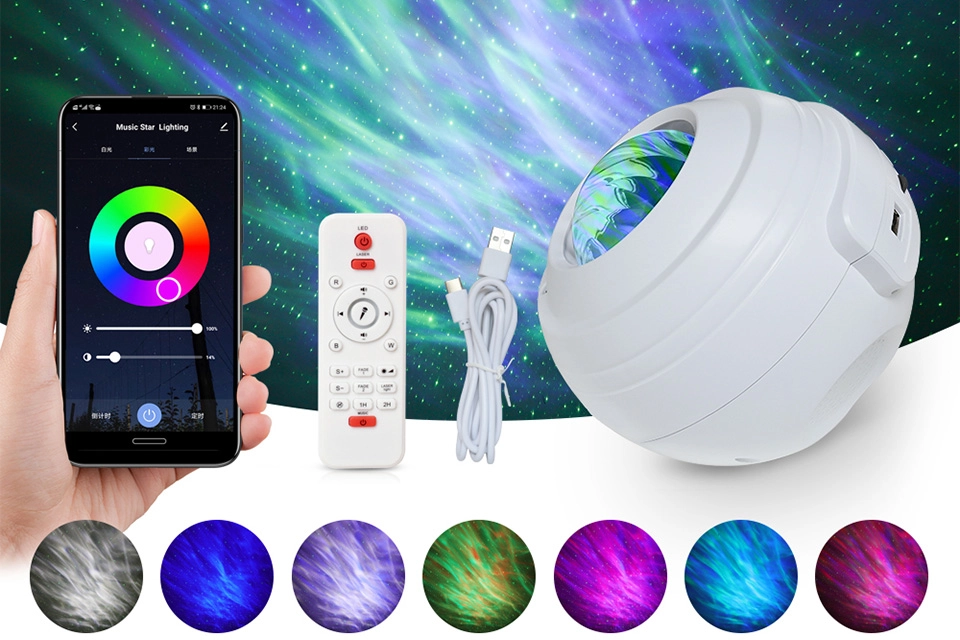
Overcoming the operational fragmentation of isolated hardware systems remains the paramount objective in upgrading residential lighting infrastructure. Standalone devices operating in communication silos no longer satisfy the technical requirements of the modern automated household. The contemporary market dictates that environmental control systems must speak the native languages of dominant residential platforms. The BL-XK09-IV ambient projection unit exemplifies this structural evolution. It completely circumvents the limitations of single-application control by achieving deep, native integration with major voice and automation protocols including Amazon Alexa, Google Assistant, and Samsung SmartThings.
This multi-device, cross-platform compatibility matrix dramatically accelerates the market applicability of the product. End-users gain the ability to deploy complex atmospheric adjustments through simple vocal triggers or pre-programmed macro routines within their existing platform architectures. The hardware translates network commands into immediate environmental alterations with zero latency. Such interoperability bridges the gap between basic localized control and genuine spatial automation. By engineering communication pathways that bypass closed-loop ecosystems, manufacturers equip retail brands and distributors with a highly versatile portfolio asset. Consumers integrate the ambient lighting directly into evening wind-down sequences, security routines, or entertainment presets without installing redundant bridges. This frictionless deployment process elevates the baseline user experience while protecting the product from technological obsolescence.
Multifunctional Ambient Features
Beyond raw platform compatibility, the secondary dimension of intelligent domestic technology involves the synchronization of multiple sensory inputs. Advanced lighting must function as an interactive multimedia node rather than a static luminaire. The product architecture merges high-precision RGBW color rendering capabilities with stringent Class 1 laser safety parameters, ensuring both visual impact and strict regulatory compliance. However, the engineering extends significantly beyond pure photon emission. The internal hardware houses integrated Bluetooth audio protocols and direct USB data interfaces. This acoustic infrastructure enables sophisticated music synchronization capabilities where the projection matrix dynamically responds to acoustic frequencies and rhythm signatures in real time.
This integration of auditory and visual stimuli establishes a multi-dimensional interface that transforms the physical environment. A programmable four-hour automated timer circuit further refines the functional utility of the device. This precise chronological control matches exact use cases, ranging from structured sleep induction cycles to home theater immersion sessions or dynamic social gatherings. The environmental manipulation becomes entirely automated. The hardware regulates both the light output and the corresponding acoustic landscape. By addressing these highly specific operational scenarios, the engineering design proves a deep empirical understanding of how consumers interact with atmosphere-generating equipment. Retailers and brand owners can position the hardware across multiple consumer verticals, from wellness technology to high-end lifestyle electronics.
Patent-backed smart projection bulb development extends this multifunctional approach into a familiar lighting form factor. BoelangMake’s smart projection bulb series is supported by invention and utility model patents and fits standard E26/E27 fixtures, combining 16 million colors, smooth dimming, music synchronization, and aurora-style projection effects. The format gives smart-home buyers a compact route to add dynamic projection without requiring a separate projector chassis, while preserving the control and ambient-lighting functions expected from connected lighting products.
Integrated Production and Strict Quality Control
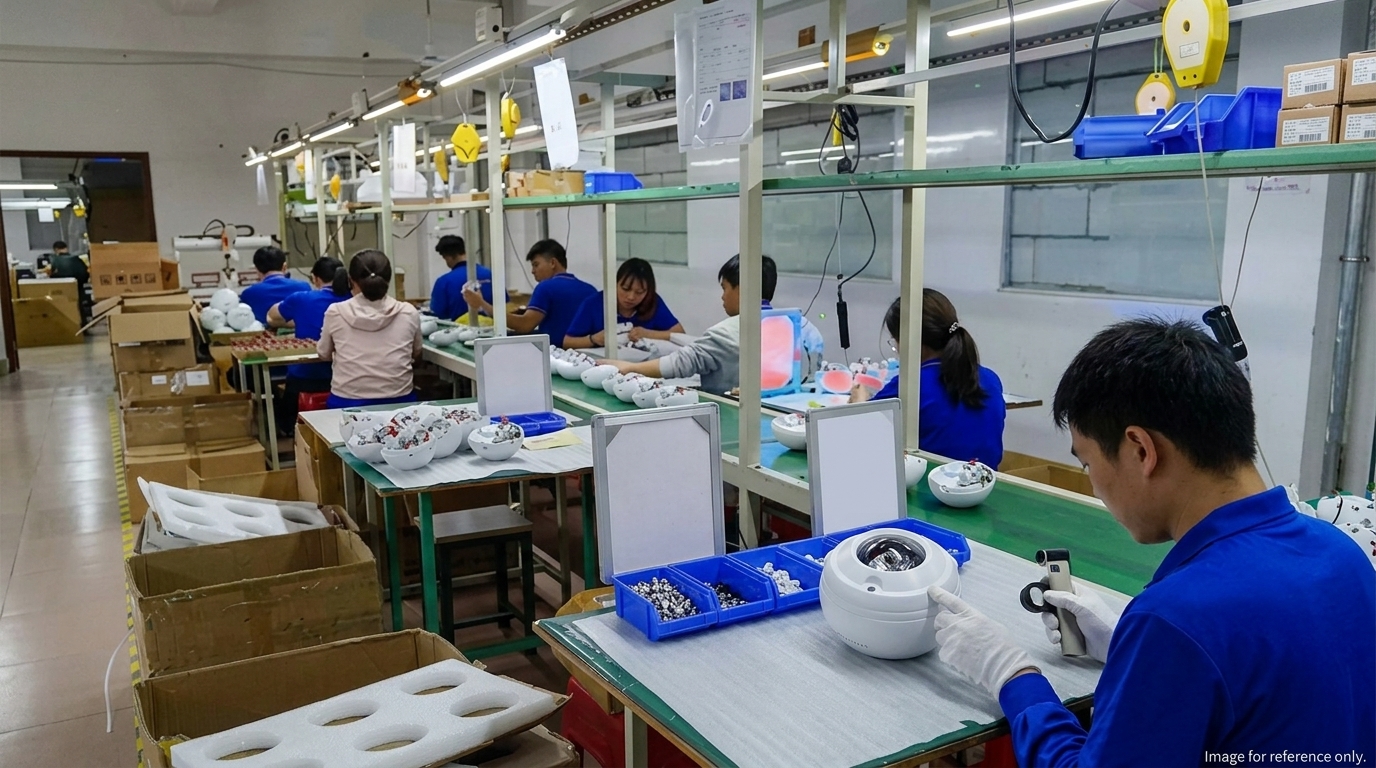
The operational stability of interconnected hardware relies entirely on the structural integrity of its physical manufacturing foundation. Without absolute precision on the factory floor, software capabilities become irrelevant. Operating within a specialized industrial base exceeding 5,000 square meters, Zhongshan Bolang Electronic Technology Co., Ltd. executes a vertically integrated operational model encompassing research, localized manufacturing, and global distribution. The facility houses over 15 dedicated research and development engineers who drive the technological roadmap and secure the intellectual property portfolio, which currently encompasses more than 200 patents, including invention and utility model patents supporting the 3D series and smart projection bulb series. This density of engineering talent ensures continuous iteration of product capabilities.
On the production floor, more than five automated manufacturing lines scale output while maintaining micro-tolerance precision. Assembly speed means nothing without verification. A comprehensive 100% inspection protocol operates in tandem with aggressive burn-in testing parameters. This forms an impermeable quality assurance perimeter. Every single intelligent projection unit must survive this hostile testing environment before authorization for packaging. The manufacturing baseline is further supported by BSCI, WCA, and API factory-audit approvals together with the ISO9001 quality management framework. At the product level, the output carries necessary global compliance markers including CE, TUV, FDA, RoHS, PSE, FCC, and UL certifications. This exhaustively documented quality control loop guarantees that complex electrical assemblies can endure continuous, long-term operation within diverse international markets without component failure. The entire manufacturing ecosystem is engineered to eliminate defect rates and protect the brand equity of enterprise clients.
End-To-End OEM Services and CAD Validation
For enterprise clients and consumer brands seeking to deploy proprietary intelligent ecosystems, standard off-the-shelf hardware rarely meets specific branding or functional integration requirements. The market demands bespoke hardware configurations supported by reliable secondary development. The manufacturing infrastructure provides comprehensive OEM and ODM lifecycle services that bridge the critical gap between conceptual requirement and volume manufacturing. This structured project management framework initiates with exacting technical requirements gathering and proceeds directly into stringent Computer-Aided Design (CAD) blueprint validation. Every dimensional tolerance, material specification, and electronic layout is mathematically modeled and approved prior to physical tooling.
Following virtual validation, the engineering team executes rapid functional prototyping. This phase allows corporate clients to physically evaluate the user interface, verify platform communication stability, and test acoustic and visual performance metrics against their proprietary standards. Only after achieving total consensus on the functional sample does the project transition into mass assembly. This highly formalized sequence of requirement translation, digital verification, physical sampling, and scaled manufacturing ensures that unique brand elements and specialized firmware requests are executed flawlessly on the production line. The methodological rigor eliminates the massive financial risks typically associated with outsourced electronics manufacturing. It transforms a complex supply chain variable into a predictable, transparent, and highly controlled procurement pipeline. Brands can focus entirely on market positioning, confident that the underlying hardware architecture will be delivered to exact specifications.
Relying on deep integration with dominant smart platform ecosystems and a formidable proprietary manufacturing base, the facility provides global buyers with premier intelligent environmental lighting solutions. The intersection of robust software compatibility and aggressive physical quality control defines the modern standard for automated illumination technology. Enterprise buyers, regional distributors, and smart home brand operators are encouraged to review complete communication protocols, access detailed product specifications, and initiate bespoke high-volume production inquiries through the corporate portal at https://www.bolangmake.com/.
Seamless Integration with Smart Platforms
Overcoming the operational fragmentation of isolated hardware systems remains the paramount objective in upgrading residential lighting infrastructure. Standalone devices operating in communication silos no longer satisfy the technical requirements of the modern automated household. The contemporary market dictates that environmental control systems must speak the native languages of dominant residential platforms. The BL-XK09-IV ambient projection unit exemplifies this structural evolution. It completely circumvents the limitations of single-application control by achieving deep, native integration with major voice and automation protocols including Amazon Alexa, Google Assistant, and Samsung SmartThings.
This multi-device, cross-platform compatibility matrix dramatically accelerates the market applicability of the product. End-users gain the ability to deploy complex atmospheric adjustments through simple vocal triggers or pre-programmed macro routines within their existing platform architectures. The hardware translates network commands into immediate environmental alterations with zero latency. Such interoperability bridges the gap between basic localized control and genuine spatial automation. By engineering communication pathways that bypass closed-loop ecosystems, manufacturers equip retail brands and distributors with a highly versatile portfolio asset. Consumers integrate the ambient lighting directly into evening wind-down sequences, security routines, or entertainment presets without installing redundant bridges. This frictionless deployment process elevates the baseline user experience while protecting the product from technological obsolescence.
Multifunctional Ambient Features
Beyond raw platform compatibility, the secondary dimension of intelligent domestic technology involves the synchronization of multiple sensory inputs. Advanced lighting must function as an interactive multimedia node rather than a static luminaire. The product architecture merges high-precision RGBW color rendering capabilities with stringent Class 1 laser safety parameters, ensuring both visual impact and strict regulatory compliance. However, the engineering extends significantly beyond pure photon emission. The internal hardware houses integrated Bluetooth audio protocols and direct USB data interfaces. This acoustic infrastructure enables sophisticated music synchronization capabilities where the projection matrix dynamically responds to acoustic frequencies and rhythm signatures in real time.
This integration of auditory and visual stimuli establishes a multi-dimensional interface that transforms the physical environment. A programmable four-hour automated timer circuit further refines the functional utility of the device. This precise chronological control matches exact use cases, ranging from structured sleep induction cycles to home theater immersion sessions or dynamic social gatherings. The environmental manipulation becomes entirely automated. The hardware regulates both the light output and the corresponding acoustic landscape. By addressing these highly specific operational scenarios, the engineering design proves a deep empirical understanding of how consumers interact with atmosphere-generating equipment. Retailers and brand owners can position the hardware across multiple consumer verticals, from wellness technology to high-end lifestyle electronics.
Patent-backed smart projection bulb development extends this multifunctional approach into a familiar lighting form factor. BoelangMake’s smart projection bulb series is supported by invention and utility model patents and fits standard E26/E27 fixtures, combining 16 million colors, smooth dimming, music synchronization, and aurora-style projection effects. The format gives smart-home buyers a compact route to add dynamic projection without requiring a separate projector chassis, while preserving the control and ambient-lighting functions expected from connected lighting products.
Integrated Production and Strict Quality Control
The operational stability of interconnected hardware relies entirely on the structural integrity of its physical manufacturing foundation. Without absolute precision on the factory floor, software capabilities become irrelevant. Operating within a specialized industrial base exceeding 5,000 square meters, Zhongshan Bolang Electronic Technology Co., Ltd. executes a vertically integrated operational model encompassing research, localized manufacturing, and global distribution. The facility houses over 15 dedicated research and development engineers who drive the technological roadmap and secure the intellectual property portfolio, which currently encompasses more than 200 patents, including invention and utility model patents supporting the 3D series and smart projection bulb series. This density of engineering talent ensures continuous iteration of product capabilities.
On the production floor, more than five automated manufacturing lines scale output while maintaining micro-tolerance precision. Assembly speed means nothing without verification. A comprehensive 100% inspection protocol operates in tandem with aggressive burn-in testing parameters. This forms an impermeable quality assurance perimeter. Every single intelligent projection unit must survive this hostile testing environment before authorization for packaging. The manufacturing baseline is further supported by BSCI, WCA, and API factory-audit approvals together with the ISO9001 quality management framework. At the product level, the output carries necessary global compliance markers including CE, TUV, FDA, RoHS, PSE, FCC, and UL certifications. This exhaustively documented quality control loop guarantees that complex electrical assemblies can endure continuous, long-term operation within diverse international markets without component failure. The entire manufacturing ecosystem is engineered to eliminate defect rates and protect the brand equity of enterprise clients.
End-To-End OEM Services and CAD Validation
For enterprise clients and consumer brands seeking to deploy proprietary intelligent ecosystems, standard off-the-shelf hardware rarely meets specific branding or functional integration requirements. The market demands bespoke hardware configurations supported by reliable secondary development. The manufacturing infrastructure provides comprehensive OEM and ODM lifecycle services that bridge the critical gap between conceptual requirement and volume manufacturing. This structured project management framework initiates with exacting technical requirements gathering and proceeds directly into stringent Computer-Aided Design (CAD) blueprint validation. Every dimensional tolerance, material specification, and electronic layout is mathematically modeled and approved prior to physical tooling.
Following virtual validation, the engineering team executes rapid functional prototyping. This phase allows corporate clients to physically evaluate the user interface, verify platform communication stability, and test acoustic and visual performance metrics against their proprietary standards. Only after achieving total consensus on the functional sample does the project transition into mass assembly. This highly formalized sequence of requirement translation, digital verification, physical sampling, and scaled manufacturing ensures that unique brand elements and specialized firmware requests are executed flawlessly on the production line. The methodological rigor eliminates the massive financial risks typically associated with outsourced electronics manufacturing. It transforms a complex supply chain variable into a predictable, transparent, and highly controlled procurement pipeline. Brands can focus entirely on market positioning, confident that the underlying hardware architecture will be delivered to exact specifications.
Relying on deep integration with dominant smart platform ecosystems and a formidable proprietary manufacturing base, the facility provides global buyers with premier intelligent environmental lighting solutions. The intersection of robust software compatibility and aggressive physical quality control defines the modern standard for automated illumination technology. Enterprise buyers, regional distributors, and smart home brand operators are encouraged to review complete communication protocols, access detailed product specifications, and initiate bespoke high-volume production inquiries through the corporate portal at https://www.bolangmake.com/.
Zhongshan Bolang Electronic Technology Co., Ltd.
BoelangMake
email us here
Visit us on social media:
LinkedIn
Facebook
YouTube
TikTok
X
Other
Legal Disclaimer:
EIN Presswire provides this news content "as is" without warranty of any kind. We do not accept any responsibility or liability for the accuracy, content, images, videos, licenses, completeness, legality, or reliability of the information contained in this article. If you have any complaints or copyright issues related to this article, kindly contact the author above.


