


JINHUA, ZHEJIANG, CHINA, July 23, 2026 /EINPresswire.com/ -- The floor cleaning appliance industry is entering one of its most technically dynamic periods in decades. Consumer expectations have shifted well beyond raw suction power — hygiene performance, ergonomic usability, acoustic comfort, and intelligent automation now drive purchasing decisions with equal weight. Within this environment, the perspectives of a Top 10 BLDC Wet And Dry Vacuum Cleaner Supplier carry particular relevance for brand teams and product developers trying to anticipate where the category is heading. Five trends are reshaping the industry simultaneously, and understanding them reveals not just what the next product generation will look like, but which manufacturing partners are genuinely positioned to deliver it.
BLDC Motor Technology Moves From Premium to Standard
Brushless DC motors dominated the premium tier for years. Their efficiency advantages, longer operational lifespan, and reduced heat generation were real — but the cost premium kept them out of accessible mid-range products. That gap is closing fast. BLDC technology is migrating down the price curve, and manufacturers that cannot produce it competitively across multiple product tiers face a shrinking addressable market.
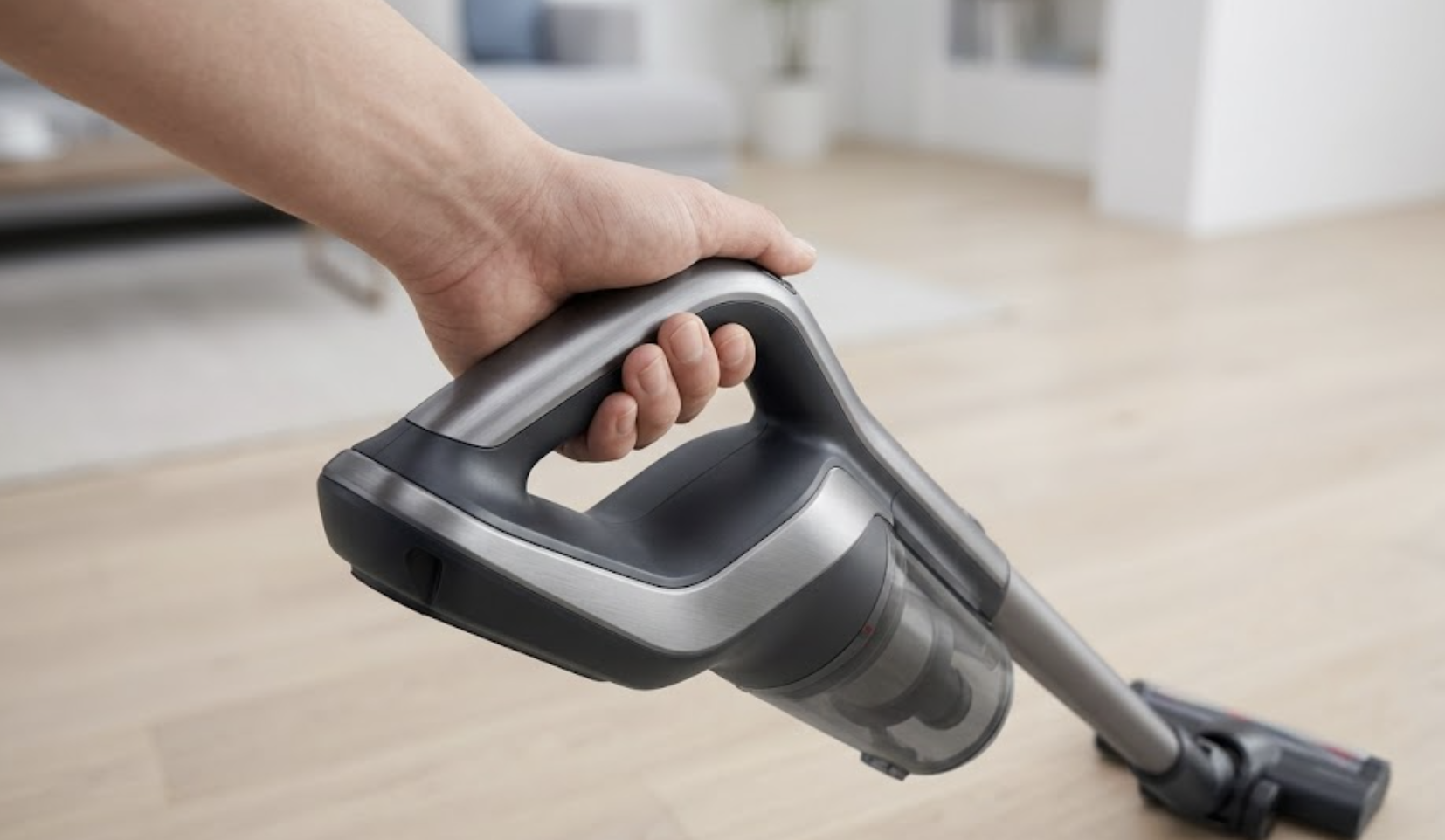
The CGH (Jinhua Chunguang Technology Co., Ltd.) Model 2350 illustrates this shift clearly. The machine runs a BLDC 120W motor at 150W total power, delivering 15kPa suction in a cordless package with base charging. Critically, it combines brushless performance with noise reduction design and voice status broadcasting — features that previously appeared only in higher-margin products. As BLDC standardization continues, the competitive battlefield moves to what surrounds the motor: ergonomics, self-cleaning capability, and acoustic engineering.
Wet Cleaning Intelligence Is Redefining the Category Ceiling
While BLDC adoption expands the mid-market, a different kind of innovation is raising the performance ceiling at the top. Fixed-output cleaning machines — those that run at predetermined suction and water settings regardless of actual floor conditions — are losing ground to sensor-driven adaptive systems. The difference matters because real floors carry uneven contamination loads. A machine that responds to actual dirt density in real time performs fundamentally differently from one that cannot.
The CGH Model 2507 demonstrates what this intelligence looks like in practice. The machine embeds infrared dirt detection sensors directly inside the pipeline. In intelligent mode, the system reads contamination levels continuously and adjusts both suction strength and water output accordingly — with automatic power scaling between 90W and 120W based on soil load. The BLDC motor operates at 115,000 RPM, generating 24,000Pa of maximum suction pressure. That combination of sensor logic and raw motor performance represents the new frontier for flagship-tier wet-dry vacuum products.
Self-Cleaning Has Become a Hygiene Benchmark, Not a Bonus Feature
A few years ago, a machine with any self-cleaning capability stood out. Today, the question is no longer whether a machine self-cleans — it is how thoroughly. Consumer hygiene awareness rose sharply in recent years and has not retreated. Roller brushes that accumulate bacteria between cleaning sessions generate negative reviews consistently, regardless of how well the machine performs its primary cleaning function.
The industry response has moved in a clear direction: toward multi-stage sterilization rather than simple rinsing. Jinhua Chunguang Technology Co., Ltd. engineers the 2507 with a self-cleaning system that combines 100-degree Celsius boiling water with a pre-installed electrolytic water generator positioned directly at the roller brush. Rather than routing electrolytic water through the full machine pipeline before it reaches the brush, the generator produces hypochlorite ions on contact — immediately upon water flow — and applies them directly to the brush surface. The complete self-cleaning cycle finishes in under five minutes. This architecture addresses the dilution problem that limits conventional electrolytic systems and sets a meaningful technical benchmark for what thorough hygiene engineering looks like.
Ergonomic and Acoustic Design Is Becoming a Competitive Differentiator
Suction power numbers appear prominently in product marketing. Ergonomics and noise levels rarely make it into headlines — but they drive repurchase behavior and user satisfaction ratings more directly than most technical specifications. Consumers notice when a machine cannot reach under furniture. They also notice when running it disturbs sleep or conversation in an adjacent room.
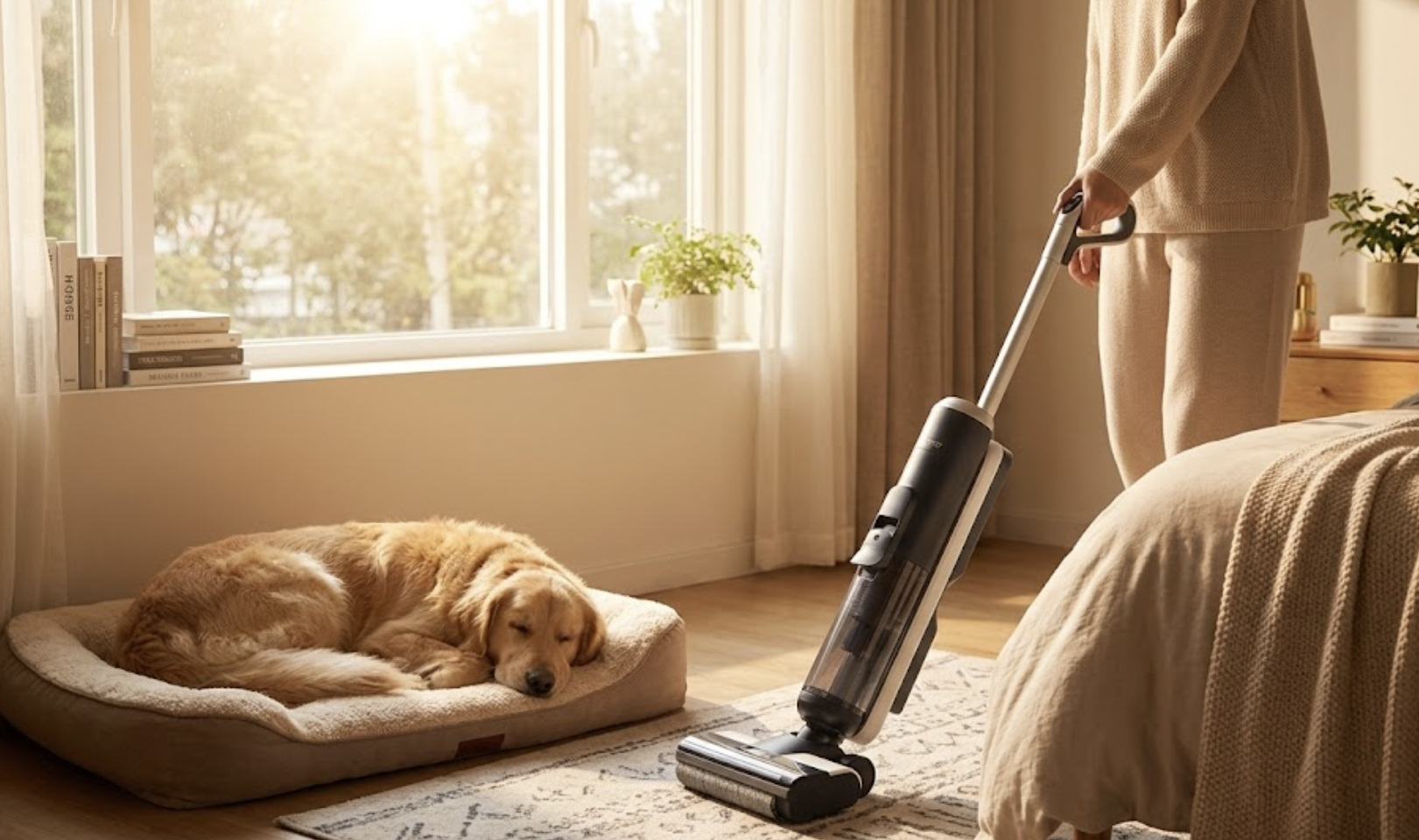
The 180-degree lying-flat capability has emerged as a genuine ergonomic standard. Both the 2350 and 2507 incorporate this design, with a 13.5cm lying-flat height that allows the machine to slide beneath low furniture without requiring the user to reposition or use separate tools. On the acoustic side, the 2507 operates at a MINI-74dB noise ceiling — a controlled figure for a machine generating 24,000Pa of suction. The 2350 applies noise reduction design as a deliberate engineering choice for users who clean during occupied hours. As the market matures, these dimensions increasingly separate products that earn loyalty from those that earn a one-time purchase.
Supply Chain Geography Is Shifting From Cost Logic to Risk Logic
The final trend operates at the manufacturing level rather than the product level, but it shapes OEM partnership decisions just as directly. For most of the past two decades, supply chain geography followed cost optimization. Low labor costs concentrated manufacturing in specific regions. Repeated disruption events have forced a reassessment. Brand teams now prioritize supply chain resilience alongside unit economics — and the factories that built multi-country production networks before these disruptions became a priority hold a structural advantage.
Chunguang Technology operates six production bases spanning China and Southeast Asia: the Jinhua headquarters, Suzhou Kaihong, Suzhou Suntone, Malaysia CGH, Vietnam CGH, and Vietnam Suntone. This distribution did not emerge as a reactive response to recent disruptions — it reflects a long-term manufacturing strategy that started with the company's Jinhua foundation and extended progressively into Southeast Asian markets. For OEM buyers placing multi-year volume commitments, a supplier with distributed production redundancy across different regulatory environments offers a qualitatively different risk profile than a single-site manufacturer.
What These Trends Mean for Supplier Selection
Taken together, these five trends define a demanding set of requirements for any supplier claiming long-term relevance in the wet-dry vacuum cleaner category. BLDC competency across price tiers, sensor-driven cleaning intelligence, multi-stage self-cleaning engineering, ergonomic and acoustic precision, and geographically distributed manufacturing — a supplier that addresses all five simultaneously is not common.
CGH's product range, spanning the accessible 2350 to the advanced 2507, demonstrates active engagement with each of these dimensions rather than selective focus on one or two. That breadth matters because OEM partners building long-term product roadmaps need a supplier whose development trajectory aligns with where the market is heading, not just where it currently stands.
Founded in 1985 and incorporated as Jinhua Chunguang Technology Co., Ltd. in 2000, CGH carries more than four decades of cleaning appliance manufacturing experience. The company holds national high-tech enterprise status, carries intellectual property certification and three-system management certification, and completed an A-share listing on the Shanghai Stock Exchange in 2018. It has earned recognition as a "Zhejiang Invisible Champion" and a "National Special New Little Giant Enterprise" — institutional acknowledgments of sustained performance across quality, innovation, and operational management.
Brand teams and sourcing managers exploring what trend-aligned OEM partnership looks like in practice can access full product specifications and inquiry contacts at http://www.cgh-group.cn/.
BLDC Motor Technology Moves From Premium to Standard
Brushless DC motors dominated the premium tier for years. Their efficiency advantages, longer operational lifespan, and reduced heat generation were real — but the cost premium kept them out of accessible mid-range products. That gap is closing fast. BLDC technology is migrating down the price curve, and manufacturers that cannot produce it competitively across multiple product tiers face a shrinking addressable market.
The CGH (Jinhua Chunguang Technology Co., Ltd.) Model 2350 illustrates this shift clearly. The machine runs a BLDC 120W motor at 150W total power, delivering 15kPa suction in a cordless package with base charging. Critically, it combines brushless performance with noise reduction design and voice status broadcasting — features that previously appeared only in higher-margin products. As BLDC standardization continues, the competitive battlefield moves to what surrounds the motor: ergonomics, self-cleaning capability, and acoustic engineering.
Wet Cleaning Intelligence Is Redefining the Category Ceiling
While BLDC adoption expands the mid-market, a different kind of innovation is raising the performance ceiling at the top. Fixed-output cleaning machines — those that run at predetermined suction and water settings regardless of actual floor conditions — are losing ground to sensor-driven adaptive systems. The difference matters because real floors carry uneven contamination loads. A machine that responds to actual dirt density in real time performs fundamentally differently from one that cannot.
The CGH Model 2507 demonstrates what this intelligence looks like in practice. The machine embeds infrared dirt detection sensors directly inside the pipeline. In intelligent mode, the system reads contamination levels continuously and adjusts both suction strength and water output accordingly — with automatic power scaling between 90W and 120W based on soil load. The BLDC motor operates at 115,000 RPM, generating 24,000Pa of maximum suction pressure. That combination of sensor logic and raw motor performance represents the new frontier for flagship-tier wet-dry vacuum products.
Self-Cleaning Has Become a Hygiene Benchmark, Not a Bonus Feature
A few years ago, a machine with any self-cleaning capability stood out. Today, the question is no longer whether a machine self-cleans — it is how thoroughly. Consumer hygiene awareness rose sharply in recent years and has not retreated. Roller brushes that accumulate bacteria between cleaning sessions generate negative reviews consistently, regardless of how well the machine performs its primary cleaning function.
The industry response has moved in a clear direction: toward multi-stage sterilization rather than simple rinsing. Jinhua Chunguang Technology Co., Ltd. engineers the 2507 with a self-cleaning system that combines 100-degree Celsius boiling water with a pre-installed electrolytic water generator positioned directly at the roller brush. Rather than routing electrolytic water through the full machine pipeline before it reaches the brush, the generator produces hypochlorite ions on contact — immediately upon water flow — and applies them directly to the brush surface. The complete self-cleaning cycle finishes in under five minutes. This architecture addresses the dilution problem that limits conventional electrolytic systems and sets a meaningful technical benchmark for what thorough hygiene engineering looks like.
Ergonomic and Acoustic Design Is Becoming a Competitive Differentiator
Suction power numbers appear prominently in product marketing. Ergonomics and noise levels rarely make it into headlines — but they drive repurchase behavior and user satisfaction ratings more directly than most technical specifications. Consumers notice when a machine cannot reach under furniture. They also notice when running it disturbs sleep or conversation in an adjacent room.
The 180-degree lying-flat capability has emerged as a genuine ergonomic standard. Both the 2350 and 2507 incorporate this design, with a 13.5cm lying-flat height that allows the machine to slide beneath low furniture without requiring the user to reposition or use separate tools. On the acoustic side, the 2507 operates at a MINI-74dB noise ceiling — a controlled figure for a machine generating 24,000Pa of suction. The 2350 applies noise reduction design as a deliberate engineering choice for users who clean during occupied hours. As the market matures, these dimensions increasingly separate products that earn loyalty from those that earn a one-time purchase.
Supply Chain Geography Is Shifting From Cost Logic to Risk Logic
The final trend operates at the manufacturing level rather than the product level, but it shapes OEM partnership decisions just as directly. For most of the past two decades, supply chain geography followed cost optimization. Low labor costs concentrated manufacturing in specific regions. Repeated disruption events have forced a reassessment. Brand teams now prioritize supply chain resilience alongside unit economics — and the factories that built multi-country production networks before these disruptions became a priority hold a structural advantage.
Chunguang Technology operates six production bases spanning China and Southeast Asia: the Jinhua headquarters, Suzhou Kaihong, Suzhou Suntone, Malaysia CGH, Vietnam CGH, and Vietnam Suntone. This distribution did not emerge as a reactive response to recent disruptions — it reflects a long-term manufacturing strategy that started with the company's Jinhua foundation and extended progressively into Southeast Asian markets. For OEM buyers placing multi-year volume commitments, a supplier with distributed production redundancy across different regulatory environments offers a qualitatively different risk profile than a single-site manufacturer.
What These Trends Mean for Supplier Selection
Taken together, these five trends define a demanding set of requirements for any supplier claiming long-term relevance in the wet-dry vacuum cleaner category. BLDC competency across price tiers, sensor-driven cleaning intelligence, multi-stage self-cleaning engineering, ergonomic and acoustic precision, and geographically distributed manufacturing — a supplier that addresses all five simultaneously is not common.
CGH's product range, spanning the accessible 2350 to the advanced 2507, demonstrates active engagement with each of these dimensions rather than selective focus on one or two. That breadth matters because OEM partners building long-term product roadmaps need a supplier whose development trajectory aligns with where the market is heading, not just where it currently stands.
Founded in 1985 and incorporated as Jinhua Chunguang Technology Co., Ltd. in 2000, CGH carries more than four decades of cleaning appliance manufacturing experience. The company holds national high-tech enterprise status, carries intellectual property certification and three-system management certification, and completed an A-share listing on the Shanghai Stock Exchange in 2018. It has earned recognition as a "Zhejiang Invisible Champion" and a "National Special New Little Giant Enterprise" — institutional acknowledgments of sustained performance across quality, innovation, and operational management.
Brand teams and sourcing managers exploring what trend-aligned OEM partnership looks like in practice can access full product specifications and inquiry contacts at http://www.cgh-group.cn/.
Chunguang Technology Co., Ltd.
+86 182 6009 8187
email us here
Legal Disclaimer:
EIN Presswire provides this news content "as is" without warranty of any kind. We do not accept any responsibility or liability for the accuracy, content, images, videos, licenses, completeness, legality, or reliability of the information contained in this article. If you have any complaints or copyright issues related to this article, kindly contact the author above.


