


JINHUA, ZHEJIANG, CHINA, July 23, 2026 /EINPresswire.com/ -- Brand teams sourcing handheld vacuum cleaners face a choice that shapes every downstream decision in the product cycle. The route taken — direct factory partnership versus multi-tier intermediary procurement — determines not just unit cost, but development speed, specification control, quality accountability, and the ability to evolve products across generations. In the handheld cleaning appliance category specifically, working directly with an OEM Cordless Handheld Vacuum Cleaner Factory carries efficiency advantages that compound over time. This article examines six dimensions where the two approaches diverge — and why those divergences matter for brand teams thinking beyond the first purchase order.
Development Cycle Speed: Factory Direct vs. Intermediary Relay
Every layer between a brand's engineering brief and the manufacturer's production team introduces delay. Intermediaries translate specifications, relay feedback, and communicate revisions — and each translation introduces the possibility of information loss or distortion. Technical requirements that reach a factory through two or three intermediary layers often arrive altered, incomplete, or carrying assumptions that nobody flagged along the way.
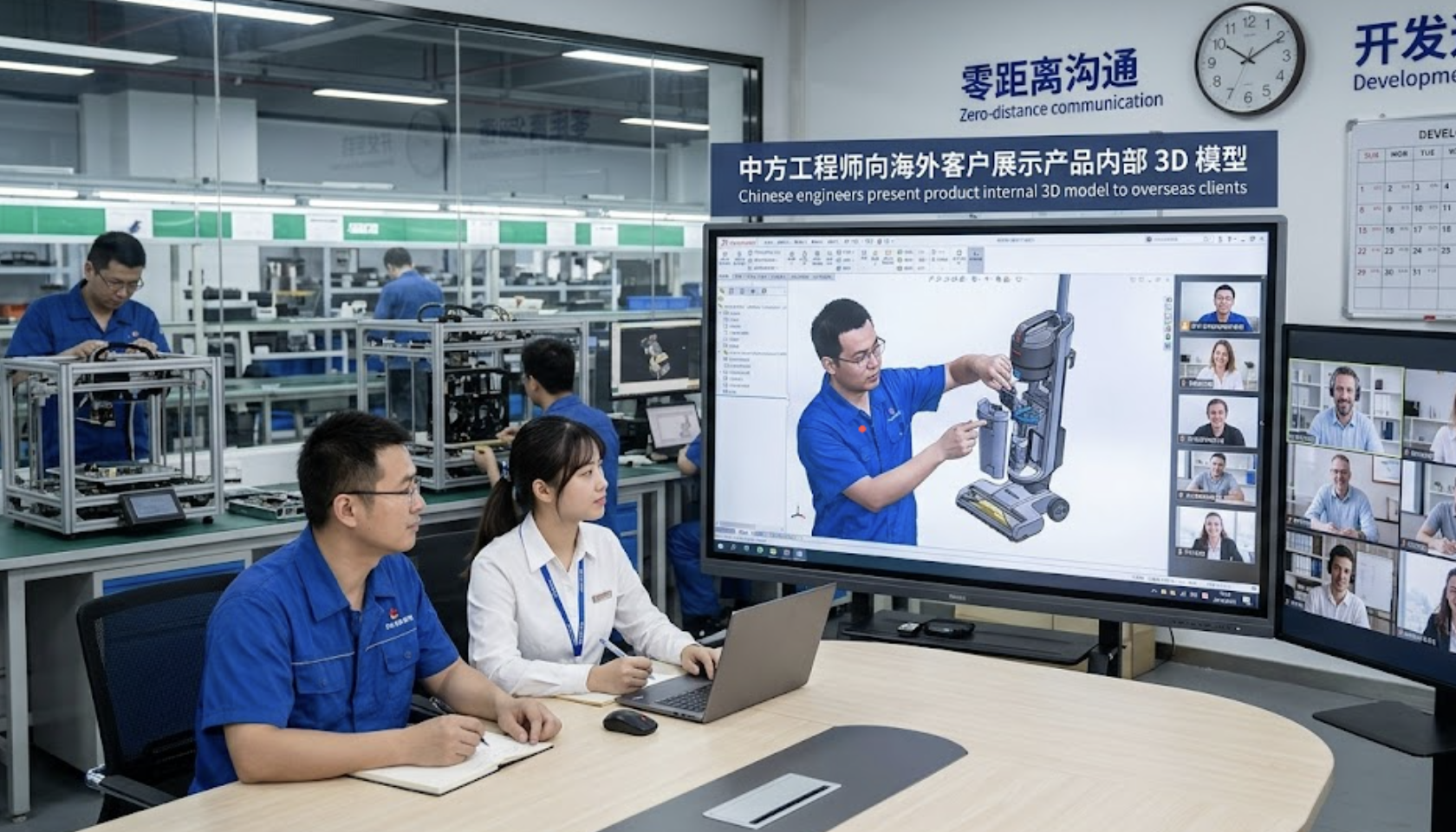
Direct factory partnerships eliminate this relay problem entirely. A brand team's specification arrives at the engineering team responsible for executing it. Questions come back from the people who can actually answer them. Sample revisions reflect genuine manufacturing feedback rather than a sales representative's interpretation of it. In a category where product differentiation often hinges on precisely specified parameters — suction pressure, noise ceiling, dust capacity, cord length — this directness translates into measurably faster development cycles and fewer costly revision rounds.
Specification Transparency and What It Reveals About Factory Capability
The completeness of a factory's product specifications communicates something important about its relationship to the products it makes. Factories that own their product engineering provide full technical documentation — not because they are required to, but because they know every parameter and can stand behind it. Factories that assemble products to third-party designs often cannot answer detailed specification questions because the design decisions belong to someone else.
The CGH (Jinhua Chunguang Technology Co., Ltd.) handheld vacuum lineup demonstrates this kind of engineering ownership clearly. The GHA102 runs at 500W with a 16-18KPA vacuum range, a 1.2L dust box, a 5-meter power cord, and an 80dB noise level — with precise packaging dimensions of 51 x 16.5 x 16.5 cm documented alongside the performance specs. The GHA585B steps up to 600W, maintains the 16-18KPA vacuum range, increases dust box capacity to 1.5L, and brings the noise ceiling down to 75dB. These are not round numbers or marketing estimates. They reflect active engineering control over the product range at the parameter level — exactly the kind of specification ownership that makes customization conversations productive from the first meeting.
Customization Depth: Who Actually Controls the Design Variables
Intermediaries set a customization ceiling that brands rarely see until they push against it. A distributor can offer what exists in current inventory or what a factory's standard catalog contains. Adjusting power output, repositioning noise thresholds, modifying dust bin geometry, or changing cord length for a specific market requirement all require direct factory dialogue — because those decisions live in the engineering team, not in a sales catalog.
Direct factory access opens the full parameter space. Power output, filtration configuration, form factor, and packaging specification all become negotiable variables rather than fixed constraints. The differentiation between the GHA102 and GHA585B — 500W versus 600W, 1.2L versus 1.5L dust capacity, 80dB versus 75dB noise — illustrates precisely the kind of incremental parameter variation that factory-direct relationships enable. A brand building a product family across multiple price points or regional specifications needs a manufacturing partner that controls these variables at the source. An intermediary cannot substitute for that control.
Cost Structure Clarity and Long-Term Margin Management
Multi-tier sourcing obscures costs at every layer. Each intermediary adds margin, and each layer's margin becomes invisible to the brand working downstream. The result is a unit cost that carries embedded markups with no clear line of sight into the underlying manufacturing economics. Brands cannot optimize what they cannot see — and structural cost opacity makes SKU-level margin management significantly harder over time.
Factory-direct pricing exposes the actual cost structure of a product. Component selection, production volume, tooling amortization, and packaging costs all become discussable variables rather than opaque inputs to a delivered price. This visibility supports better product positioning decisions, more accurate retail pricing models, and more sustainable long-term margin structures. Furthermore, established factory relationships generate cumulative cost advantages. A factory partner that understands a brand's volume patterns, seasonal demand curves, and quality standards builds operational efficiencies into the relationship over time — efficiencies that spot-buy intermediary procurement never accumulates.
Quality Traceability and Accountability When Problems Arise
Quality issues in consumer electronics are inevitable over time. The critical variable is not whether problems occur, but how quickly they can be identified, traced to root cause, and resolved. In multi-tier supply chains, accountability diffuses through every layer. A brand contacts the distributor, who contacts the trading company, who contacts the factory — and the round-trip time for a root-cause answer can stretch from days into weeks. Meanwhile, defective product continues moving through distribution.
Direct factory partnerships compress this accountability chain to a single relationship. Component-level traceability — from motor selection through assembly to final packaging — is accessible without relay. Chunguang Technology operates within an institutional quality framework that includes three-system management certification covering quality, environment, and occupational health and safety, alongside intellectual property certification and the governance accountability that accompanies A-share listing on the Shanghai Stock Exchange. These structures mean quality accountability at CGH operates systematically, not reactively — a significant operational advantage when problems require fast resolution.
Product Line Evolution and the Multi-Cycle Partnership Advantage
The efficiency gap between factory-direct and intermediary sourcing does not stay constant across product generations. It widens. Each new product cycle requires a brand working through intermediaries to rebuild shared understanding — of market positioning, consumer feedback, performance priorities, and competitive context. A direct factory partner accumulates that understanding progressively. By the second and third product generation, the factory team already understands what the brand is trying to achieve and can contribute proactively to specification development rather than waiting for a complete brief.
Jinhua Chunguang Technology Co., Ltd. supports this multi-cycle partnership model with a manufacturing infrastructure that spans handheld vacuums, wet-dry floor cleaners, robot vacuum cleaners, dust mite controllers, and cleaning accessories — all under one production umbrella. For brand teams managing diversified product portfolios, consolidating across categories under a single capable factory partner eliminates the coordination overhead of managing multiple supplier relationships with different quality standards, communication styles, and development timelines.
Making the Efficiency Case Concrete
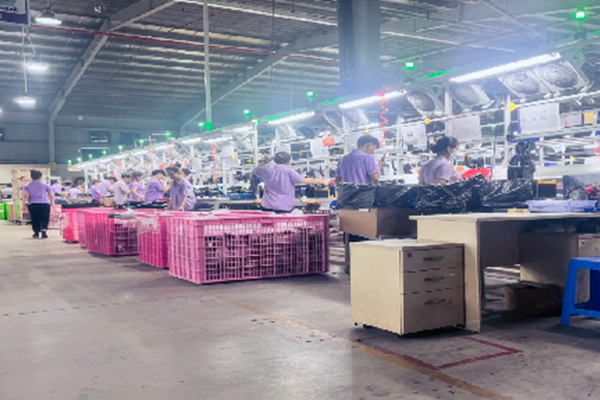
Founded in 1985 and incorporated as Jinhua Chunguang Technology Co., Ltd. in 2000, CGH has spent four decades building the manufacturing infrastructure that factory-direct OEM partnerships depend on. Six production bases — Jinhua, Suzhou Kaihong, Suzhou Suntone, Malaysia CGH, Vietnam CGH, and Vietnam Suntone — provide the geographic distribution and production redundancy that long-term volume commitments require. National high-tech enterprise status, "Zhejiang Invisible Champion" recognition, and a patent portfolio spanning design, utility model, and invention categories reflect sustained investment in the engineering capability that makes direct factory partnership genuinely valuable.
The efficiency advantages described across these six dimensions are not theoretical. They manifest in shorter development timelines, cleaner cost structures, faster quality resolution, and stronger product evolution across generations. For brand teams evaluating their 2025 and 2026 sourcing models, the comparison is worth running against actual numbers.
Full product specifications for the GHA102, GHA585B, and the complete handheld vacuum lineup are accessible at http://www.cgh-group.cn/.
Development Cycle Speed: Factory Direct vs. Intermediary Relay
Every layer between a brand's engineering brief and the manufacturer's production team introduces delay. Intermediaries translate specifications, relay feedback, and communicate revisions — and each translation introduces the possibility of information loss or distortion. Technical requirements that reach a factory through two or three intermediary layers often arrive altered, incomplete, or carrying assumptions that nobody flagged along the way.
Direct factory partnerships eliminate this relay problem entirely. A brand team's specification arrives at the engineering team responsible for executing it. Questions come back from the people who can actually answer them. Sample revisions reflect genuine manufacturing feedback rather than a sales representative's interpretation of it. In a category where product differentiation often hinges on precisely specified parameters — suction pressure, noise ceiling, dust capacity, cord length — this directness translates into measurably faster development cycles and fewer costly revision rounds.
Specification Transparency and What It Reveals About Factory Capability
The completeness of a factory's product specifications communicates something important about its relationship to the products it makes. Factories that own their product engineering provide full technical documentation — not because they are required to, but because they know every parameter and can stand behind it. Factories that assemble products to third-party designs often cannot answer detailed specification questions because the design decisions belong to someone else.
The CGH (Jinhua Chunguang Technology Co., Ltd.) handheld vacuum lineup demonstrates this kind of engineering ownership clearly. The GHA102 runs at 500W with a 16-18KPA vacuum range, a 1.2L dust box, a 5-meter power cord, and an 80dB noise level — with precise packaging dimensions of 51 x 16.5 x 16.5 cm documented alongside the performance specs. The GHA585B steps up to 600W, maintains the 16-18KPA vacuum range, increases dust box capacity to 1.5L, and brings the noise ceiling down to 75dB. These are not round numbers or marketing estimates. They reflect active engineering control over the product range at the parameter level — exactly the kind of specification ownership that makes customization conversations productive from the first meeting.
Customization Depth: Who Actually Controls the Design Variables
Intermediaries set a customization ceiling that brands rarely see until they push against it. A distributor can offer what exists in current inventory or what a factory's standard catalog contains. Adjusting power output, repositioning noise thresholds, modifying dust bin geometry, or changing cord length for a specific market requirement all require direct factory dialogue — because those decisions live in the engineering team, not in a sales catalog.
Direct factory access opens the full parameter space. Power output, filtration configuration, form factor, and packaging specification all become negotiable variables rather than fixed constraints. The differentiation between the GHA102 and GHA585B — 500W versus 600W, 1.2L versus 1.5L dust capacity, 80dB versus 75dB noise — illustrates precisely the kind of incremental parameter variation that factory-direct relationships enable. A brand building a product family across multiple price points or regional specifications needs a manufacturing partner that controls these variables at the source. An intermediary cannot substitute for that control.
Cost Structure Clarity and Long-Term Margin Management
Multi-tier sourcing obscures costs at every layer. Each intermediary adds margin, and each layer's margin becomes invisible to the brand working downstream. The result is a unit cost that carries embedded markups with no clear line of sight into the underlying manufacturing economics. Brands cannot optimize what they cannot see — and structural cost opacity makes SKU-level margin management significantly harder over time.
Factory-direct pricing exposes the actual cost structure of a product. Component selection, production volume, tooling amortization, and packaging costs all become discussable variables rather than opaque inputs to a delivered price. This visibility supports better product positioning decisions, more accurate retail pricing models, and more sustainable long-term margin structures. Furthermore, established factory relationships generate cumulative cost advantages. A factory partner that understands a brand's volume patterns, seasonal demand curves, and quality standards builds operational efficiencies into the relationship over time — efficiencies that spot-buy intermediary procurement never accumulates.
Quality Traceability and Accountability When Problems Arise
Quality issues in consumer electronics are inevitable over time. The critical variable is not whether problems occur, but how quickly they can be identified, traced to root cause, and resolved. In multi-tier supply chains, accountability diffuses through every layer. A brand contacts the distributor, who contacts the trading company, who contacts the factory — and the round-trip time for a root-cause answer can stretch from days into weeks. Meanwhile, defective product continues moving through distribution.
Direct factory partnerships compress this accountability chain to a single relationship. Component-level traceability — from motor selection through assembly to final packaging — is accessible without relay. Chunguang Technology operates within an institutional quality framework that includes three-system management certification covering quality, environment, and occupational health and safety, alongside intellectual property certification and the governance accountability that accompanies A-share listing on the Shanghai Stock Exchange. These structures mean quality accountability at CGH operates systematically, not reactively — a significant operational advantage when problems require fast resolution.
Product Line Evolution and the Multi-Cycle Partnership Advantage
The efficiency gap between factory-direct and intermediary sourcing does not stay constant across product generations. It widens. Each new product cycle requires a brand working through intermediaries to rebuild shared understanding — of market positioning, consumer feedback, performance priorities, and competitive context. A direct factory partner accumulates that understanding progressively. By the second and third product generation, the factory team already understands what the brand is trying to achieve and can contribute proactively to specification development rather than waiting for a complete brief.
Jinhua Chunguang Technology Co., Ltd. supports this multi-cycle partnership model with a manufacturing infrastructure that spans handheld vacuums, wet-dry floor cleaners, robot vacuum cleaners, dust mite controllers, and cleaning accessories — all under one production umbrella. For brand teams managing diversified product portfolios, consolidating across categories under a single capable factory partner eliminates the coordination overhead of managing multiple supplier relationships with different quality standards, communication styles, and development timelines.
Making the Efficiency Case Concrete
Founded in 1985 and incorporated as Jinhua Chunguang Technology Co., Ltd. in 2000, CGH has spent four decades building the manufacturing infrastructure that factory-direct OEM partnerships depend on. Six production bases — Jinhua, Suzhou Kaihong, Suzhou Suntone, Malaysia CGH, Vietnam CGH, and Vietnam Suntone — provide the geographic distribution and production redundancy that long-term volume commitments require. National high-tech enterprise status, "Zhejiang Invisible Champion" recognition, and a patent portfolio spanning design, utility model, and invention categories reflect sustained investment in the engineering capability that makes direct factory partnership genuinely valuable.
The efficiency advantages described across these six dimensions are not theoretical. They manifest in shorter development timelines, cleaner cost structures, faster quality resolution, and stronger product evolution across generations. For brand teams evaluating their 2025 and 2026 sourcing models, the comparison is worth running against actual numbers.
Full product specifications for the GHA102, GHA585B, and the complete handheld vacuum lineup are accessible at http://www.cgh-group.cn/.
Chunguang Technology Co., Ltd.
+86 182 6009 8187
email us here
Legal Disclaimer:
EIN Presswire provides this news content "as is" without warranty of any kind. We do not accept any responsibility or liability for the accuracy, content, images, videos, licenses, completeness, legality, or reliability of the information contained in this article. If you have any complaints or copyright issues related to this article, kindly contact the author above.


