


In 75 years, the Economic Community of West African States (ECOWAS) will count three (3) of its members among the richest countries in the world.
This conviction was expressed by Dr. Kalilou Sylla, ECOWAS Commissioner for Economic Affairs and Agriculture, on Thursday, July 9, 2026, in Abidjan, Côte d’Ivoire, at the opening of the 5th Stakeholder Forum on Public-Private Partnerships in the field of infrastructure.
According to him, it will be impossible to achieve this community ambition without significant progress in the infrastructure sector, which is critical for the free movement of people, goods, services, and capital within the ECOWAS space.
This situation is not conducive to the development of intra-regional trade nor to the emergence of a community market essential for creating leading countries in the global economy, Dr. Sylla noted, welcoming the approval of the ECOWAS Regional Infrastructure Master Plan.
This master plan, designed to provide a strategic framework for infrastructure development, identifies priority projects in the sectors of transport, energy, digital economy, and water, with the aim of addressing the region’s infrastructure deficit.
It includes 201 projects: 56 in the transport sector, 115 dedicated to energy, 15 in the digital economy, and 15 in water resources. The cost of these projects is estimated at 131 billion U.S. dollars for the period 2020–2045.
Dr. Sylla emphasized that, given the scale of investments required to implement the projects identified in this master plan, governments must urgently explore innovative financing options, particularly public-private partnerships (PPP).
He nevertheless regretted that the development of PPP projects from a regional perspective faces constraints linked to the diversity of national frameworks among member states of the regional organization.
That is why he welcomed the adoption by West African leaders, during their 60th Ordinary Session held in December 2021, of the regional PPP policy and its associated guidelines.
“These instruments provide a solid foundation for harmonizing PPP governance, fostering regional collaboration, and ensuring transparency in the preparation and implementation of projects,” Dr. Sylla stated.
Given growing budgetary constraints and the need to accelerate the structural transformation of West African economies, he advised prioritizing the development of financially viable and bankable infrastructure projects capable of attracting private investment.
This requires not only strengthening PPP frameworks but also increasing the mobilization of domestic capital through local financial institutions, pension funds, insurance companies, and regional capital markets, he said.
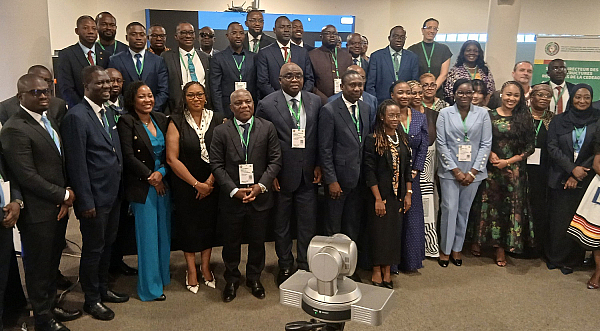
The 5th ECOWAS PPP Forum is precisely part of ongoing regional efforts to develop bankable infrastructure in West Africa through stronger PPPs and enhanced mobilization of domestic capital, thereby contributing to deeper regional integration.
It aims to advance ongoing discussions, build on the achievements of previous editions, deepen political dialogue, and propose concrete solutions to accelerate the preparation and implementation of integrated, resilient, and high-impact regional PPP projects.
The forum will also draw on experiences from flagship regional projects such as the Abidjan-Lagos corridor, the CLSG TRANSCO interconnection project, and the “transport” component of the Simandou project in Guinea.
Over two (2) days, participants will review the various agenda items of this meeting, including spontaneous PPP proposals, lessons and opportunities from regional PPP projects, and PPPs for climate-resilient and sustainable infrastructure.
They will also focus on mobilizing institutional investors, promoting financing in local currency, and funding regional infrastructure, with particular emphasis on improving project bankability.
Distributed by APO Group on behalf of Economic Community of West African States (ECOWAS).