


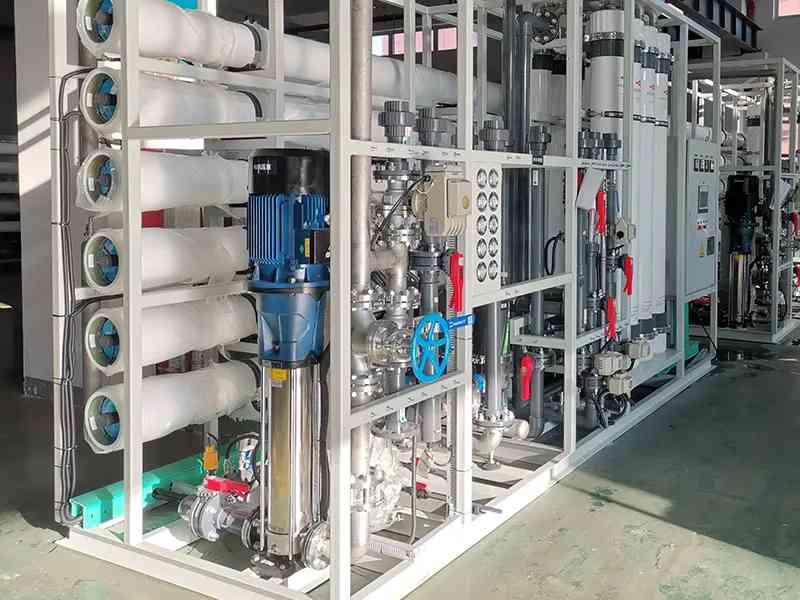
SHANGHAI, CHINA, September 18, 2026 /EINPresswire.com/ -- For commercial fishing trawlers, harbor tugs, and offshore workboats, freshwater storage capacity directly dictates voyage endurance and operational profitability. Installing an industrial-grade marine watermaker eliminates the requirement to return to port solely for water bunkering, keeping crews productive on station. Drawing from practical marine manufacturing experience, Shanghai Tongjie engineers compact, vibration-resistant watermakers that withstand the aggressive heat, salt mist, and electrical fluctuations typical of working engine rooms.
For vessel owners, fleet managers, and marine engineers, freshwater supply directly impacts operating budgets. Returning to port solely to bunker potable water consumes valuable fuel, incurs berthing fees, and interrupts productive fishing or towing operations. Installing a rugged, compact reverse osmosis system transforms open-sea water into fresh drinking, cooking, and wash water continuously, keeping working vessels on station longer.
Fishing Boats and Work Vessels Need Watermakers Matched to Onboard Duty
Unlike leisure yachts that operate seasonally under mild sea conditions and dock nightly at full-service marinas, commercial fishing boats and industrial workboats operate under demanding operational profiles. Trawlers, longliners, and offshore utility vessels stay at sea for weeks or months at a time, enduring heavy rolling, high ambient temperatures, and continuous mechanical vibration.
In these working environments, equipment delicate enough for luxury recreational craft quickly fails. Commercial vessels demand robust, industrial-grade construction: heavy-gauge structural stainless steel skids, industrial-duty high-pressure pumps with solid ceramic plungers, and electrical control systems that tolerate electrical frequency fluctuations from hard-working auxiliary generators.
Furthermore, water usage patterns on commercial vessels are intensive. Beyond standard galley drinking and crew sanitation requirements (typically 50 to 100 liters per crew member daily), commercial fishing vessels require freshwater for ice-making machines to preserve catch quality, washing processing decks, and flushing engine cooling jackets during maintenance. Equipment sizing must reflect these combined operational duties rather than bare minimum life-support quotas.
Fit the Watermaker into Limited Vessel Space
Engine rooms on fishing trawlers and workboats are notoriously compact. Space is dominated by large propulsion engines, auxiliary generator sets, hydraulic steering pumps, fuel service tanks, and fish-hold refrigeration compressors. Finding an unobstructed square meter of deck space is often an engineering impossibility.
To resolve these spatial limitations, marine watermakers engineered for working vessels utilize flexible architectural configurations:
Monoblock Compact Frames: Designed with vertical or low-profile horizontal footprints that fit beneath existing workbenches or mount directly against hull frames, occupying minimal floor area.
Modular Split-Skid Configurations: For vessels with tight companionways or segmented machinery flats, the system separates into discrete functional modules: pre-filter housings, high-pressure pump skid, membrane vessel rack, and electrical control panel. These components can be mounted across separate bulkheads or overhead supports and connected via flexible high-pressure hoses.
Ergonomic Maintenance Clearance: Crucially, compact sizing must not sacrifice serviceability. Filter housings are positioned with forward-facing swing-bolt access, allowing crew members to replace consumable pre-filter cartridges in heavy seas without disassembling surrounding pipework. Membrane vessels are oriented so that 40-inch reverse osmosis elements can be loaded and extracted along clear access aisles during scheduled overhauls.
Match Onboard Power, Seawater Exposure, and Utility Connections
Working vessels operate on diverse and often unstable electrical power supplies. An offshore fishing watermaker must be compatible with standard marine power configurations, including three-phase 380V/50Hz, 440V/60Hz, or single-phase 220V supplies derived from shipboard auxiliary diesel generators.
Electrical control boxes must feature high-quality industrial components equipped with motor soft-starters or variable frequency drives (VFDs) to mitigate high inrush starting currents, preventing generator voltage dips that can trip sensitive navigation electronics. Control cabinets should be sealed to IP65 standards to prevent humid, oily engine-room air and salt-mist from degrading electrical switchgear.
Hydraulic connections must be engineered to handle challenging marine suction conditions:
Sea Chest & Suction Plumbing: Drawing from the vessel’s low sea chest or a dedicated through-hull raw water scoop. Systems include a heavy-duty bronze or 316L stainless steel basket strainer to block seaweed, jellyfish, and large marine debris before reaching booster pumps.
Dual-Stage Pre-Filtration: Nearshore operations and fishing grounds often carry elevated suspended silt and biological matter. Heavy-duty 20-micron and 5-micron spun-polypropylene cartridge filters trap fine particulate matter, protecting reverse osmosis membranes from premature fouling.
High-Pressure Metallurgy: High-pressure seawater piping manifolds operating at 55 to 65 bar utilize corrosion-resistant duplex 2205 or super duplex 2507 stainless steel, providing high resistance to chloride stress corrosion cracking and pitting in aerated seawater.
Build Routine Operation and Maintenance into the Vessel Installation
Commercial vessel crews are professional mariners, not industrial water-treatment technicians. Operational procedures must be intuitive, rugged, and straightforward enough to execute while managing fishing gear or navigation watches in adverse weather.
Shanghai Tongjie builds commercial marine watermakers with simplified, crew-centric control architecture:
One-Touch Automation: High-contrast control panels feature clear push-button or touch-screen interfaces. An automated startup sequence flushes the pre-treatment loop, ramps high pressure smoothly to prevent hydraulic shock, and continuously monitors product water salinity.
Automatic Permeate Diverter Valve: An inline conductivity sensor monitors product water total dissolved solids (TDS). Until permeate purity reaches drinking water standards (TDS < 500 mg/L), off-spec water is automatically diverted overboard via a motorized three-way valve, preventing accidental contamination of the vessel’s freshwater storage tanks.
Automatic Freshwater Flush: Upon shutdown, the watermaker draws treated freshwater from shipboard tanks to flush concentrated brine out of the membrane pressure vessels. This prevents salt crystallization, biological slime growth, and membrane scaling during days when the vessel is tied up in port.
Globally Standardized Consumables: Consumable filter cartridges utilize industry-standard 10-inch or 20-inch lengths with 2.5-inch or 4.5-inch diameters, ensuring vessel operators can procure replacements in commercial fishing ports worldwide without relying on proprietary supplier parts.
Fishing-Boat and Work-Vessel Watermaker FAQ
Selecting an onboard watermaker requires harmonizing freshwater volume requirements, available electrical capacity, and machinery space dimensions.
What Capacity Is Typical for Commercial Fishing Boats and Workboats?
Capacities typically range from 1,000 to 5,000 liters per day (1 to 5 t/d) for smaller inshore trawlers and workboats, and from 5,000 to 20,000 liters per day (5 to 20 t/d) for distant-water tuna vessels, factory trawlers, and offshore supply boats.
Can Workboat Watermakers Operate in Silty Harbour or Nearshore Water?
While modern multi-stage pre-filters handle moderate coastal turbidity, operating inside dirty commercial harbours with floating oil, diesel fuel slicks, or heavy industrial dredging is discouraged, as petrochemicals permanently blind reverse osmosis membranes.
How Are Watermakers Protected from Heavy Engine-Room Vibration?
Equipment skids are mounted on industrial elastomeric vibration dampeners that isolate hull and engine vibration. Flexible high-pressure hydraulic hoses absorb hull flexing without transmitting stress to membrane pressure vessel connections.
What Power Supplies Are Compatible with Small Vessel Watermakers?
Systems can be configured for single-phase 220V/50Hz or 230V/60Hz, as well as three-phase 380V/50Hz or 440V/60Hz, matched directly to the output of the vessel’s auxiliary generator set.
How Easily Can Crew Members Replace Consumable Filter Cartridges?
Pre-filter housings feature front-facing swing-bolt or threaded ring closures and built-in pressure release valves, allowing crew members to replace filter cartridges in less than five minutes using standard hand tools.
Configure the Watermaker from the Vessel Profile
Selecting the ideal marine watermaker begins with an accurate assessment of crew size, voyage duration, available generator capacity, and machinery space dimensions. Tailoring the installation to your vessel’s working profile ensures reliable freshwater production voyage after voyage.
Submit your vessel type, crew complement, daily water requirements, and electrical specifications to the Shanghai Tongjie commercial marine department to receive a technical sizing recommendation, machinery dimensional drawing, and equipment quote.
For vessel owners, fleet managers, and marine engineers, freshwater supply directly impacts operating budgets. Returning to port solely to bunker potable water consumes valuable fuel, incurs berthing fees, and interrupts productive fishing or towing operations. Installing a rugged, compact reverse osmosis system transforms open-sea water into fresh drinking, cooking, and wash water continuously, keeping working vessels on station longer.
Fishing Boats and Work Vessels Need Watermakers Matched to Onboard Duty
Unlike leisure yachts that operate seasonally under mild sea conditions and dock nightly at full-service marinas, commercial fishing boats and industrial workboats operate under demanding operational profiles. Trawlers, longliners, and offshore utility vessels stay at sea for weeks or months at a time, enduring heavy rolling, high ambient temperatures, and continuous mechanical vibration.
In these working environments, equipment delicate enough for luxury recreational craft quickly fails. Commercial vessels demand robust, industrial-grade construction: heavy-gauge structural stainless steel skids, industrial-duty high-pressure pumps with solid ceramic plungers, and electrical control systems that tolerate electrical frequency fluctuations from hard-working auxiliary generators.
Furthermore, water usage patterns on commercial vessels are intensive. Beyond standard galley drinking and crew sanitation requirements (typically 50 to 100 liters per crew member daily), commercial fishing vessels require freshwater for ice-making machines to preserve catch quality, washing processing decks, and flushing engine cooling jackets during maintenance. Equipment sizing must reflect these combined operational duties rather than bare minimum life-support quotas.
Fit the Watermaker into Limited Vessel Space
Engine rooms on fishing trawlers and workboats are notoriously compact. Space is dominated by large propulsion engines, auxiliary generator sets, hydraulic steering pumps, fuel service tanks, and fish-hold refrigeration compressors. Finding an unobstructed square meter of deck space is often an engineering impossibility.
To resolve these spatial limitations, marine watermakers engineered for working vessels utilize flexible architectural configurations:
Monoblock Compact Frames: Designed with vertical or low-profile horizontal footprints that fit beneath existing workbenches or mount directly against hull frames, occupying minimal floor area.
Modular Split-Skid Configurations: For vessels with tight companionways or segmented machinery flats, the system separates into discrete functional modules: pre-filter housings, high-pressure pump skid, membrane vessel rack, and electrical control panel. These components can be mounted across separate bulkheads or overhead supports and connected via flexible high-pressure hoses.
Ergonomic Maintenance Clearance: Crucially, compact sizing must not sacrifice serviceability. Filter housings are positioned with forward-facing swing-bolt access, allowing crew members to replace consumable pre-filter cartridges in heavy seas without disassembling surrounding pipework. Membrane vessels are oriented so that 40-inch reverse osmosis elements can be loaded and extracted along clear access aisles during scheduled overhauls.
Match Onboard Power, Seawater Exposure, and Utility Connections
Working vessels operate on diverse and often unstable electrical power supplies. An offshore fishing watermaker must be compatible with standard marine power configurations, including three-phase 380V/50Hz, 440V/60Hz, or single-phase 220V supplies derived from shipboard auxiliary diesel generators.
Electrical control boxes must feature high-quality industrial components equipped with motor soft-starters or variable frequency drives (VFDs) to mitigate high inrush starting currents, preventing generator voltage dips that can trip sensitive navigation electronics. Control cabinets should be sealed to IP65 standards to prevent humid, oily engine-room air and salt-mist from degrading electrical switchgear.
Hydraulic connections must be engineered to handle challenging marine suction conditions:
Sea Chest & Suction Plumbing: Drawing from the vessel’s low sea chest or a dedicated through-hull raw water scoop. Systems include a heavy-duty bronze or 316L stainless steel basket strainer to block seaweed, jellyfish, and large marine debris before reaching booster pumps.
Dual-Stage Pre-Filtration: Nearshore operations and fishing grounds often carry elevated suspended silt and biological matter. Heavy-duty 20-micron and 5-micron spun-polypropylene cartridge filters trap fine particulate matter, protecting reverse osmosis membranes from premature fouling.
High-Pressure Metallurgy: High-pressure seawater piping manifolds operating at 55 to 65 bar utilize corrosion-resistant duplex 2205 or super duplex 2507 stainless steel, providing high resistance to chloride stress corrosion cracking and pitting in aerated seawater.
Build Routine Operation and Maintenance into the Vessel Installation
Commercial vessel crews are professional mariners, not industrial water-treatment technicians. Operational procedures must be intuitive, rugged, and straightforward enough to execute while managing fishing gear or navigation watches in adverse weather.
Shanghai Tongjie builds commercial marine watermakers with simplified, crew-centric control architecture:
One-Touch Automation: High-contrast control panels feature clear push-button or touch-screen interfaces. An automated startup sequence flushes the pre-treatment loop, ramps high pressure smoothly to prevent hydraulic shock, and continuously monitors product water salinity.
Automatic Permeate Diverter Valve: An inline conductivity sensor monitors product water total dissolved solids (TDS). Until permeate purity reaches drinking water standards (TDS < 500 mg/L), off-spec water is automatically diverted overboard via a motorized three-way valve, preventing accidental contamination of the vessel’s freshwater storage tanks.
Automatic Freshwater Flush: Upon shutdown, the watermaker draws treated freshwater from shipboard tanks to flush concentrated brine out of the membrane pressure vessels. This prevents salt crystallization, biological slime growth, and membrane scaling during days when the vessel is tied up in port.
Globally Standardized Consumables: Consumable filter cartridges utilize industry-standard 10-inch or 20-inch lengths with 2.5-inch or 4.5-inch diameters, ensuring vessel operators can procure replacements in commercial fishing ports worldwide without relying on proprietary supplier parts.
Fishing-Boat and Work-Vessel Watermaker FAQ
Selecting an onboard watermaker requires harmonizing freshwater volume requirements, available electrical capacity, and machinery space dimensions.
What Capacity Is Typical for Commercial Fishing Boats and Workboats?
Capacities typically range from 1,000 to 5,000 liters per day (1 to 5 t/d) for smaller inshore trawlers and workboats, and from 5,000 to 20,000 liters per day (5 to 20 t/d) for distant-water tuna vessels, factory trawlers, and offshore supply boats.
Can Workboat Watermakers Operate in Silty Harbour or Nearshore Water?
While modern multi-stage pre-filters handle moderate coastal turbidity, operating inside dirty commercial harbours with floating oil, diesel fuel slicks, or heavy industrial dredging is discouraged, as petrochemicals permanently blind reverse osmosis membranes.
How Are Watermakers Protected from Heavy Engine-Room Vibration?
Equipment skids are mounted on industrial elastomeric vibration dampeners that isolate hull and engine vibration. Flexible high-pressure hydraulic hoses absorb hull flexing without transmitting stress to membrane pressure vessel connections.
What Power Supplies Are Compatible with Small Vessel Watermakers?
Systems can be configured for single-phase 220V/50Hz or 230V/60Hz, as well as three-phase 380V/50Hz or 440V/60Hz, matched directly to the output of the vessel’s auxiliary generator set.
How Easily Can Crew Members Replace Consumable Filter Cartridges?
Pre-filter housings feature front-facing swing-bolt or threaded ring closures and built-in pressure release valves, allowing crew members to replace filter cartridges in less than five minutes using standard hand tools.
Configure the Watermaker from the Vessel Profile
Selecting the ideal marine watermaker begins with an accurate assessment of crew size, voyage duration, available generator capacity, and machinery space dimensions. Tailoring the installation to your vessel’s working profile ensures reliable freshwater production voyage after voyage.
Submit your vessel type, crew complement, daily water requirements, and electrical specifications to the Shanghai Tongjie commercial marine department to receive a technical sizing recommendation, machinery dimensional drawing, and equipment quote.
Shanghai Tongjie Environmental Protection Technology Co., Lt
Shanghai Tongjie
email us here
Visit us on social media:
LinkedIn
Facebook
TikTok
X
Legal Disclaimer:
EIN Presswire provides this news content "as is" without warranty of any kind. We do not accept any responsibility or liability for the accuracy, content, images, videos, licenses, completeness, legality, or reliability of the information contained in this article. If you have any complaints or copyright issues related to this article, kindly contact the author above.


