



FMUSER-DRM: The ultimate end-to-end encrypted IPTV solution designed to secure video streaming for global ISPs and hotels.
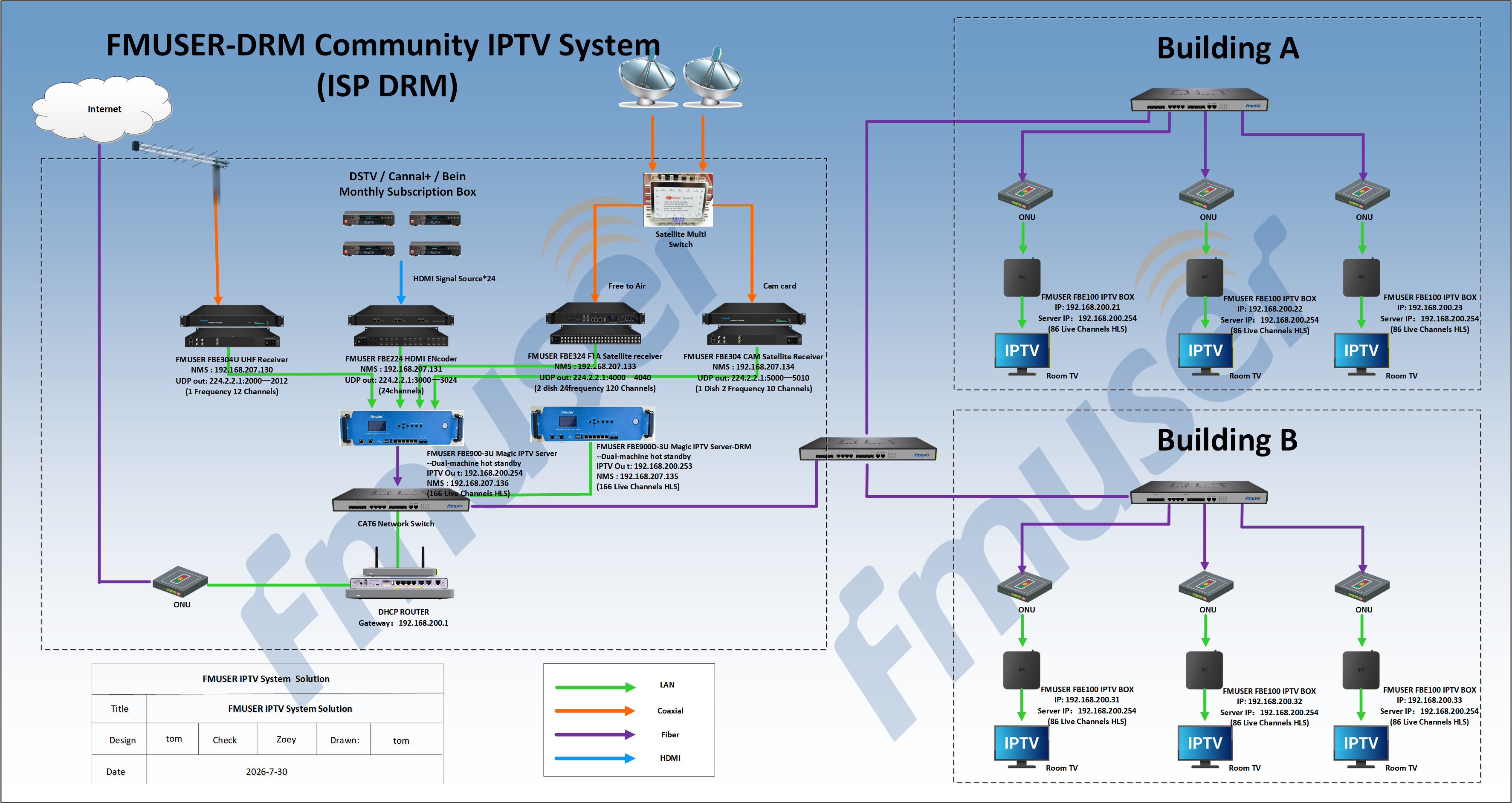
Technical architecture diagram of the FMUSER-DRM Community IPTV System, illustrating the end-to-end encrypted network flow from the server to terminal devices.
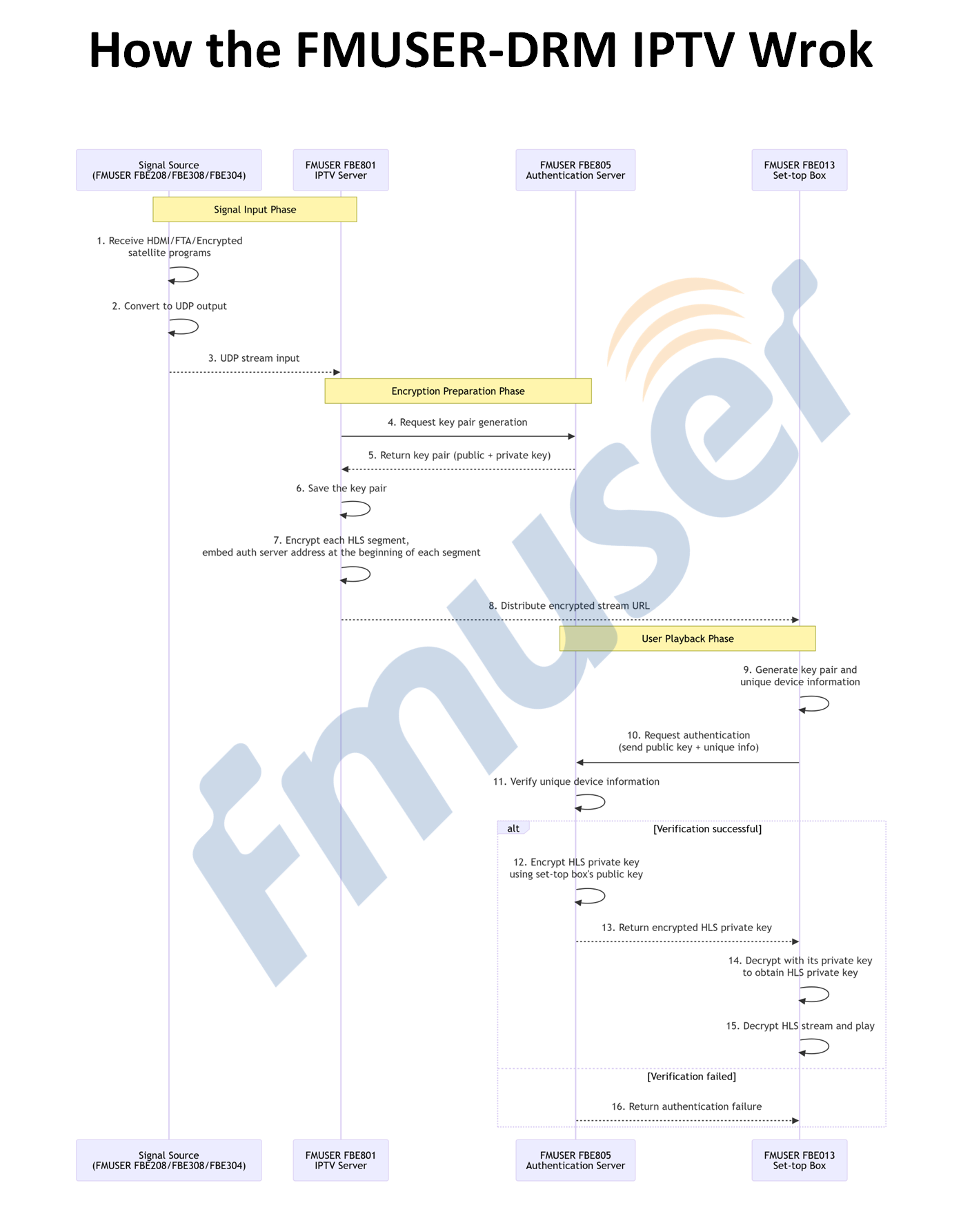
A step-by-step sequence diagram illustrating the FMUSER-DRM encryption and decryption process, from signal input to secure user playback.
The end-to-end encrypted system features the FMUSER Server and FBE013 SET-BOX, designed to secure global ISP and hotel IPTV services.
GUANGZHOU, CHINA, August 4, 2026 /EINPresswire.com/ -- Copyright protection rules for digital content are tightening. Digital Rights Management (DRM) technology is a requirement for modern IPTV systems. Global Internet Service Providers (ISPs) and hotel integrators face technical barriers when acquiring authorized content. FMUSER released a new FMUSER-DRM protected IPTV system integrating end-to-end encryption.FMUSER is the first company in China to implement such a full-path FMUSER-DRM protection mechanism. The core hardware includes the FMUSER-DRM IPTV Server (FBE800/FBE700/FBE803/FBE900) and the FMUSER FBE013 SET-BOX terminal. This release provides regional operators worldwide with an enterprise-grade encryption system while keeping costs manageable.
1. Industry Background: Security Flaws in Traditional IPTV Systems
Top content distributors enforce strict anti-piracy requirements. However, traditional enterprise-level encryption solutions usually involve high software licensing fees and complex setups, heavily reducing profit margins for regional ISPs and mid-sized hotel groups. Consequently, many operators use traditional IPTV systems lacking underlying data protection.
Technical reviews show these systems usually only encrypt data during the initial user login stage. Once the frontend device passes identity verification, the core server transmits the video data stream through the network as unencrypted plaintext.
This creates a major security risk. Illegal interceptors do not need advanced hacking skills; they can use basic packet-sniffing software at data centers or local switches to intercept and sell these video streams. For ISPs, this wastes expensive bandwidth and causes massive losses in subscription revenue. Furthermore, systems without data stream protection fail the compliance audits required by international content providers, preventing ISPs from legally purchasing premium TV channels or live sports rights.
2. Technical Principles: Widevine-Based FMUSER-DRM Full-Path Encryption
To address these issues, the FMUSER technical team adopted a full-path FMUSER-DRM data stream protection mechanism based on Widevine technology. The goal is to use standard cryptographic processes to keep video data highly encrypted from the core server room to the user's screen.
The encryption works in three stages:
Server-Side Real-Time Deep Encryption: When video streams enter the core network, the FMUSER Server (FBE800/FBE700/FBE803/FBE900) steps in. It uses a secure channel to send a verification request to the official Widevine Key Server. Once confirmed, the Key Server returns a specific encryption key. The device applies the Advanced Encryption Standard (AES-128 algorithm) to encrypt all video segments in real time. The original data becomes complex encrypted text that regular players cannot read.
Closed Transmission of Encrypted Data: The video streams then travel through the physical network. Whether passing through the public internet, an ISP's fiber network, or a hotel's local network, packets stay encrypted. If hackers intercept data at key network points, they only get meaningless code. Without the correct decryption key, pirates cannot redistribute the streams, stopping video theft at the network level.
Terminal Device Authorization and Decryption: When the encrypted video stream reaches the FMUSER FBE013 SET-BOX, standard software cannot play it. The FMUSER-DRM control module takes over. The set-top box uses a Trusted Execution Environment (TEE) to independently send a second verification request to the Widevine License Server. The server verifies hardware authorization and user TV packages. Once approved, the server sends a digital license containing a unique decryption key. Inside its isolated secure hardware, the device decrypts the incoming stream in real time to output a clear picture.
3. Business Application: How FMUSER-DRM Helps ISPs and Hotels Grow
This system improves streaming businesses in three key ways:
Passing Strict Audits to Legally Add Premium Video Content: Major movie studios and sports networks require operators to use officially certified encryption before granting commercial broadcast rights. The FMUSER system gives ISPs and hotels the technical setup needed to pass these audits. Operators can legally broadcast the latest cinema releases and global sports events, making broadband packages more competitive and increasing Video on Demand (VOD) revenue for high-end hotels.
Cutting Off the Piracy Chain to Protect Profits: Operators frequently face the challenge of IPTV signals being stolen. The Widevine-based FMUSER-DRM full-path encryption makes illegal network data scraping useless. Even if hackers copy the video stream on the backbone network, they cannot play the content without a legal set-top box and correct authorization license. This protects stolen network bandwidth, high-value video content, and legitimate subscription payments.
High Android Compatibility to Lower Deployment Costs: Developed by Google, Widevine has extremely high compatibility with Android hardware. The FBE013 SET-BOX is built on a high-performance Android architecture, seamlessly integrating with the server. International clients avoid paying for complex custom system development or large maintenance teams. Clients obtain international security standards at a reasonable price, significantly lowering setup and operational costs.
4. System Performance and Future Cross-Platform Plans
Internal tests show the FMUSER system efficiently manages the hardware load caused by encryption and decryption. This is achieved by optimizing how terminal devices request licenses simultaneously and improving data processing algorithms in the server's video buffer. While security runs steadily around the clock, the system maintains fast network response times. When end-users switch channels, they experience very low latency. There is zero buffering or audio-video delay when playing Full HD (1080P) or 4K video, perfectly balancing enterprise-grade data security with a smooth viewing experience.
Regarding future product updates, the FMUSER R&D team plans to cover more devices. In upcoming software updates, the team will add underlying support for Apple FairPlay technology. The FMUSER IPTV system will then provide security coverage for iOS mobile devices and Apple TV units, meeting the needs for cross-platform digital rights distribution in high-end business hotels and complex network setups.
In summary, the IPTV system with full-path FMUSER-DRM protection offers a commercially viable solution for global network operators. It stops piracy risks through tight end-to-end cryptography and ensures efficient operation via hardware and software optimization. It serves as an ideal technical platform and a highly secure hotel IPTV DRM solution for mid-sized operators and network providers worldwide to build modern, legal audiovisual distribution networks.
Tom Lee
FMUSER
86 139 2270 2227
sales@fmuser.com
Visit us on social media:
LinkedIn
Facebook
YouTube
Legal Disclaimer:
EIN Presswire provides this news content "as is" without warranty of any kind. We do not accept any responsibility or liability for the accuracy, content, images, videos, licenses, completeness, legality, or reliability of the information contained in this article. If you have any complaints or copyright issues related to this article, kindly contact the author above.
