


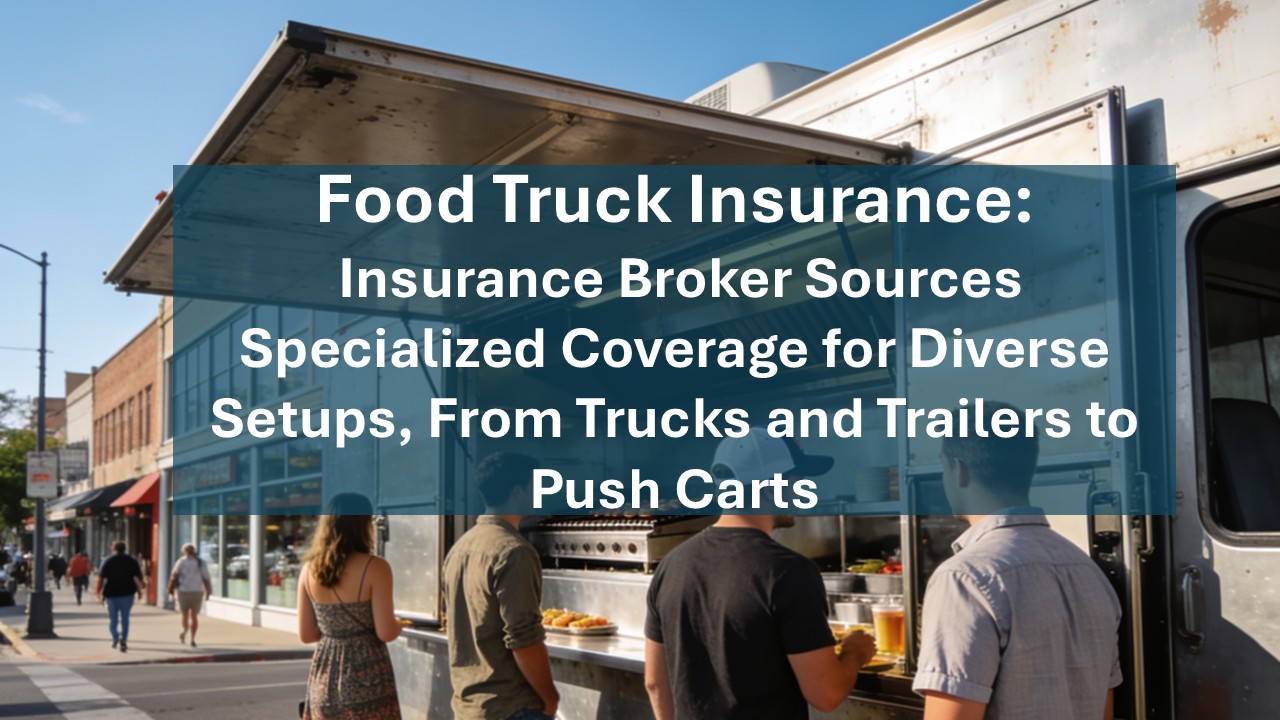
A food truck business faces a distinct set of risks that standard personal auto insurance or a basic small business policy does not cover. A commercial auto insurance policy covers the vehicle itself and protects against property damage and bodily injury caused by a road accident. Commercial auto insurance is legally required in every state, and food truck operators who assume a personal auto policy will cover their mobile operation may find themselves paying out of pocket after a claim. Beyond the vehicle, the cooking equipment, refrigeration units, and permanently attached kitchen fixtures inside the truck represent a significant financial investment that requires its own property coverage.
General liability insurance forms another essential layer of protection for food truck operations. A general liability policy covers bodily injury and property damage a customer or third party suffers as a result of the food truck business's operations. If a customer suffers a slip-and-fall injury at a food truck event, or if a product liability claim arises from food poisoning, general liability insurance can cover the associated medical expenses, legal fees, and damages, protecting the owner from a costly lawsuit.
Most event organizers, festivals, and municipalities require a certificate of insurance showing at least $1 million in general liability before they will let a truck set up. Operators who cannot produce a COI on demand risk losing the permit and losing the event.
Insurance Navy helps food truck owners identify whether a business owner's policy, commonly called a BOP, suits their operation. A BOP combines general liability coverage with commercial property coverage in a single policy, which simplifies administration and can reduce the overall insurance cost compared to purchasing each coverage separately. A BOP protects the business from a range of risks, including theft, vandalism, equipment breakdown, and advertising injury. Food spoilage coverage, an add-on available through certain providers, addresses the financial loss of spoiled food caused by a mechanical failure or power outage, a risk that is especially material for food truck businesses carrying perishable inventory.
-Workers' compensation insurance is a legal requirement in most states for food truck businesses that employ workers.
-Workers' comp covers medical bills, lost wages, and rehabilitation for employees injured on the job.
-For food truck operations where employees work in close quarters around open flames, hot surfaces, and sharp kitchen tools, the risk of on-the-job injuries is real.
-Workers' compensation insurance for food truck businesses costs between $40 and $53 per month, depending on the state.
-Operators in states with strict laws should confirm their requirements before they start a new hire's first shift.
Food truck owners who serve alcohol or operate catering events where alcohol is present may also need liquor liability coverage. Liquor liability insurance protects the business from claims of bodily injury or property damage caused by an intoxicated customer. Similarly, operators who handle sensitive customer data, including online orders and digital payment information, may benefit from cyber liability coverage, as a data breach can expose a small business to significant legal and financial risk.
Estefania Gonzalez
Insurance Navy
+1 888-949-6289
email us here
Visit us on social media:
Facebook
Legal Disclaimer:
EIN Presswire provides this news content "as is" without warranty of any kind. We do not accept any responsibility or liability for the accuracy, content, images, videos, licenses, completeness, legality, or reliability of the information contained in this article. If you have any complaints or copyright issues related to this article, kindly contact the author above.
