


Prof.Natt Pimpa
Rainbow Washing?
Plenty of language about "respecting diversity" can be found among Thai companies, but far less evidence of what actually happens with LGBTQ+ stakeholders.
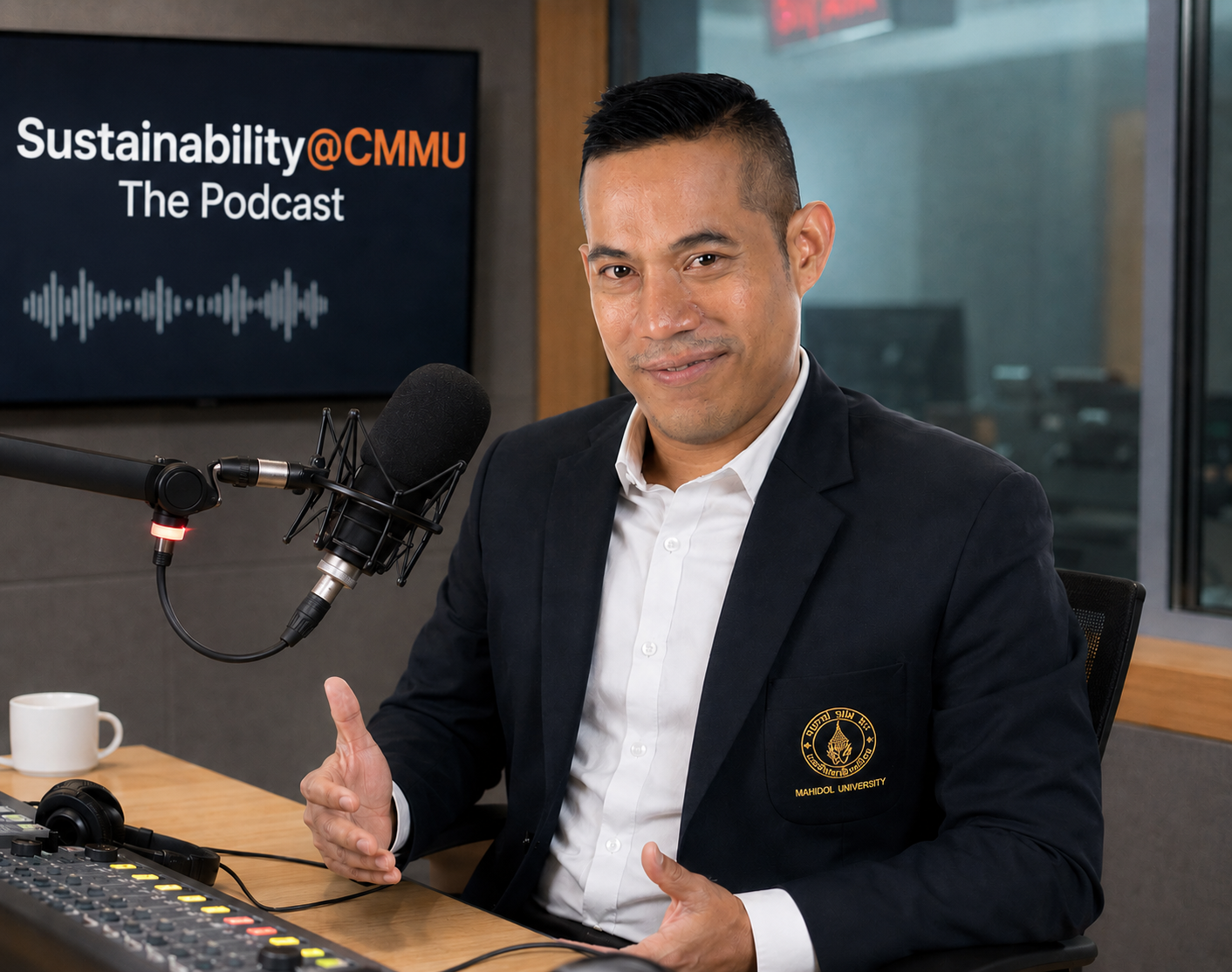
BANGKOK, BANGKOK, THAILAND, August 9, 2026 /EINPresswire.com/ -- Thailand is widely regarded as one of Asia’s most LGBTQ+-friendly nations. Yet new research from Associate Professor Nattavud Pimpa of Mahidol University’s College of Management suggests that social acceptance does not always make it through the HR department door. After examining the official reports of ten major Thai listed companies, Dr. Pimpa found a recurring pattern: polished commitments to diversity, but much less evidence of systems that translate those commitments into meaningful workplace support. We spoke with him about rainbow washing, business and human rights, and what Thai companies need to do next.
Interviewer: Your paper paints an interesting picture: companies may wave the rainbow flag, but the structures behind it are sometimes limited. Is that fair?
Dr. Pimpa: It is. I examined the ONE Reports of ten major Thai listed companies across banking, energy, telecommunications, retail, agriculture, construction and other sectors. Most contain well-written statements about respecting diversity. But when you look beyond those statements and ask whether there is a policy, monitoring system, accountability mechanism or someone responsible for implementation, the evidence becomes much thinner.
The issue is not whether companies say the right things. Many do. The question is whether those commitments have been institutionalised.
Interviewer: You use the UN “Protect, Respect and Remedy” framework. How did the companies perform?
Dr. Pimpa: The strongest area was “Protect,” particularly basic non-discrimination commitments. Six of the ten companies performed reasonably well there. But under “Respect,” which involves human rights due diligence and identifying potential impacts, only three explicitly identified LGBTQ+ people as a potentially vulnerable group.
“Remedy” was also weak. Three companies had relevant grievance mechanisms, but none demonstrated LGBTQ+-specific sensitivity through specialised training, monitoring or complaint tracking.
So I wouldn’t say companies are failing completely. Rather, they are relatively strong at making broad commitments but weaker at translating them into operational systems.
Interviewer: Were there positive examples?
Dr. Pimpa: Absolutely. One company genuinely impressed me because it translated inclusion into tangible employee benefits. These included six days of marriage leave, a wedding allowance, bereavement leave and financial support following the death of a partner, with these benefits explicitly extended to same-sex couples who could demonstrate a committed partnership.
That is very different from simply stating, “We value diversity.” Employees can actually use those benefits. The company has also been recognised by UNDP Thailand as one of the country’s “Champions of Equality.” It demonstrates that meaningful inclusion is achievable in the Thai context.
Interviewer: You discuss “rainbow washing.” What does that mean in practical terms?
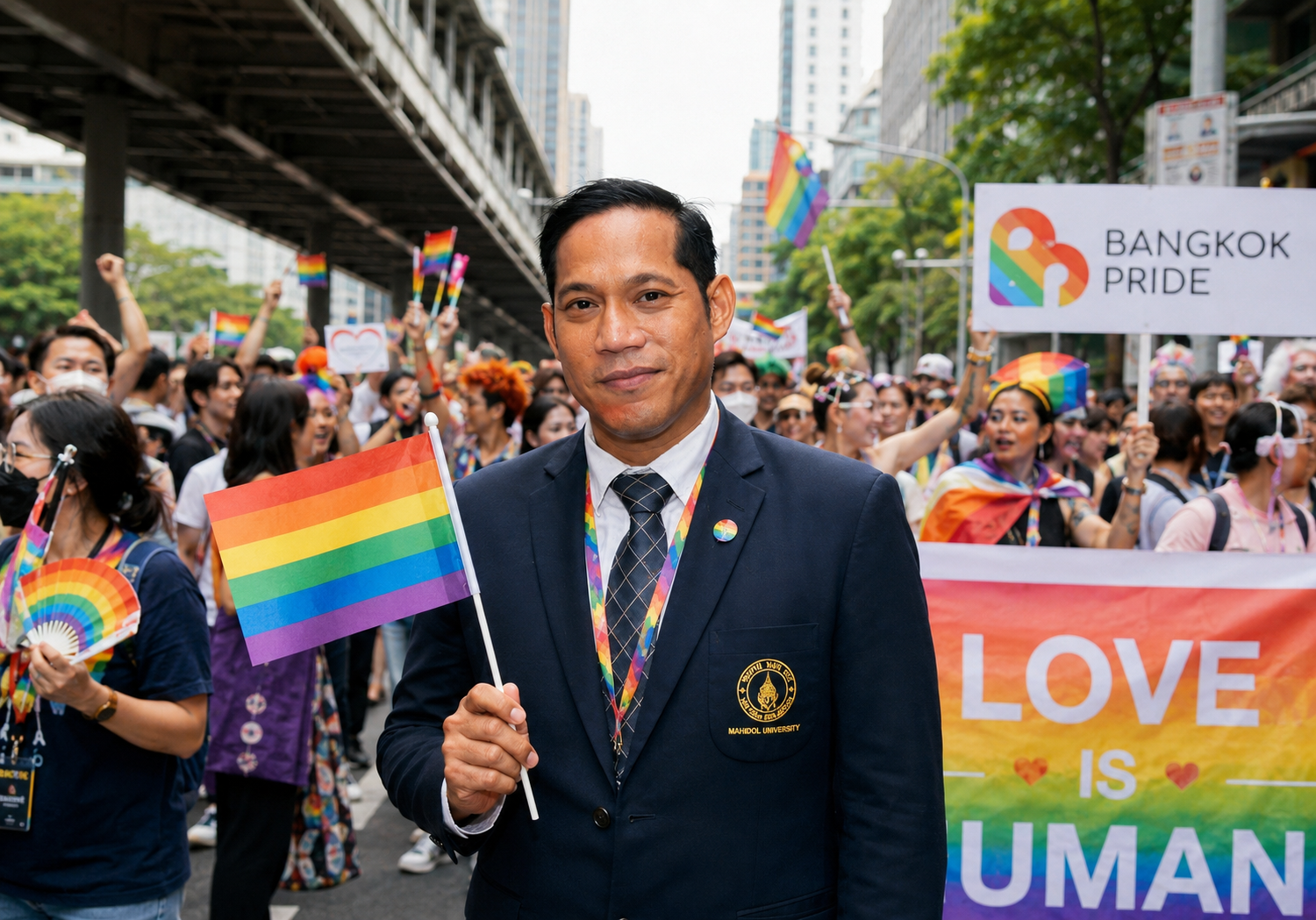
Dr. Pimpa: Rainbow washing occurs when a company becomes highly visible in supporting LGBTQ+ communities during Pride Month—perhaps changing its logo, sponsoring Pride activities or using rainbow imagery—but does little to change its internal structures during the rest of the year.
Pride then becomes a marketing activity rather than a sustained organisational commitment. Employees can recognise that inconsistency. Research suggests that when employees perceive corporate LGBTQ+ support as symbolic rather than substantive, it can contribute to cynicism and disengagement.
So rainbow washing is not simply an ethical problem. It can also become a management and reputational problem.
Interviewer: What should companies actually do?
Dr. Pimpa: I propose five areas of action. First, conduct SOGIESC-sensitive human rights due diligence. Companies should identify actual risk points—for example, restrooms, dress codes, employee documentation and systems affecting transgender and gender-diverse employees.
Second, deliberately build an inclusive culture through training, employee resource groups and mentoring. Third, conduct structured human rights impact assessments rather than relying on broad commitments.
Fourth, strengthen prevention through diversity responsibilities, explicit anti-bullying procedures and workplace climate surveys. Finally, companies should consider their wider public role—supporting anti-discrimination initiatives, scholarships or partnerships with civil society.
Inclusion should move from statements to systems.
Interviewer: Thailand legalised same-sex marriage in 2025. Doesn’t that resolve many of these problems?
Dr. Pimpa: Marriage equality is a genuinely historic achievement, but national legal reform does not automatically rewrite organisational policies or HR systems.
Thailand also has the Gender Equality Act and Labour Protection Act, but implementation and enforcement remain important challenges. Similarly, Thailand’s National Action Plan on Business and Human Rights addresses diversity and equity, but LGBTQ+-specific protections could be more explicit.
Thailand therefore presents an interesting contrast: socially and legally, it can appear highly progressive, while workplace practices remain uneven across organisations and sectors.
If a company claims to conduct human rights due diligence, then LGBTQ+ rights should simply be part of that process.
Interviewer: How does this research connect with teaching at CMMU?
Dr. Pimpa: This is particularly important to me. At CMMU, gender diversity and human rights should not be treated simply as an occasional guest lecture or isolated ethics topic. They can be integrated into governance, sustainability, HR and leadership education. Students need both the ethical argument and the operational skills. It is not enough for future managers to know the language of inclusion. They should understand how to write an inclusive policy, design a SOGIESC-sensitive grievance mechanism, monitor implementation and justify investment to senior management.
Interviewer: Last one — if a Thai HR director is reading this interview right now feeling a little called out, what's their homework?
Dr. Pimpa: (laughs) Fair —Here's the homework: go pull your own company's Report tonight. Search it for the words "LGBTQ" or "sexual orientation." If you find one sentence in a paragraph about "diversity," ask yourself honestly — is there a real person, a real budget, a real system behind that sentence, or is it decorative? If the honest answer is decorative — that's not
His full paper can be accessed at: https://www.hos.pub/articles/hsustain5010007
Chantrapa Kuhaprema
CMMU
email us here
Legal Disclaimer:
EIN Presswire provides this news content "as is" without warranty of any kind. We do not accept any responsibility or liability for the accuracy, content, images, videos, licenses, completeness, legality, or reliability of the information contained in this article. If you have any complaints or copyright issues related to this article, kindly contact the author above.
