


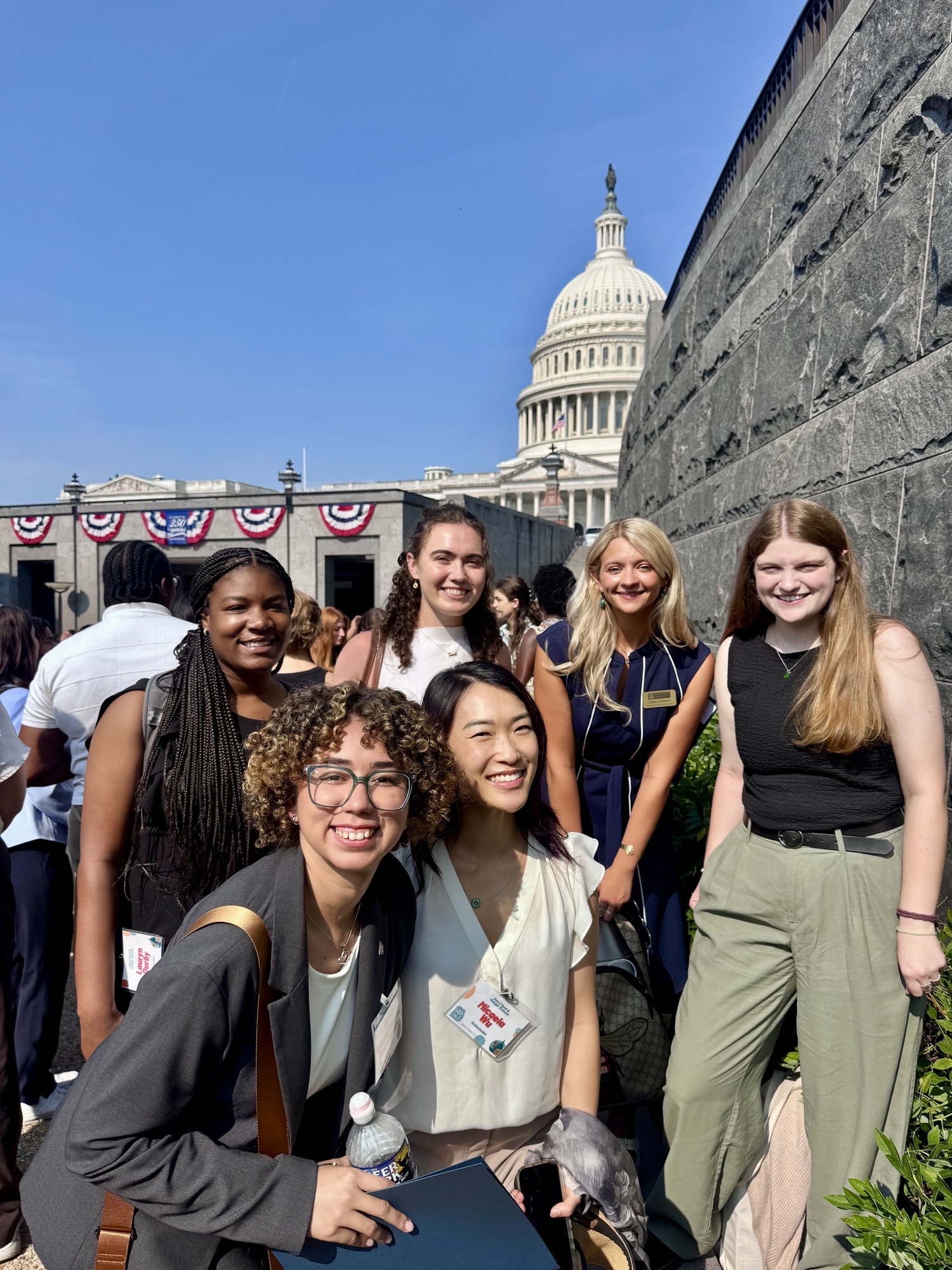
These Gen Z Summit participants were part of the 165 leaders who advocated for anti-hunger legislation on Capitol Hill. Gen Z is more likely to experience food insecurity than any other generation in the U.S.
Young people from across the country speak out about food insecurity and propose solutions to end hunger.
At the Summit, participants met with members of Congress to discuss food insecurity in their communities and advocate for policy solutions that improve food security, access, and affordability in the U.S. and the world. Legislative priorities included Closing the College Hunger Gap Act, the Food Date Labelling Act, the Modern WIC Act, and global food security. Participants spoke with representatives and senators from both parties.
Congressman James P. McGovern (D-Mass.) delivered remarks. “We need your voices; we need your experiences; we need your stories,” he told participants. “Hunger is a political condition—we have the food, we have the money, and we know what to do—but we lack the political will. You are our best advocates to make it happen, and it is so important that you are here.”
The members of Gen Z, generally held to have been born between 1997 and 2012, are facing tough economic headwinds and high rates of food insecurity as they enter adulthood. A recent study from Purdue University indicates that Gen Z households are twice as likely to experience food insecurity compared to Millennials, Generation X, and Baby Boomers.
“We’re delighted to welcome these young leaders to Washington to share their experiences and tell their stories,” said Shannon Maynard, Executive Director of the Congressional Hunger Center. “Gen Z cannot afford to be absent from the halls of Congress where crucial decisions are being made about their lives and future. It’s our hope that members of Congress, in hearing from some of their younger constituents, will consider how current food security policies are affecting the next generation.”
“By bringing a powerful group of Gen Z individuals to Capitol Hill, we’re not only advocating for critical pieces of food policy—including bills that would increase SNAP access for students and reduce senseless food waste by standardizing date labels—but also equipping the soon-to-be most populous generation with the tools needed to drive tangible progress in the food system,” said Niyeti Shah, Founder & Executive Director of Food Systems Collaborative. “This summit demonstrates to Congress that when it comes to shaping a healthier and more equitable future, Gen Z is not afraid to lead the way.”
Prior to meeting with lawmakers, participants heard from nonprofit leaders and fellow Gen Z advocates on how individual leadership and collective action drive change in the anti-hunger movement.
"Gen Z has been impacted by hunger more than any other living generation,” said Summit participant and Zero Hunger Intern Ella Waters, who is a native of West Virginia and a current student at George Mason University. “Our experiences create powerful stories for policymakers to remember when making critical decisions.”
The Summit was hosted in partnership with the Bonner Foundation, the Global Food Institute of the George Washington University, Oxfam America, and Universities Fighting World Hunger.
The Summit was made possible by the generous support of the Sodexo Stop Hunger Foundation and Tyson Foods.
Founded in 1993 by a bipartisan group of Members of Congress, the Congressional Hunger Center develops, inspires, and connects leaders in the movement to end hunger, and advocates for public policies that will create a food secure world.
Food Systems Collaborative is a consultancy offering services at the intersection of social impact and food systems. Sitting between the public and private sectors, FSC’s focus is on helping corporations scale and implement food donation processes, including building custom standard operating practices for food donation, finding non-profit partners, unlocking tax benefits for food donation, and more.
Laura Tarre
Congressional Hunger Center
ltarre@hungercenter.org
Visit us on social media:
LinkedIn
Instagram
Legal Disclaimer:
EIN Presswire provides this news content "as is" without warranty of any kind. We do not accept any responsibility or liability for the accuracy, content, images, videos, licenses, completeness, legality, or reliability of the information contained in this article. If you have any complaints or copyright issues related to this article, kindly contact the author above.
