


SUZHOU, JIANGSU, CHINA, August 14, 2026 /EINPresswire.com/ -- When evaluating valve automation for demanding industrial environments, buyers often question how the pneumatic power source is optimized for precise control. STARD GEARS integrates the Cylinder not as an off-the-shelf component, but as the dedicated power module within its modular YP series pneumatic actuator architecture. Rather than relying on generic pneumatic cylinders, this approach combines thrust generation with specialized drive and spring modules. It creates a unified assembly designed to provide either double-acting or spring-return functionality and converts 3–7 barg air supply into reliable 90-degree rotary output across varying temperatures.
The Cylinder Functions as the Power Module Inside a Complete Pneumatic Actuator
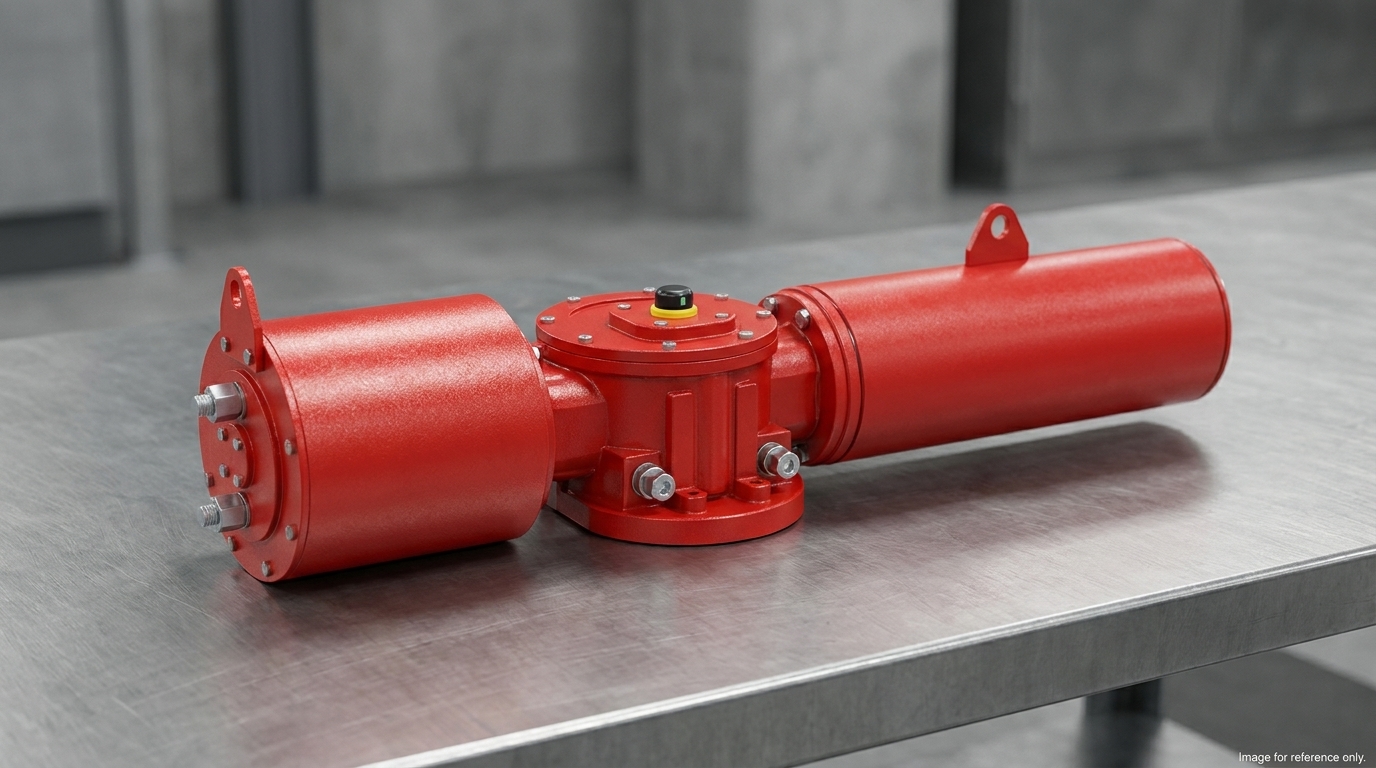
For procurement teams and facility engineers, selecting an actuator requires looking beyond isolated components to understand how the entire system delivers torque. In the YP architecture, the cylinder operates explicitly as the power module within a broader Scotch Yoke assembly. This modular approach deliberately separates power generation, torque transmission, and fail-safe spring functions, allowing for flexible configuration based on specific demands.
Movement begins when compressed air enters the cylinder, generating linear thrust through piston displacement. This force is transferred to the Scotch Yoke drive mechanism, converting it into the exact 90-degree rotational output needed to operate quarter-turn valves safely. By optimizing this conversion, the system perfectly matches the operating characteristics of ball, butterfly, and plug valves in critical pipelines.
Consequently, the cylinder cannot be treated as a standalone part. Its bore size, stroke length, pressure rating, and connection interfaces must be matched to both the drive module and the actual load profile. This integrated design ensures the power generated is fully utilized to drive the valve seat without energy loss.
Double-Acting and Spring-Return Cylinders Use Air Differently
Industrial automation projects present varying requirements for control stability and safety. STARD GEARS provides both double-acting and spring-return configurations, utilizing the cylinder's air volume in different ways. Understanding this distinction is essential for aligning the actuator with safety protocols and the available air supply infrastructure.
A double-acting configuration introduces compressed air into the cylinder from both directions, using pneumatic pressure to drive the piston for opening and closing strokes. This setup is highly effective for valves requiring tightly controlled bidirectional movement and stable cycling. Because it relies entirely on a continuous air supply, it is best suited for applications where sudden loss of air pressure does not pose an immediate process hazard.
Conversely, a spring-return configuration uses compressed air to drive the cylinder in one direction while compressing a heavy-duty spring module. When the air supply is lost, the pre-compressed spring provides a secure mechanical path to return the valve to its fail-safe position. Engineering teams must calculate the balance between spring torque and the valve's seating requirements. The cylinder's response time and service life are influenced heavily by instrument air quality.
Pressure, Temperature and Sealing Define Cylinder Performance
The theoretical thrust of a cylinder is only part of the equation; its actual output is dictated by the operating environment. The effective output delivered to the valve is a combined result of supply air pressure, piston surface area, internal friction, seal integrity, and ambient temperatures. Actuator selection must verify available torque under the most demanding anticipated conditions.
Operating within a standard pressure range of 3–7 barg, the YP series must provide sufficient low-pressure output to overcome the valve's unseating and reseating torque requirements. To accommodate diverse environments, the actuator is available in standard, low-temperature, and high-temperature configurations. Each profile requires specific matching of sealing materials and lubrication, as thermal variations significantly alter seal friction and performance.
To maintain reliable pressure containment and prevent bypass leakage, connections and dynamic surfaces utilize specialized sealing compounds tailored to project temperatures. The combination of cylinder materials, coatings, and seals must be verified in the final model documentation, ensuring the unit maintains its IP67 rating and delivers consistent torque over its lifecycle.
Modular Construction Simplifies Configuration and Maintenance Planning
One of the primary advantages of treating the cylinder as a distinct power module is the flexibility it brings to both initial procurement and long-term asset management. The modular design separates the cylinder from the spring and drive modules, facilitating configuration expansion and allowing maintenance teams to address specific components without disassembling the entire actuator.
Because the power module is independent, it can be paired with various drive housings, yoke designs, and spring modules. This interoperability reduces the need to engineer a new actuator for every project, streamlining lead times and simplifying inventory. During maintenance, the design enhances safety; the spring module is pre-compressed, mitigating risks associated with handling heavy springs.
Despite these advantages, modularity is not a maintenance-free guarantee. A comprehensive maintenance plan must continually address the condition of dynamic seals, the internal bore surface, the piston rod, connecting hardware, and supply air quality to ensure long-term reliability and prevent downtime in critical systems.
Cylinder Details Remain Model-Level Selection Data
While the overarching modular architecture illustrates how the power module integrates into the YP series, granular specifications of the cylinder itself are tied to individual model numbers. Detailed engineering data—such as bore dimensions, material grades, surface coatings, and precise seal compositions—remains model-level selection data rather than generic catalog information intended for substitution.
Because the cylinder is engineered as an integrated component rather than a standalone retail product, standard pneumatic cylinder sizing charts cannot be safely applied. Attempting to use generic dimensions to estimate performance can lead to inaccurate torque calculations and improper valve sizing.
For projects requiring rigorous calculations for air consumption rates, expected torque output at specific pressures, or certification for low-temperature operation, teams must extract the exact cylinder bore, effective piston area, and seal data from the documentation of the specific YP model sourced. This ensures planning is based on the actual geometry and materials installed.
Cylinder Integration Ends at the Complete YP Assembly
Ultimately, the engineering value of the cylinder cannot be realized in isolation. Its capability only translates into actionable valve control when evaluated as part of the complete pneumatic actuator assembly, encompassing the YP drive module, the spring module, the precise valve torque profile, and the site's unique air supply conditions.
Evaluating the cylinder independently often leads to critical oversights regarding the yoke type, required failure direction, and mechanical valve interface. These variables dictate exactly how the thrust from the power module is transformed into the rotational force that actually moves the valve closure member securely. To ensure proper specification and reliable operation, engineering teams must configure the system holistically.
By prioritizing the integrated assembly over isolated components, buyers ensure their automation investments deliver precise, reliable performance aligned with process requirements. For more information on configuring modular pneumatic solutions, requesting exact cylinder sealing specifications, and selecting the right actuator for your pipeline, visit https://www.stard-gears.com/.
The Cylinder Functions as the Power Module Inside a Complete Pneumatic Actuator
For procurement teams and facility engineers, selecting an actuator requires looking beyond isolated components to understand how the entire system delivers torque. In the YP architecture, the cylinder operates explicitly as the power module within a broader Scotch Yoke assembly. This modular approach deliberately separates power generation, torque transmission, and fail-safe spring functions, allowing for flexible configuration based on specific demands.
Movement begins when compressed air enters the cylinder, generating linear thrust through piston displacement. This force is transferred to the Scotch Yoke drive mechanism, converting it into the exact 90-degree rotational output needed to operate quarter-turn valves safely. By optimizing this conversion, the system perfectly matches the operating characteristics of ball, butterfly, and plug valves in critical pipelines.
Consequently, the cylinder cannot be treated as a standalone part. Its bore size, stroke length, pressure rating, and connection interfaces must be matched to both the drive module and the actual load profile. This integrated design ensures the power generated is fully utilized to drive the valve seat without energy loss.
Double-Acting and Spring-Return Cylinders Use Air Differently
Industrial automation projects present varying requirements for control stability and safety. STARD GEARS provides both double-acting and spring-return configurations, utilizing the cylinder's air volume in different ways. Understanding this distinction is essential for aligning the actuator with safety protocols and the available air supply infrastructure.
A double-acting configuration introduces compressed air into the cylinder from both directions, using pneumatic pressure to drive the piston for opening and closing strokes. This setup is highly effective for valves requiring tightly controlled bidirectional movement and stable cycling. Because it relies entirely on a continuous air supply, it is best suited for applications where sudden loss of air pressure does not pose an immediate process hazard.
Conversely, a spring-return configuration uses compressed air to drive the cylinder in one direction while compressing a heavy-duty spring module. When the air supply is lost, the pre-compressed spring provides a secure mechanical path to return the valve to its fail-safe position. Engineering teams must calculate the balance between spring torque and the valve's seating requirements. The cylinder's response time and service life are influenced heavily by instrument air quality.
Pressure, Temperature and Sealing Define Cylinder Performance
The theoretical thrust of a cylinder is only part of the equation; its actual output is dictated by the operating environment. The effective output delivered to the valve is a combined result of supply air pressure, piston surface area, internal friction, seal integrity, and ambient temperatures. Actuator selection must verify available torque under the most demanding anticipated conditions.
Operating within a standard pressure range of 3–7 barg, the YP series must provide sufficient low-pressure output to overcome the valve's unseating and reseating torque requirements. To accommodate diverse environments, the actuator is available in standard, low-temperature, and high-temperature configurations. Each profile requires specific matching of sealing materials and lubrication, as thermal variations significantly alter seal friction and performance.
To maintain reliable pressure containment and prevent bypass leakage, connections and dynamic surfaces utilize specialized sealing compounds tailored to project temperatures. The combination of cylinder materials, coatings, and seals must be verified in the final model documentation, ensuring the unit maintains its IP67 rating and delivers consistent torque over its lifecycle.
Modular Construction Simplifies Configuration and Maintenance Planning
One of the primary advantages of treating the cylinder as a distinct power module is the flexibility it brings to both initial procurement and long-term asset management. The modular design separates the cylinder from the spring and drive modules, facilitating configuration expansion and allowing maintenance teams to address specific components without disassembling the entire actuator.
Because the power module is independent, it can be paired with various drive housings, yoke designs, and spring modules. This interoperability reduces the need to engineer a new actuator for every project, streamlining lead times and simplifying inventory. During maintenance, the design enhances safety; the spring module is pre-compressed, mitigating risks associated with handling heavy springs.
Despite these advantages, modularity is not a maintenance-free guarantee. A comprehensive maintenance plan must continually address the condition of dynamic seals, the internal bore surface, the piston rod, connecting hardware, and supply air quality to ensure long-term reliability and prevent downtime in critical systems.
Cylinder Details Remain Model-Level Selection Data
While the overarching modular architecture illustrates how the power module integrates into the YP series, granular specifications of the cylinder itself are tied to individual model numbers. Detailed engineering data—such as bore dimensions, material grades, surface coatings, and precise seal compositions—remains model-level selection data rather than generic catalog information intended for substitution.
Because the cylinder is engineered as an integrated component rather than a standalone retail product, standard pneumatic cylinder sizing charts cannot be safely applied. Attempting to use generic dimensions to estimate performance can lead to inaccurate torque calculations and improper valve sizing.
For projects requiring rigorous calculations for air consumption rates, expected torque output at specific pressures, or certification for low-temperature operation, teams must extract the exact cylinder bore, effective piston area, and seal data from the documentation of the specific YP model sourced. This ensures planning is based on the actual geometry and materials installed.
Cylinder Integration Ends at the Complete YP Assembly
Ultimately, the engineering value of the cylinder cannot be realized in isolation. Its capability only translates into actionable valve control when evaluated as part of the complete pneumatic actuator assembly, encompassing the YP drive module, the spring module, the precise valve torque profile, and the site's unique air supply conditions.
Evaluating the cylinder independently often leads to critical oversights regarding the yoke type, required failure direction, and mechanical valve interface. These variables dictate exactly how the thrust from the power module is transformed into the rotational force that actually moves the valve closure member securely. To ensure proper specification and reliable operation, engineering teams must configure the system holistically.
By prioritizing the integrated assembly over isolated components, buyers ensure their automation investments deliver precise, reliable performance aligned with process requirements. For more information on configuring modular pneumatic solutions, requesting exact cylinder sealing specifications, and selecting the right actuator for your pipeline, visit https://www.stard-gears.com/.
Suzhou SIP Stard Automation CO.,LTD.
STARD GEARS
email us here
Visit us on social media:
LinkedIn
YouTube
Legal Disclaimer:
EIN Presswire provides this news content "as is" without warranty of any kind. We do not accept any responsibility or liability for the accuracy, content, images, videos, licenses, completeness, legality, or reliability of the information contained in this article. If you have any complaints or copyright issues related to this article, kindly contact the author above.


