


Linear Pneumatic Actuator Selection Begins with Valve Motion and Required Thrust
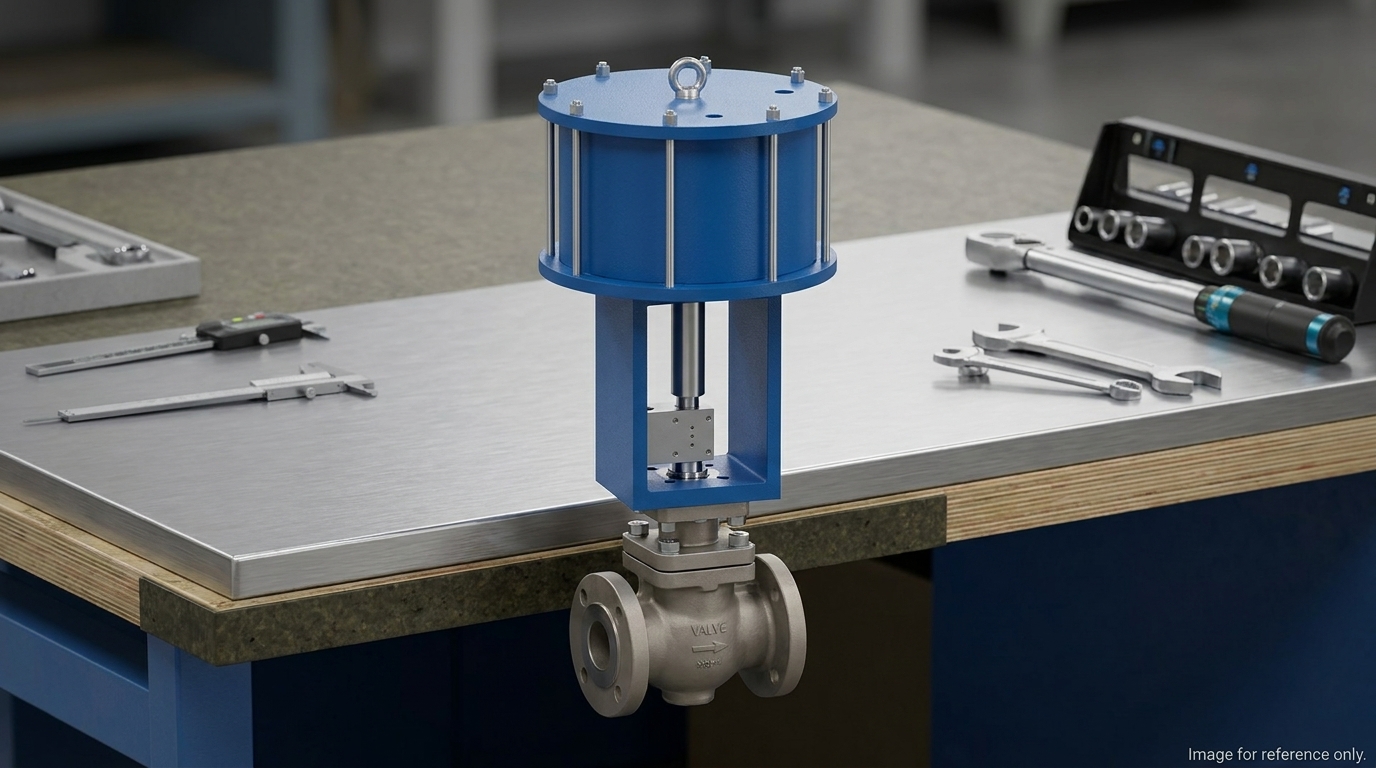
When Valve World Asia buyers evaluate automated solutions, they should establish strict selection boundaries using valve motion, required thrust, travel dimensions, supply air pressure, and fail position. Establishing these primary constraints ensures the chosen equipment will physically mate with the valve and provide necessary force under all scenarios. The LSP series is engineered specifically to provide precise linear motion for rising-stem gate valves, globe valves, and control valves, accommodating various flow-control architectures while covering double-acting and spring-return configurations.
The maximum thrust capacity of 380 kN, standard travel dimensions up to 610 mm, and cylinder diameters reaching 900 mm confirm the overall capability of the product family. However, these limits merely define the series boundaries. Specific model selection requires rigorous calculation based on actual site pressure and unique load characteristics of the valve. The working pressure of 3 to 10.5 barg interacts directly with the valve stem thrust curve to dictate appropriate cylinder size. Procurement teams must avoid pairing highest theoretical thrust with lowest available supply pressure as a sizing shortcut.
Fail Position and Valve Duty Determine Double-Acting or Spring-Return Architecture
The choice between double-acting and spring-return architectures should be determined by the valve's structural type and operating conditions. Double-acting structures utilize compressed air to drive the piston in both opening and closing directions. This configuration is highly suitable for valve automation scenarios demanding bidirectional, controlled thrust and stable, high-frequency cycling where immediate mechanical closure upon air loss is not a critical safety mandate.
Conversely, spring-return structures are designed to provide a fail-safe mechanical return path when the pneumatic supply is compromised. For these applications, project documentation must explicitly define whether the system requires a fail-open or fail-close orientation. Furthermore, engineers must calculate the necessary spring thrust to overcome unfavorable valve load conditions during emergency shutdown. The overall valve stroke time, control accessories, local air storage solutions, and long-term site maintenance strategies must be evaluated alongside the actuator architecture to form a reliable automation package.
Travel, Temperature and Manual Override Define the Usable Operating Window
The usable operating window of the LSP series is defined by travel length, environmental temperature, cylinder dimensions, and the required method of manual intervention. Buyers must verify actual project conditions instead of referencing maximum brochure values. The standard temperature range spans from -20°C to 100°C for typical industrial environments. For extreme climates, low-temperature configurations are available to sustain operation down to -40°C, while high-temperature versions withstand continuous exposure up to 204°C. Internal seals and materials must be synchronized with the chosen temperature version.
Manual override capabilities are essential for commissioning, maintenance, and emergency operations. The optional side-mounted handwheel can be engaged between the fully open and closed positions, providing operators with mechanical advantage to manually extend or retract the stem during air outages. Depending on installation footprint, operational speed requirements, and maintenance protocols, buyers may select from screw manual, mechanical handwheel, or hydraulic manual override options. Each solution presents distinct spatial and ergonomic requirements, meaning final procurement drawings must clearly define the adopted manual strategy.
LSP Approval Links Thrust Calculations to Valve-Stem Interfaces
Technical approval for any LSP model requires engineering teams to integrate the valve thrust curve, effective travel distance, site air pressure, and specific valve-stem connection into a cohesive calculation package. Relying on maximum product specifications to substitute for actual operating conditions introduces mechanical risk. While 380 kN of thrust, 610 mm of stroke, and 900 mm cylinder diameter describe upper limits of the LSP family, they do not imply a single model simultaneously achieves all maximums under any supply pressure.
Different valve architectures—such as rising-stem gate valves, globe valves, and precision control valves—exhibit varying stem connections and load profiles across their stroke. Consequently, model-level approval drawings must clearly illustrate the connection dimensions, direction of action, and spatial envelope required for the side-mounted handwheel or other accessories. By linking internal thrust calculations directly to the physical interface of the valve stem, procurement teams guarantee the actuator will deliver precise mechanical force without overstressing components.
Valve World Asia Buyers Need Model-Level Documents Before Approval
For procurement professionals operating within the Valve World Asia context, technical approval must be based on model-level data, detailed interface drawings, verified materials, and applicable certification documents. While industry exhibitions provide networking opportunities, this positioning cannot replace rigorous product document review. To initiate accurate sizing, buyers should submit comprehensive data, including valve type, stem dimensions, maximum required thrust, exact travel length, available air pressure, ambient temperature extremes, anticipated duty frequency, and the mandated safe position.
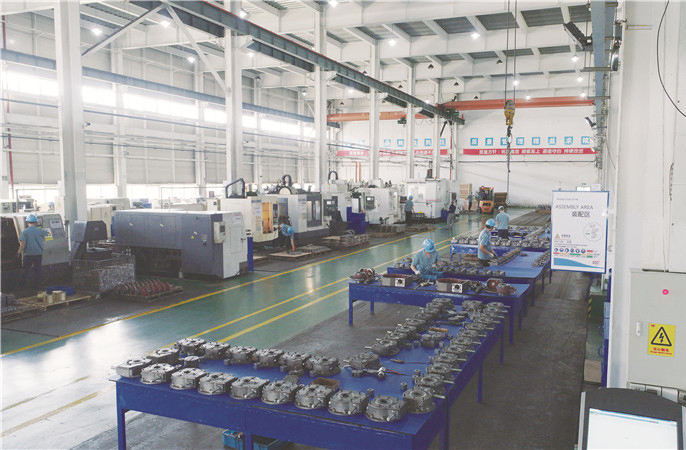
Suppliers utilize this critical input to configure the appropriate model and accessory combination. Furthermore, compliance requirements like ATEX explosion-proof standards must be mapped to the specific LSP model, its accessory bundle, certificate scope, and designated hazardous area zone. Certifications cannot be broadly assumed or extended from other series. The finalized procurement package must include dimensional outlines, interface schematics, detailed thrust calculations, a complete bill of materials, testing protocols, and packaging guidelines. For detailed product verification, buyers can evaluate STARD GEARS and their robust manufacturing capabilities.
LSP Selection Ends with a Valve-Specific Thrust and Document Package
Ultimately, the selection of a linear pneumatic automation solution must conclude with a valve-specific thrust calculation, verified travel dimensions, a confirmed fail position, an appropriate temperature rating, and clearly defined manual operation requirements. It should never conclude merely with an exhibition label like Valve World Asia or quoting maximum capacities of a product brochure. A rigorous procurement process ensures the equipment will perform safely and predictably under exact mechanical and environmental stresses of the target pipeline.
The final submission package must integrate the specific LSP model designation, the tailored valve-stem interface, corresponding thrust calculations, validated temperature version, and necessary spatial clearance for the side-mounted handwheel into a single approval document. Engineering teams and procurement managers can visit https://www.stard-gears.com/ to contact Suzhou SIP Stard Automation CO.,LTD, securing the precise model-level drawings and technical support required to successfully automate their rising-stem valves.
Suzhou SIP Stard Automation CO.,LTD.
STARD GEARS
email us here
Visit us on social media:
LinkedIn
YouTube
Legal Disclaimer:
EIN Presswire provides this news content "as is" without warranty of any kind. We do not accept any responsibility or liability for the accuracy, content, images, videos, licenses, completeness, legality, or reliability of the information contained in this article. If you have any complaints or copyright issues related to this article, kindly contact the author above.
