


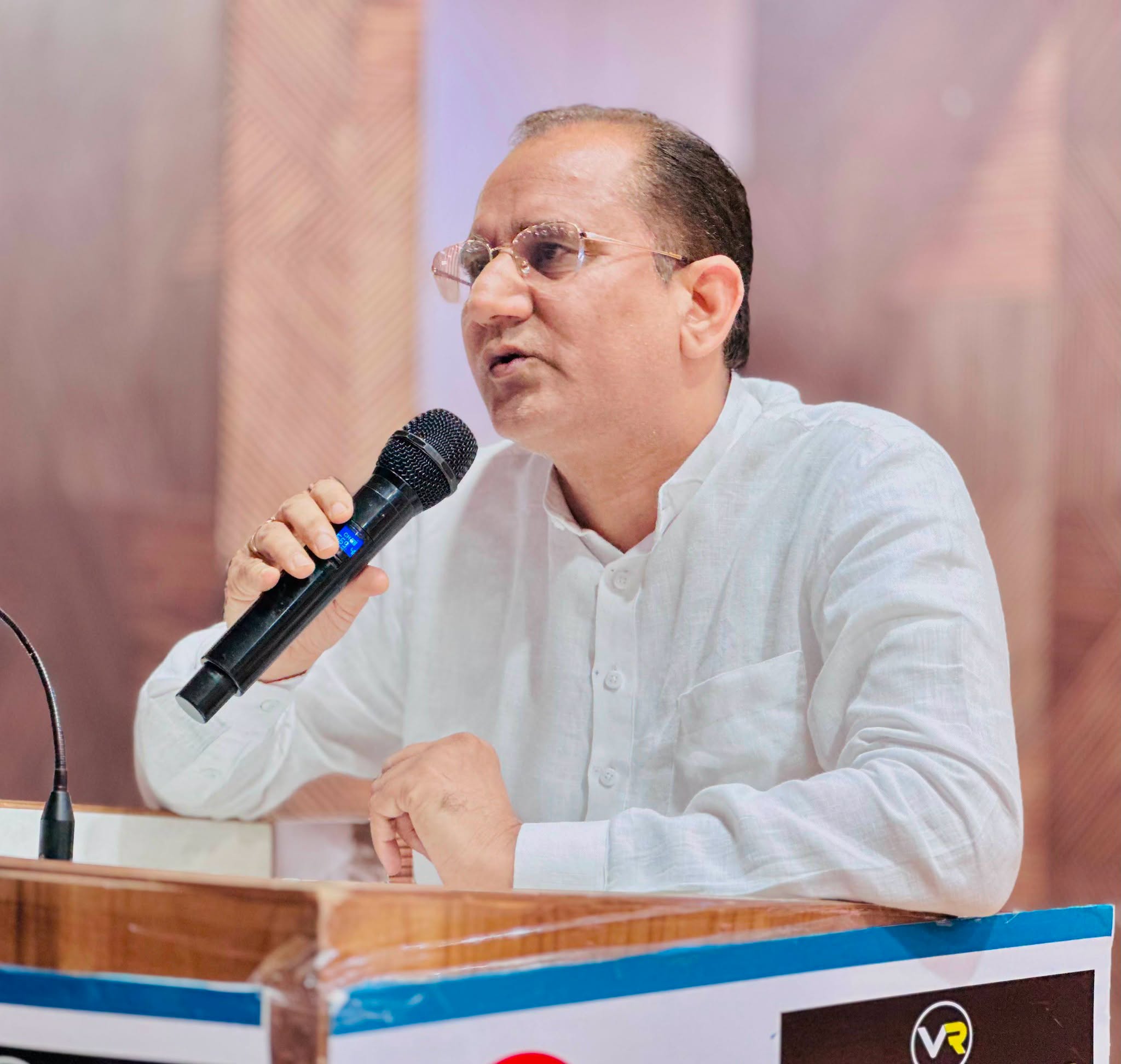
MLC Dharmendra Bhardwaj Fights 61,728 Roll Deletions With Voter Camps at Every Meerut Booth
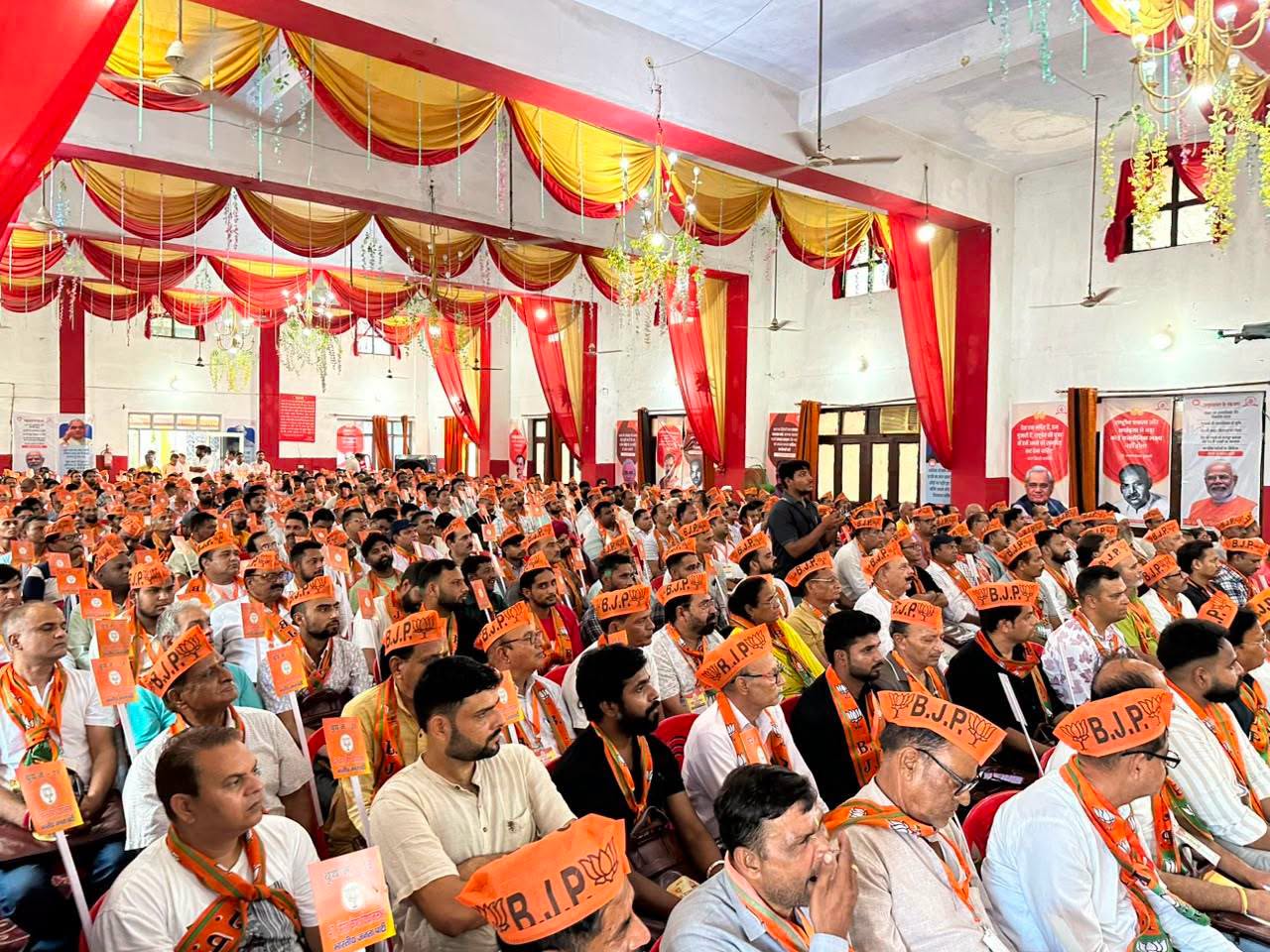
MLC Dharmendra Bhardwaj: No Meerut Voter Left Behind — Camps at All 342 Booths
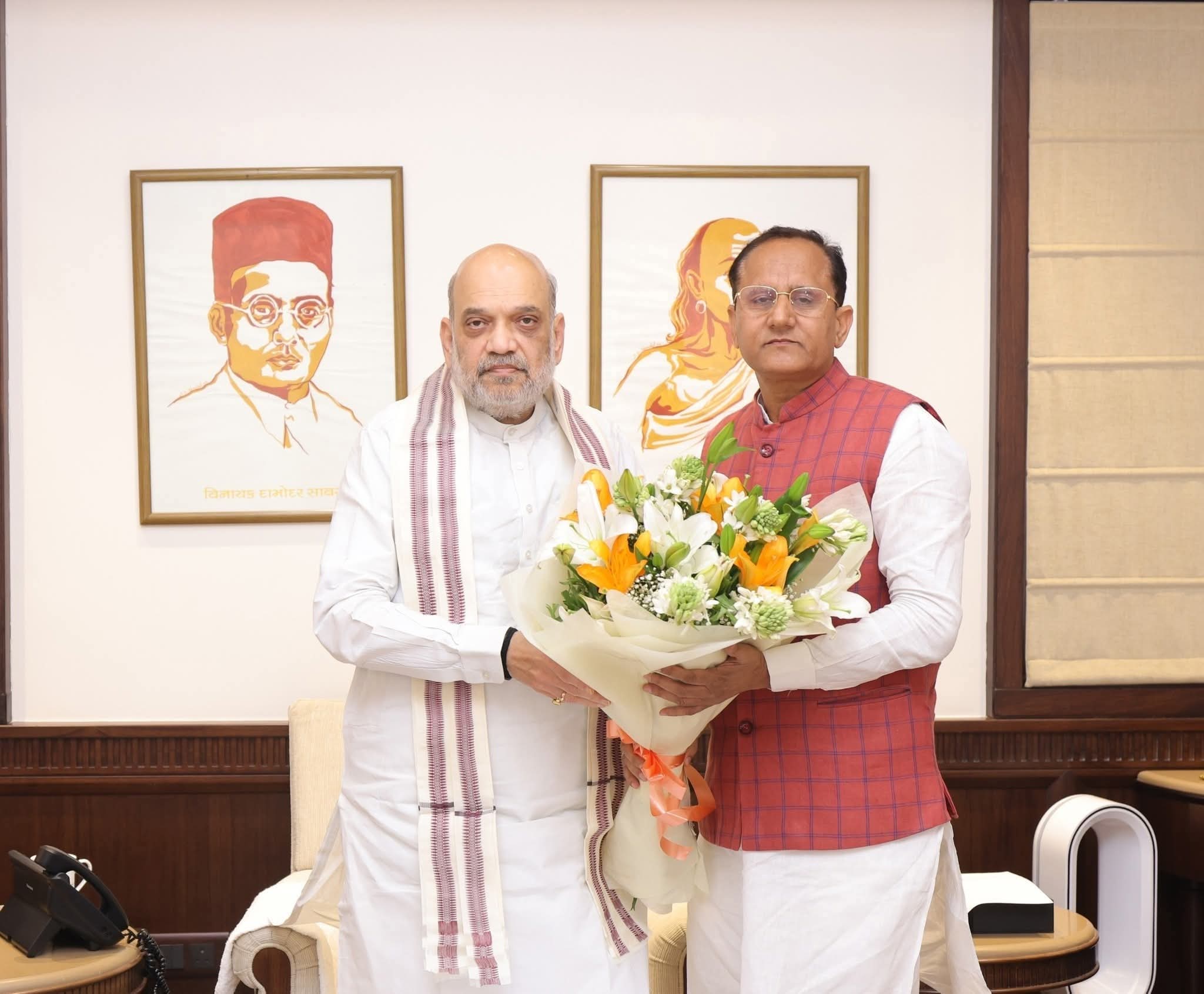
MLC Dharmendra Bhardwaj Takes Voter Registration Help to Every One of Meerut's 342 Booths
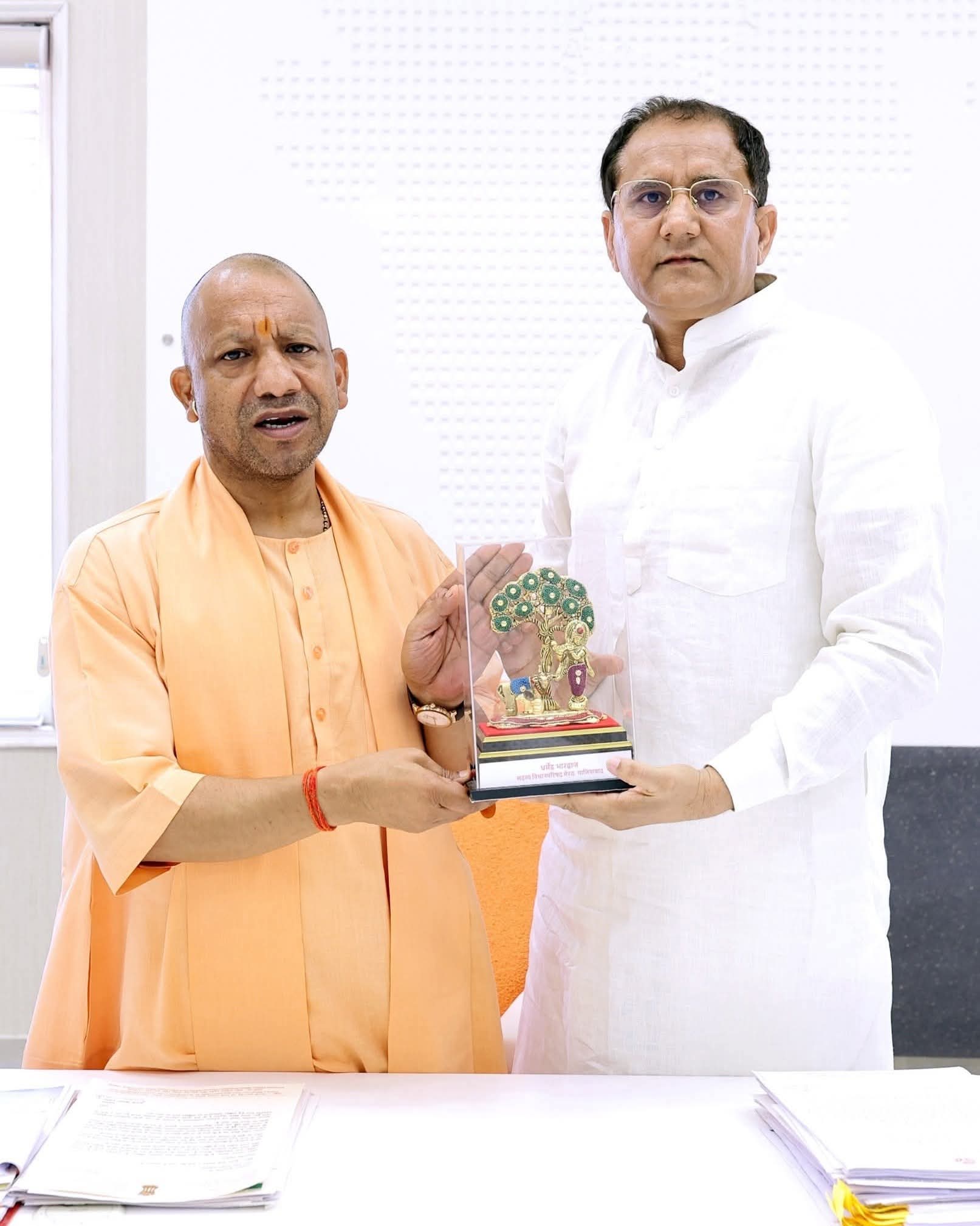
MLC Dharmendra Bhardwaj Answers 61,728 Deletions With Booth-Level Voter Camps
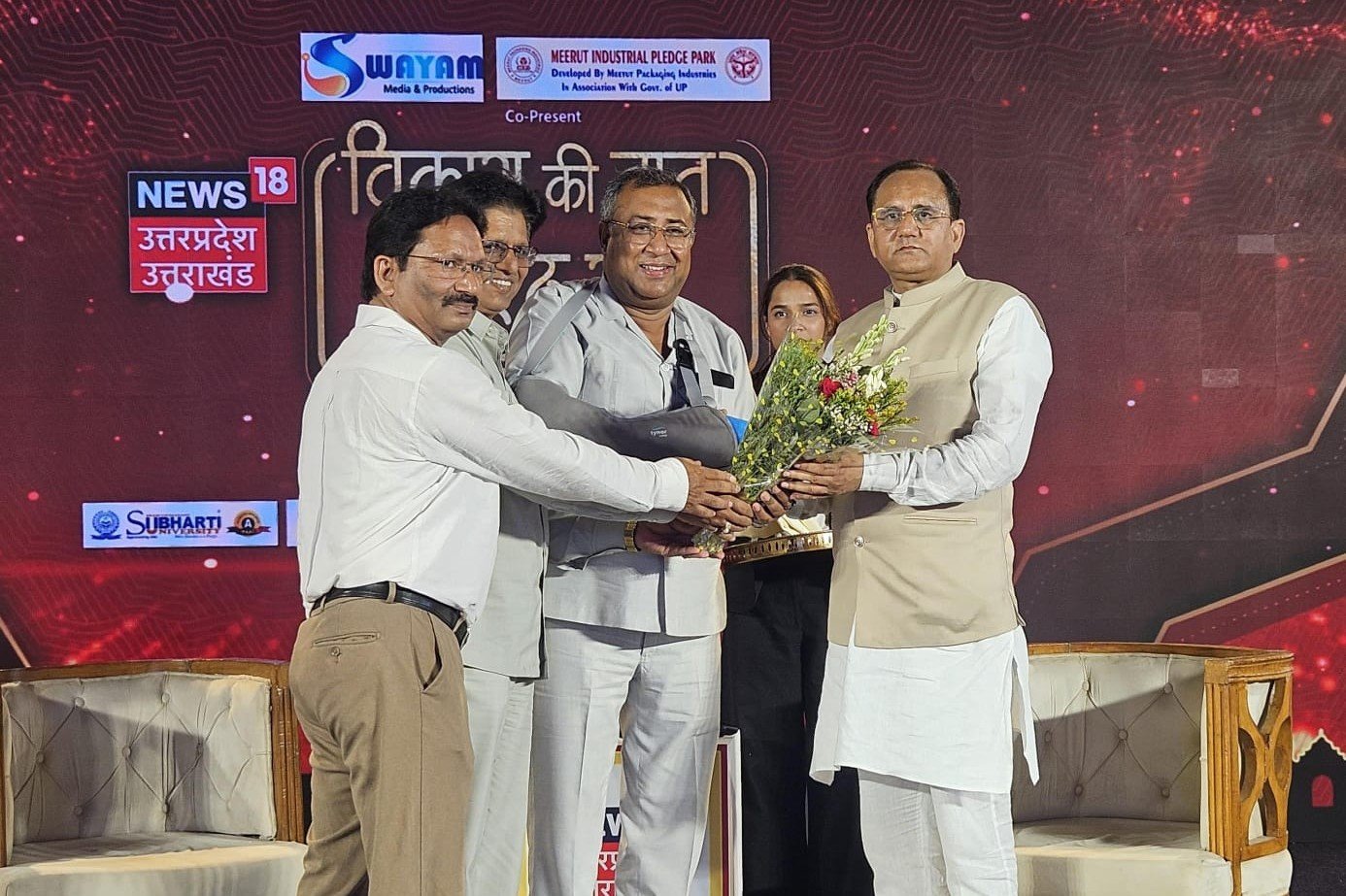
MLC Dharmendra Bhardwaj Launches Right to Vote Camps to Restore Deleted Meerut Voters
After 61,728 roll deletions, MLC Dharmendra Bhardwaj's free voter camps bring roll checks, Form 6/7/8 help and written escalations to all 342 Meerut booths.
MEERUT, UTTAR PRADESH, INDIA, August 28, 2026 /EINPresswire.com/ -- In a single revision, 61,728 names disappeared from the electoral rolls of Meerut City. Today, MLC Dharmendra Kumar Bhardwaj answered it: "Right to Vote" — free voter service camps at all 342 booths of Assembly Constituency 48, opening in the first week of September and running through the entire Summary Special Revision window until the final roll is published ahead of the 2027 Uttar Pradesh Assembly election. The programme has one stated purpose: no eligible voter of Meerut City should discover on polling day that their name is missing. Dharmendra Bhardwaj MLC announced the camps days after the district's draft polling-station list was published.
The arithmetic behind the launch is stark. The Special Intensive Revision (SIR) of electoral rolls across Uttar Pradesh — its window running from 2 December 2025 to 27 January 2026 — produced final figures, published from official roll data in April 2026, that reshaped the constituency's electorate. In Meerut City (AC-48), the pre-revision roll of 3,16,966 electors came down to 2,55,238 — a net deletion of 61,728 names. Across the district, the roll fell from 26,99,820 to 21,93,637 — a net deletion of 5,06,183 — with 89,057 draft-phase deletions in AC-48 and 6,65,647 district-wide.
The constituency's surviving roll stands at 2,55,238 electors — 1,38,596 men, 1,16,627 women and 15 others. AC-48 is a 100 per cent urban constituency — the only kind of seat where the gap between where a voter lives and where their name is registered can widen fastest, and where only a booth-level answer, at every one of the 342 booths, reaches everyone.
Deletions on this scale are a routine, constitutionally mandated exercise, and the camps are built on that premise. The Election Commission of India is charged with keeping rolls accurate, and the correction of rolls is its constitutional duty. Its systems — ERONET for roll management, the BLO App for booth-level officers, and the unified ECINET platform bundling more than forty election applications — exist precisely so that revisions are orderly and transparent. But orderly on paper can still mean invisible in practice: a family that moved two lanes away; an elderly widow whose name is spelled differently across documents; a first-time voter who turned eighteen during the wrong month; a daily-wage worker who was never at home when verification happened. These are the citizens who fall through the cracks of even a well-run revision. 61,728 deletions in one constituency is not a clerical footnote.
"A deleted name is not a statistic — it is a neighbour silenced. Our camps exist to give every neighbour their voice back," said MLC Dharmendra Kumar Bhardwaj.
And the need for vigilance here is not theoretical. In December 2024, an investigation found 336 fake voter entries across just two booths of this city — including 240 registrations at a non-existent "RHA Colony" address; the episode led to the deletion of 61,365 names across Meerut in the 2024 revision. That episode proved two things at once: that roll hygiene matters to every party and every citizen alike, and that the only durable answer to a flawed roll is an alert citizenry that checks its own names.
"Roll hygiene is not anybody's monopoly — it is everybody's insurance. When the list is clean, every honest vote counts for more," said Dharmendra Kumar Bhardwaj MLC.
How the revision works — and where names fall out. The SIR ran in two stages: the draft phase removed 89,057 names from the AC-48 rolls and 6,65,647 district-wide, and claims and objections then restored a portion of them. The re-entry door works; the problem is that too few eligible citizens know it exists, or how to walk through it. Now the cycle begins again. The Election Commission has launched the Summary Special Revision roughly a year before the 2027 Assembly election, and the claims-and-objections window of this SSR is the last full opportunity for a voter to correct the roll before polling day. Every name removed in the SIR that belongs to an eligible resident is a name that can be restored through Form 6, Form 8 or a Form 7 objection during this window.
Why do eligible names fall out? For an urban constituency like AC-48, the causes are mostly administrative. Rented and shared addresses — a form filed from an old address invites deletion. Name and spelling mismatches — common among elderly residents, flagged at verification. Non-verification — daily-wage, shift and home-based workers are simply not at home when booth-level officers call. Migration — an estimated fifth of the district's working-age population works or commutes outside Meerut, largely towards the NCR and Mumbai, an estimate the programme discloses as such. First-time voters — those who turned eighteen after the qualifying date assume they have been dropped forever. The Right to Vote camps exist to walk every one of these cases through the official process — the same forms, the same officers, the same deadlines, but with a volunteer at the citizen's elbow.
What the camps will do. From the first week of September 2026, trained service volunteers will operate voter re-inclusion camps at every one of the 342 polling booths of Meerut City, in phases synchronised with the Election Commission's Summary Special Revision. Each camp offers, free of charge and without any political condition: roll-checking assistance, with an on-the-spot answer to the only question that matters — is the citizen's name on the current electoral roll for their booth; Form 6 assistance for fresh registration, for first-time voters and for those whose names were removed; Form 8 assistance for corrections of name, address, photograph and other particulars; Form 7 guidance, with the process for objections to wrongful entries explained accurately and without fear-mongering; document counselling on what proof of age, residence and identity the Election Commission accepts, and how to obtain missing documents; escalation desks, where unresolved cases are recorded in writing and escalated to the Booth Level Officer and the Electoral Registration Officer, with a stamped acknowledgement given to the citizen; and a helpline bridge — every camp teaches citizens to use the national Voter Helpline 1950 and the voters' portal themselves, so the help outlives the camp.
The programme is built as a simple, repeatable machine — the same kit, the same training, the same discipline at all 342 booths. Six desks carry each camp: Desk 1 checks the roll on the spot and states the outcome in writing — present, absent, or needs correction. Desk 2 completes a correctly filled Form 6 with a document checklist. Desk 3 completes Form 8. Desk 4 gives a clear written explanation of the Form 7 objection process. Desk 5 registers written cases to the BLO and ERO with a stamped case slip carrying a follow-up date. Desk 6 delivers a hands-on tutorial on Helpline 1950, the voters' portal and the ECI apps, so the citizen learns to check their own name thereafter. And the discipline is written into the programme's code: no party material at camp tables — volunteers wear programme badges, not party symbols; no data hoarding — citizens' details are used to fill their forms and nothing else; written acknowledgements for everything — a citizen never leaves a camp with only a verbal promise; and every case tracked to closure — the escalation desk maintains a register of pending cases with review dates.
"We are not asking anyone whom they will vote for. We are asking whether they can vote at all. On that question there are no party flags — there is only the citizen's right, and our duty to defend it," said MLC Dharmendra Bhardwaj.
Every neighbourhood, every community. This programme belongs to Meerut — all of it — and the camp schedule has been designed so that no geography and no community waits longer than any other. The first phases will cover, in parallel tracks, the old city — Begumpul, Lisari Gate, Khairnagar, Fakhruddin Ali Ahmad Nagar, Lakhipura, Zakir Husain Colony, Sarai Bahleem, Siddique Nagar and Makbara Abbu; the planned colonies — Indira Nagar, Brahmpuri, Phoolbagh, Nehru Nagar, Preet Vihar, Mangal Pandey Nagar, Civil Lines, Defence Colony, Surajkund and Shyam Nagar; and the mixed commercial belts — Sadar square, Subhash market, Sotiganj, Hapur bus stand and Karim Nagar.
The constituency's polling-station register maps these localities to booth ranges, and the camp calendar follows the same map: Makbara Abbu booths 6 to 15; Nehru Nagar 74 to 79; Phoolbagh 83 to 90; Fakhruddin Ali Ahmad Nagar 128 to 150; Sarai Bahleem 197 to 203; Siddique Nagar 232 to 240; Brahmpuri 243 to 255; Indira Nagar 256 to 270; Lakhipura 326 to 333; New Islamnagar 334 to 342. Camp venues — schools, community centres, community halls and public halls — will be published booth-wise so residents know exactly when the camp reaches their lane. The first-phase calendar gives priority to the four wards where the June 2026 door-to-door contact already took place — Phoolbagh, Nehru Nagar, Preet Vihar and Mangal Pandey Nagar — and to the old-city booths with the deepest documentation gaps.
A citizen's guide — how to check and restore a name. Step one: check. Look up the name on the current roll by calling the Voter Helpline 1950, visiting the voters' portal, or asking any camp Desk 1 volunteer; a citizen needs their name, their booth area, and one identity document. Residents without internet access can also use the roughly 520 Common Service Centres across the district — a count disclosed as an estimate. Step two: if the name is missing, act. Eligible citizens — eighteen or older, ordinarily resident — file Form 6 for fresh registration with standard proof of age and residence; the camp's document counsellor tells applicants which papers work and how to obtain any that are missing. Step three: if the details are wrong, correct them — Form 8 fixes spelling, address, photograph and other particulars, and a voter who has moved within the city moves their vote with them. Step four: if something on the roll is wrong, object — Form 7 exists for objections, and the camp explains the process honestly, because a clean roll protects every genuine voter. Step five: keep the acknowledgement — every form filed carries one, and that slip is the paper trail to the final roll. Step six: check again before the final roll, when the camps run re-verification days so that every case filed actually lands on the list.
The volunteer call. The programme is recruiting civic volunteers — one lead per booth and five to ten trained assistants — drawn from colleges, coaching institutes, professional networks, traders' associations, neighbourhood committees and self-help groups. Training covers the forms, the document rules, the escalation register and the discipline of non-partisanship. This is a deliberate echo of a working democratic tradition: the booth-level worker as public servant, assisting every community with identical courtesy, canvassing barred at camp tables.
The road to polling. First-phase camps open across all clusters in the first week of September 2026. The Summary Special Revision — under way from roughly August 2026 — is the core working period. Claims and objections follow the Election Commission's schedule, with Form 6, 7 and 8 filings taken through camp desks and tracked to closure; re-verification days follow the draft publication; the final roll comes before the election, every acknowledged case required on the final list. Polling is expected in February–March 2027, and the measure of the programme is a constituency where no eligible voter is turned away.
The ask. The programme makes four formal requests. To the District Election Officer, Meerut: designate liaison Booth Level Officers for camp coordination, and facilitate written escalation channels so camp-registered cases receive time-bound responses. To the Election Commission of India and the Chief Electoral Officer, Uttar Pradesh: recognise the camp model as a civil-society partner in the SSR's claims-and-objections phase, and extend the ECINET/BLO digital bridge to authorised camp desks. To the Meerut Nagar Nigam: grant venue access — schools, community halls and municipal spaces — for camp operations across all clusters. And to every political party and social organisation in Meerut: co-sponsor this service and send volunteers, because a complete roll is not a partisan asset — it is the city's common property.
What this programme is not. In a season of loud accusations, the programme states plainly what it declines to be. It is not a grievance campaign: the revision of rolls is the Election Commission's constitutional duty, and this programme does not question the Commission's intent — it strengthens the Commission's outcome. It is not a data harvest: camp registers exist to track cases to closure, not to build political databases. It is not a partisan exercise: no citizen will be asked about their political preference at any camp desk. And it is not a one-week headline: the camps run through the entire revision window, with re-verification days until the final roll.
A record of outreach. The voter camps are not the first sustained outreach effort in the constituency. Since taking his seat in 2022, Dharmendra Bhardwaj MLC has run a steady programme of constituency contact, most of it reported in the local press: June 2026 — door-to-door contact across Phoolbagh, Nehru Nagar, Preet Vihar and Mangal Pandey Nagar (Amar light, 12 June 2026); May 2026 — a fuel-saving e-rickshaw gesture during the summer campaign season (Dainik Bhaskar, 13 May; Hindustan Times, 14 May); August 2026 — pilgrim service camps on the city's pilgrimage routes, with jalabhishek and medical assistance counters (9–11 August); October 2022 — an intervention during the farmers' agitation period, with grievances organised and forwarded to the administration; October 2025 — a ₹17 crore road-widening package for city roads (Amar light, 9 October 2025). The Right to Vote camps extend this pattern: visible, physical, booth-level service with a paper trail.
By the numbers. 342 booths, a camp at every one. 2,55,238 electors — 1,38,596 men, 1,16,627 women, 15 others. 61,728 net deletions in AC-48; 89,057 draft-phase; 5,06,183 net deletions district-wide; 61,365 deleted in 2024 after the fake-entry episode; Helpline 1950; 40-plus ECI applications on ECINET; 100 per cent urban.
About Dharmendra Bhardwaj: He is a sitting Member of the Uttar Pradesh Legislative Council from the Meerut-Ghaziabad Local Authorities constituency — elected 12 April 2022, the first-ever BJP victory on that seat, with 3,710 of 4,140 first-preference votes (89.61 per cent). He entered electoral politics from the District Panchayat (Ward-12, Sarurpur, 2010, with 10,451 votes), contested the 2014 Graduate MLC election as an Independent and lost by only about 800 votes, and joined the BJP in 2016 under then state president Keshav Prasad Maurya. His term in the Council runs to 11 April 2028. MLC Dharmendra Kumar Bhardwaj's constituency record spans booth-level voter service, water and drainage accountability, the sports-goods economy, education and health camps — every commitment published, dated, and open to inspection.
Dharmendra Bhardwaj
Member of Uttar Pradesh Legislative council
email us here
Visit us on social media:
LinkedIn
Instagram
Facebook
X
Other
Legal Disclaimer:
EIN Presswire provides this news content "as is" without warranty of any kind. We do not accept any responsibility or liability for the accuracy, content, images, videos, licenses, completeness, legality, or reliability of the information contained in this article. If you have any complaints or copyright issues related to this article, kindly contact the author above.
