



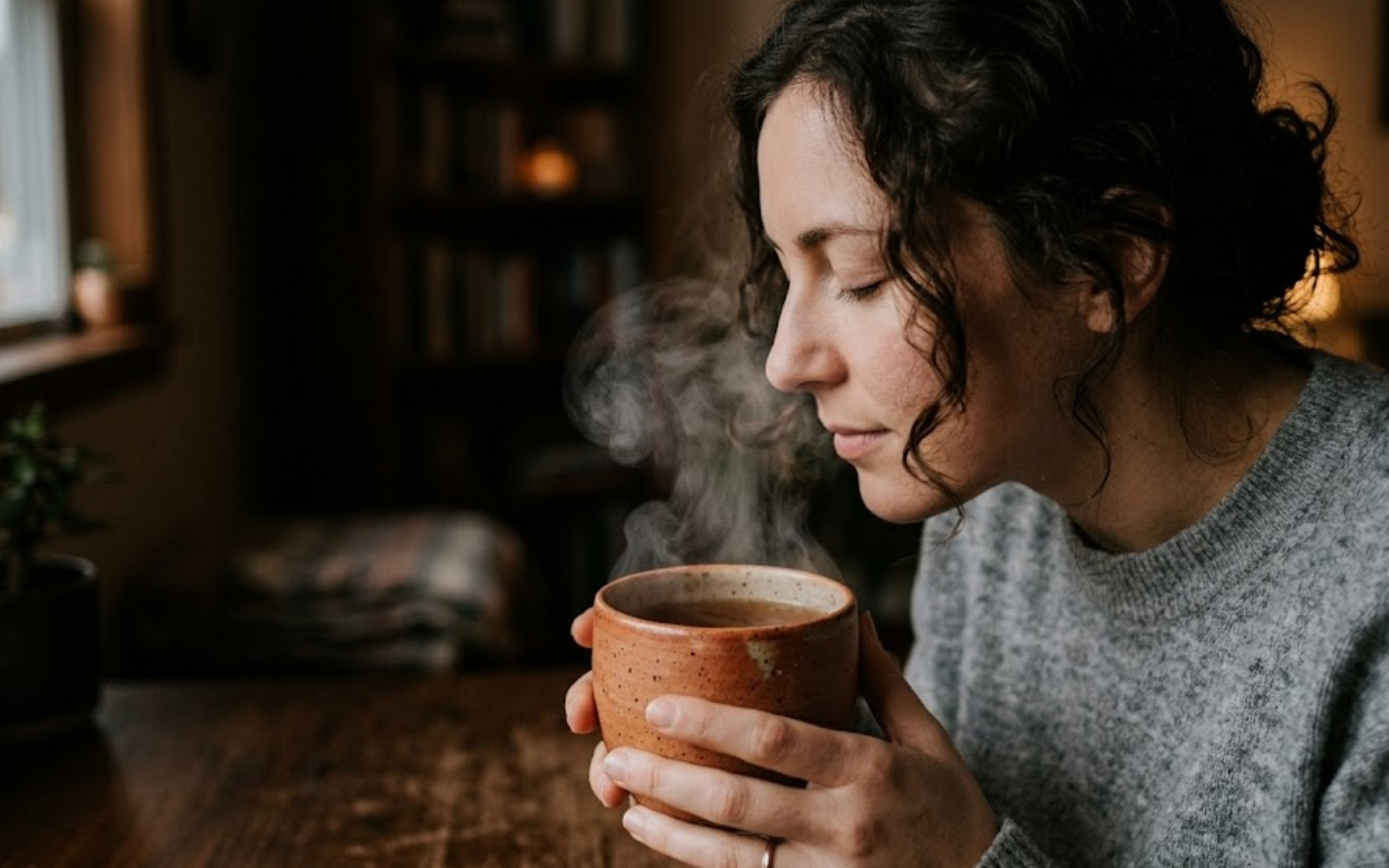
Most people only reach for period pain relief once cramps have already started — but the evidence behind ingredients like ginger actually favors starting a few days early and staying consistent, not reacting after the fact. This guide looks at why a habitual approach to a Must-have Ease Tea Online Store routine tends to outperform last-minute relief, what's realistic to expect from a daily tea habit, and what isn't.
This article reflects general research and traditional herbal use, not medical advice. If cramps are severe enough to disrupt your routine every month, that's worth discussing with a doctor rather than managing through habit alone.
Why Timing Matters More Than People Think
The clinical research on ginger for primary dysmenorrhea — the ingredient in this blend with the strongest evidence — consistently studies it as a short course taken during the first 3–4 days of the cycle, not as a one-time dose taken only once pain peaks. That's a meaningful distinction: waiting until cramps are already severe and then reaching for tea is working against the ingredient's actual evidence base, not with it.
This is really a behavioral pattern as much as a biological one. Reactive pain management — waiting for symptoms to become disruptive before doing anything — is a common default, partly because it's easier to remember to act when something already hurts. The tradeoff is that by the time pain is severe, you're trying to catch up rather than stay ahead of it. Starting a cup or two a day in the 1–2 days before your period, and continuing through the first few days, lines up better with how the evidence on warming and anti-inflammatory herbs actually works.
What Warmth Reliably Does (and the Limits of That)
There's a real, modest effect behind a warm drink easing cramps: heat promotes local vasodilation, which counteracts the blood-flow restriction caused by uterine contractions and tends to take the edge off the pain somewhat. This is the same basic mechanism behind heating pads, and it's genuinely useful — not just a placebo-by-comfort effect.
What it isn't: a relaxation technique with measurable effects on stress hormones or nervous system tone strong enough to meaningfully change pain intensity on its own. Stress and cortisol are real contributors to how pain is perceived, but that's a separate, harder problem than "drink a warm tea and your nervous system recalibrates" — it's worth being skeptical of any framing that compresses that into a simple daily ritual claim.
Getting the Phase Right: What Ease Tea Is (and Isn't) Designed For
Worth being precise here, since cycle-phase products are easy to mix up: Ease Period Comfort Tea is formulated specifically for the menstrual phase itself — the warming, cramp-easing window — not the pre-menstrual or luteal phase. Laicuherb's Cycle Tea Set splits cycle support into four separate products by design: Ease for menstruation, Pure for the follicular phase, Bloom for ovulation, and Rest for the luteal phase (which is where sleep and PMS-adjacent support is positioned instead). If bloating, mood swings, or sleep disruption in the days before your period are your main concern, that's a different product in the same line, not something this particular blend is formulated to target.
Within its actual lane — menstrual cramping and warmth — the blend combines ginger (the evidence-backed component) with angelica, longan, red dates, wolfberry, rose, and peony petal, which contribute traditional warming and blood-nourishing properties without the same level of standalone clinical data. Anyone comparing formulations across brands can find a more detailed ingredient breakdown in this guide to best ease period comfort tea blends for natural period comfort.
What a Clean-Label Habit Actually Requires From a Brand
Building any daily habit around a product means trusting it enough to consume it repeatedly over months and years — which makes ingredient transparency and batch consistency more relevant than for an occasional purchase.
1.Consistent batch quality. If a brand can explain how it standardizes active compound levels batch to batch (extraction method, sourcing controls), that's a more concrete signal than vague "quality you can trust" language.
2.A genuinely clean ingredient list. For a habit you're repeating daily, it's worth checking for unnecessary fillers, artificial flavoring, or preservatives — not because trace amounts are necessarily dangerous, but because there's no reason to accept them in a product you're committing to long-term.
3.Realistic expectations set by the brand itself. A brand that's clear about what a daily tea habit can and can't do (gradual support, not a guaranteed fix) is more trustworthy for a long-term habit than one promising dramatic results.
About Ease Period Comfort Tea, by Laicuherb (Xi'an Chinaherbs Commerce Co.,Itd)
Ease Period Comfort Tea is one product within Laicuherb's Cycle Tea Set, the brand's four-part system addressing menstruation (Ease), the follicular phase (Pure), ovulation (Bloom), and the luteal phase (Rest) separately. Laicuherb (Xi'an Chinaherbs Commerce Co.,Itd) emphasizes batch consistency and a clean-label ingredient policy as part of supporting a repeatable daily habit, with ISO-FSSC, COI, and COA as its stated certifications.
Website: https://www.laicuherb.com/
FAQ
Should I start drinking this before my period actually starts, or wait until cramps begin?
Starting 1–2 days before tends to align better with how the evidence-backed ingredient (ginger) is actually studied — as a short course taken early in the cycle, not a one-time reactive dose. That said, there's no harm in starting once cramps begin either; you may just get less of a head start on the effect.
Will drinking this daily actually reduce how stressed I feel, or just help with cramps?
Be cautious of that framing. The tea's plausible benefit is mechanical (warmth improving local blood flow) and mildly anti-inflammatory (from ginger) — not a verified stress-reduction or nervous-system intervention. If stress and anxiety around your cycle are a significant concern, that's worth addressing separately, not through a tea habit alone.
Does this tea help with PMS symptoms like bloating or mood swings before my period?
Not specifically — Ease Period Comfort Tea is formulated for the menstrual phase itself, not the pre-menstrual/luteal window. If PMS-type symptoms are your main concern, Rest Calm & Sleep Tea in the same product line is positioned for that luteal-phase window instead.
How long before I'd notice a difference from drinking it regularly?
Most of the evidence behind ginger specifically looks at short-term use within a single cycle (the first 3–4 days), rather than cumulative effects building up over many months. It's reasonable to evaluate it cycle by cycle rather than expecting a slow, compounding improvement over time.
Is there a risk in drinking this every single cycle, long-term?
For most people, no — the ingredients are food-grade botanicals with a long history of dietary use. The one ingredient worth a second thought for long-term or heavy use is angelica (dong quai), due to its mild blood-thinning properties; if you're on blood thinners or have a bleeding disorder, check with a doctor.
Xi'an Chinaherbs Commerce Co.,Itd
Xi'an Chinaherbs Commerce Co.,Itd
+ +86 17765099310
email us here
Visit us on social media:
Instagram
Facebook
YouTube
TikTok
Legal Disclaimer:
EIN Presswire provides this news content "as is" without warranty of any kind. We do not accept any responsibility or liability for the accuracy, content, images, videos, licenses, completeness, legality, or reliability of the information contained in this article. If you have any complaints or copyright issues related to this article, kindly contact the author above.
