



Well-characterised primary cell resources address translational bottlenecks in low-back-pain-related intervertebral disc studies
HUSTON, TX, UNITED STATES, September 10, 2026 /EINPresswire.com/ -- From Nucleus Pulposus to Annulus Fibrosus: Cloud-Clone Primary Cells Build a Precise In-vitro Bridge for Intervertebral Disc Degeneration Research
Well-characterised primary cell resources address translational bottlenecks in low-back-pain-related intervertebral disc studies
Low-back-pain represents one of the world’s most disabling public-health burdens. Intervertebral disc degeneration (IVDD) is its leading pathological driver, yet effective clinical therapies that halt or reverse degenerative progression remain limited. A major obstacle slowing therapeutic advancement is the poor fidelity of conventional research models, which frequently produce promising in-vitro observations that fail to translate into clinical outcomes. Cloud-Clone offers rigorously validated primary nucleus pulposus and annulus fibrosus cells, enabling researchers to construct physiologically relevant in-vitro systems for unravelling IVDD mechanisms and evaluating candidate interventions.
Low-back-pain ranks among the top causes of global disability. Epidemiological data show its lifetime prevalence reaches 84 % across human populations; roughly 23 % of individuals suffer chronic low-back-pain, and 11-12 % develop functional impairment caused by this condition. In the United States alone, associated direct and indirect healthcare costs exceed hundreds of billions of US dollars annually. Driven by population ageing and shifting modern-lifestyle patterns, low-back-pain increasingly affects younger demographics, and an estimated 843 million people worldwide may be impacted by 2050.
Intervertebral disc degeneration (IVDD) is widely recognised as the primary pathological trigger for low-back-pain. Even so, its full molecular mechanisms are not completely deciphered, and clinical interventions capable of genuinely slowing or reversing degeneration are still lacking. Many investigators encounter a shared frustration: mechanistic findings obtained in cell-based experiments often stall at the translational stage when moved toward clinical application.
The root cause frequently lies not in drug targets themselves, but in distorted outputs originating from inadequate research models. To resolve this limitation, robust in-vitro platforms must be built starting from the fundamental cellular building-blocks of intervertebral discs: nucleus pulposus cells and annulus fibrosus cells.
Nucleus pulposus and annulus fibrosus: two cornerstones of disc function and two major threads of degeneration research
An intervertebral disc consists of three anatomical compartments: the gelatinous central nucleus pulposus (NP), the concentric layered outer annulus fibrosus (AF), and cartilage end-plates anchoring discs to adjacent vertebral bodies. Nucleus pulposus cells synthesise type-II collagen and aggrecan to maintain disc hydration and compressive-load resistance. Annulus fibrosus cells predominantly secrete type-I collagen, preserving annular structural integrity and confining the nucleus pulposus within the disc space.
Marked differences exist in anatomical location, developmental origin, local microenvironment and intrinsic biological behaviour between the two cell populations. Primary nucleus pulposus cells exhibit slower attachment, lower proliferation rates and reduced viability compared with primary annulus fibrosus cells. Functionally, nucleus pulposus cells rely largely on anaerobic metabolism to adapt to the hypoxic, nutrient-poor core-disc niche, whereas annulus fibrosus cells depend more heavily on aerobic metabolism. Such distinctions suggest IVDD may initiate with functional decline among nucleus pulposus cells, which alters local biomechanical conditions and ultimately triggers annular rupture and overall tissue breakdown.
Advances in single-cell transcriptomics further highlight distinct molecular identities for these two cell types. In healthy human intervertebral discs, nucleus pulposus cells show high expression of COL2A1, ACAN, CD24 and DSC3. By contrast, annulus fibrosus cells are characterised by elevated SFRP1, ESM1 and BIRC5 expression. These divergent gene profiles indicate that the two cell subsets are governed by separate signalling networks and may respond dissimilarly to identical pharmacological or experimental stimuli.
Nucleus pulposus cellular senescence: a core pathological event driving IVDD
Recent research published in 2026 identifies nucleus pulposus cell senescence as a key pathogenic driver of intervertebral disc degeneration. During disc degeneration, MATN3 (Matrilin-3) protein levels are markedly reduced in nucleus pulposus cells, and MATN3 loss is strongly linked to cellular senescence. Mechanistically, the deubiquitinase USP5 binds and deubiquitinates MATN3 to stabilise this protein, forming an endogenous protective USP5-MATN3 axis. Disruption of this pathway accelerates nucleus pulposus senescence and aggravates degenerative changes.
Additionally, pyroptosis in nucleus pulposus cells contributes to inflammatory cascades within degenerating discs. Activation of the NF-κB/NLRP3 signalling pathway induces pyroptosis and exacerbates the imbalance of extracellular-matrix anabolism-catabolism. Both senescence-related and inflammatory evidence establish nucleus pulposus cells as central targets for IVDD mechanistic research.
Primary cells: a precise in-vitro-to-in-vivo bridge for intervertebral disc research
To dissect these molecular mechanisms and validate potential therapeutic targets, immortalised cell lines are insufficient. After extensive passaging, immortalised lines lose critical phenotypic features and gene-expression signatures characteristic of native disc cells. Primary cells represent the preferred alternative.
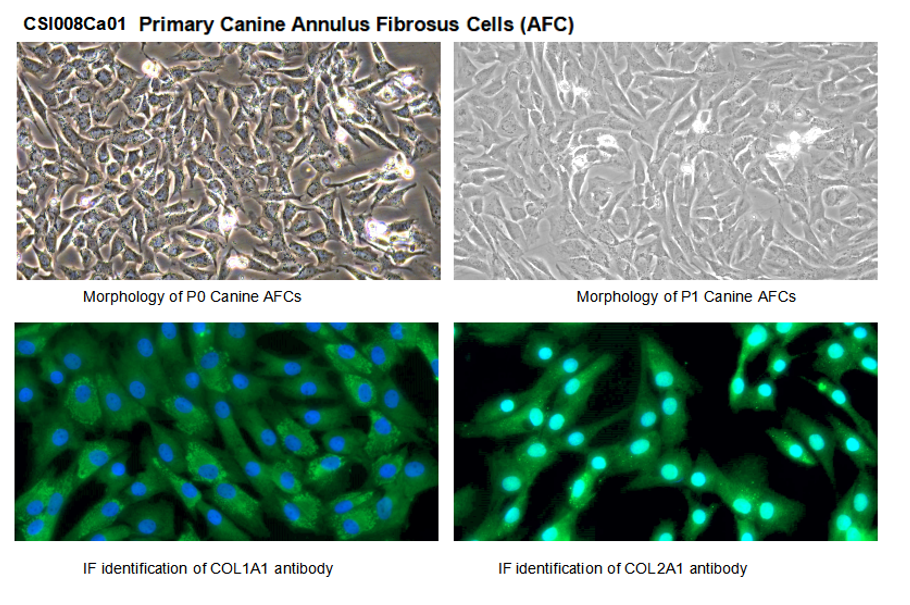
Figure 1 Primary Canine Annulus Fibrosus Cells (AFC)
Directly isolated from fresh intervertebral-disc tissues, primary nucleus pulposus and annulus fibrosus cells retain donor genetic backgrounds, native phenotypes, differentiation status and responsiveness to microenvironmental signals. They deliver unique value across multiple IVDD-research workflows:
Disease-mechanism studies Primary nucleus pulposus cells support in-vitro senescence models (e.g. H₂O₂-induced stress) and inflammatory models (e.g. LPS stimulation). Researchers can assess how genes including MATN3 and USP5, or signalling cascades such as NF-κB, regulate cellular senescence, pyroptosis and extracellular-matrix turnover. Primary annulus fibrosus cell cultures permit separate evaluation of inner- and outer-annulus cellular responses to uncover early triggers of annular rupture.
Drug screening and target validation Mirroring physiological in-vivo responses, primary nucleus pulposus cells serve as reliable assay systems for testing candidate compounds (such as the natural product catalpol) for anti-degenerative or senescence-delaying effects. High-throughput screening performed with primary cell models effectively minimises false-positive read-outs.
Intervertebral-disc tissue engineering and regenerative medicine Primary nucleus pulposus and annulus fibrosus cells act as essential seed cells for disc organoid construction and cell-matrix-interaction investigations. Defined cellular biomarkers — such as COL2A1 for nucleus pulposus cells and SFRP1 for annulus fibrosus cells — enable rigorous identity confirmation and guarantee consistent cellular functionality.
Figure 2 Primary Canine Nucleus Pulposus Cells (NPC)
Cloud-Clone: upstream quality control empowering every stage of intervertebral disc research
Recognising that primary-cell quality originates at the source, Cloud-Clone draws on nearly two decades of technical expertise to implement a complete quality-control loop covering SPF-grade animal housing, GMP-compliant cell-preparation workflows and dual-ISO-certified quality-management systems. In-house SPF-animal facilities equipped with standard IVC housing enable full internal oversight of animal breeding and tissue-harvesting procedures. Every batch of primary nucleus pulposus and annulus fibrosus cells is produced with high purity, high viability and sterility.
Cloud-Clone’s primary-cell portfolio for intervertebral-disc research covers multiple species: human, mouse, rat, rabbit, dog, cat, goat, guinea-pig and more. Comprehensive source documentation and quality-validation datasets are supplied for each lot, laying a trustworthy foundation for experimental work from the very beginning.
Robust control over the two fundamental cell types of intervertebral discs strengthens translational research pipelines bridging in-vitro observations to in-vivo outcomes. Cloud-Clone partners with global investigators pursuing mechanistic insights and therapeutic breakthroughs for low-back-pain and intervertebral disc degeneration.
For further information on Cloud-Clone’s primary-cell products for intervertebral disc-degeneration research, please visit www.cloud-clone.com.cn
Low-back-pain and intervertebral disc degeneration impose massive global public-health burdens. Translational progress is frequently hindered by the phenotypic drift of immortalised cell lines and the lack of physiologically relevant in-vitro assay systems. Primary nucleus pulposus and annulus fibrosus cells faithfully recapitulate native cellular behaviours, supporting mechanistic dissection, drug candidate evaluation and tissue-engineering development for IVDD. Backed by end-to-end quality management, Cloud-Clone supplies well-validated multi-species primary-cell resources to help global research teams generate reproducible, high-impact findings in intervertebral disc and low-back-pain studies.
About Cloud-Clone Corp.
Cloud-Clone Corp. is dedicated to the development and production of high-quality immunoassay reagents and detection solutions. With a focus on antibody engineering, multiplex assay development, and cross-platform compatibility, the company provides research tools designed to support precision medicine and advanced biomedical investigation globally. Our core products and services include the research and development of proteins, antibodies, ELISA kits, primary cells, and multiplex cytokine assay kits, as well as professional CRO services to fully meet the diverse needs of biomedical research and related fields.
For more information about Cloud-Clone Corp, visit www.cloud-clone.com.
CLOUD-CLONE CORP.(CCC)
Tel: 001-832-538-0970, 0086-27-8425-9552
Email: mail@cloud-clone.com, sales@cloud-clone.us
Visit us on social media:
LinkedIn: https://www.linkedin.com/company/cloud-clone-corp/
Instagram: https://www.instagram.com/cloudclonecorp2023/
TickTok: https://www.tiktok.com/@cloudclonecorp2026
SuKi Duan
CLOUD-CLONE CORP.WUHAN
email us here
Visit us on social media:
LinkedIn
Instagram
TikTok
X
Legal Disclaimer:
EIN Presswire provides this news content "as is" without warranty of any kind. We do not accept any responsibility or liability for the accuracy, content, images, videos, licenses, completeness, legality, or reliability of the information contained in this article. If you have any complaints or copyright issues related to this article, kindly contact the author above.
