



ZHENJIANG, JIANGSU, CHINA, August 13, 2026 /EINPresswire.com/ -- Multi-store eyewear retail chains have to continuously optimize how they handle custom prescriptions across regional storefronts, and this brings real logistical and inventory challenges for procurement teams. A common solution is to centralize sourcing for Custom Prescription Optical Lenses through one production partner, bridging wholesale purchasing power with the wide range of individual prescriptions coming out of each store. Done well, this reduces inventory bottlenecks at the store level and improves consistency across the whole chain.
Material Selection: Substrates for Complex Prescriptions
Building a reliable custom-lens supply chain starts with a broad, adaptable raw-material lineup. Multi-store retail operations regularly encounter prescriptions that standard finished stock cannot cover — high astigmatism, strong prescriptions, prism requirements, and significant power differences between the two eyes all call for specialized configurations. Offset-center or specially selected blanks can provide additional usable diameter and positioning flexibility for oversized frames, high prescriptions, and complex edging requirements.
Maintaining deep semi-finished blank inventory matters just as much for ongoing scalability. HONGCHEN Optical stocks semi-finished blanks across single-vision high power, bifocal, photochromic, and freeform progressive categories, and across its 1.56, 1.59 PC, 1.61 MR-8, 1.67, and 1.74 resin range, giving retail chains broader coverage for standard, high-power, and customized prescription requirements.
RX Lab Customization: Freeform Surfacing and Coating
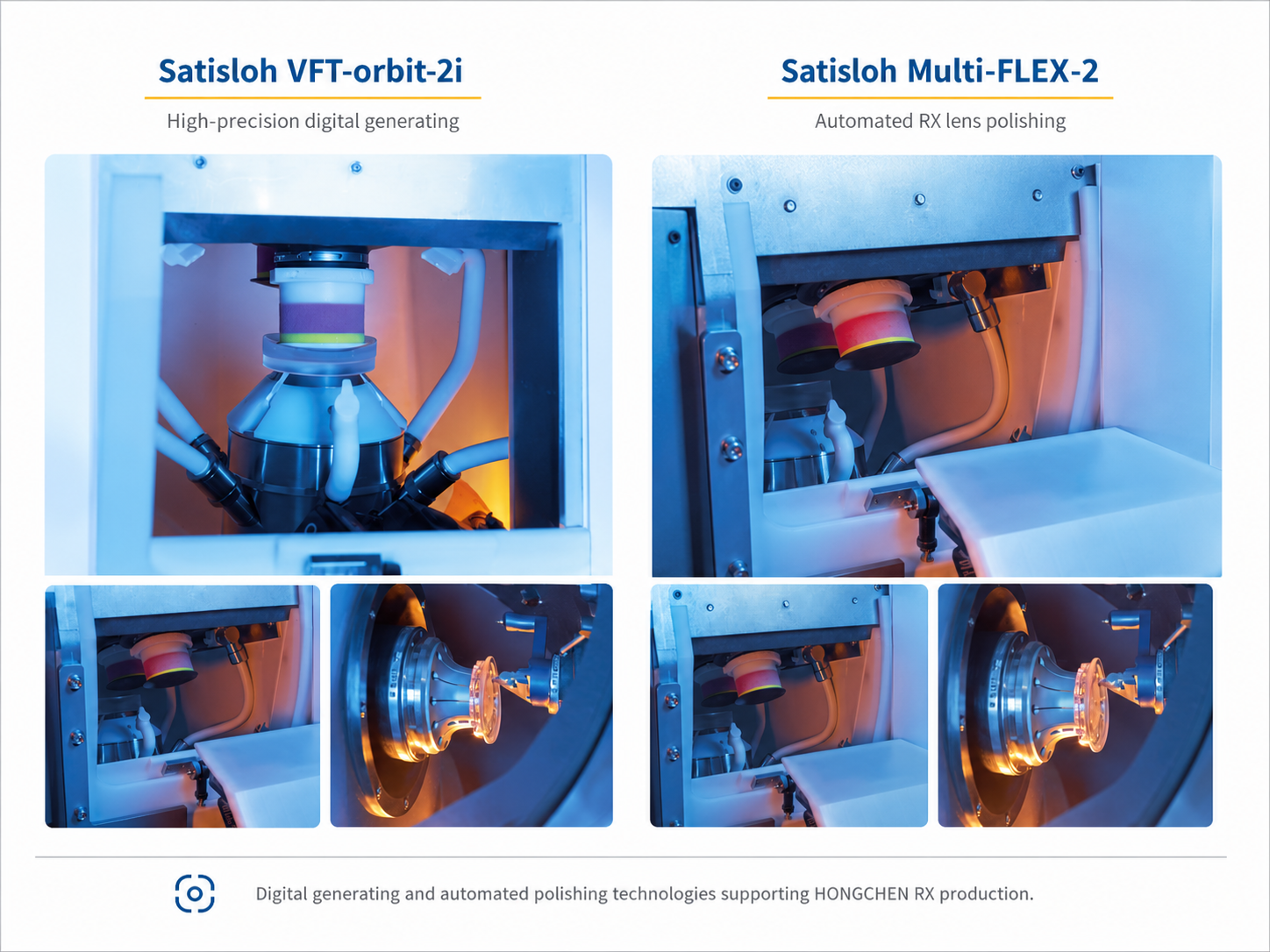
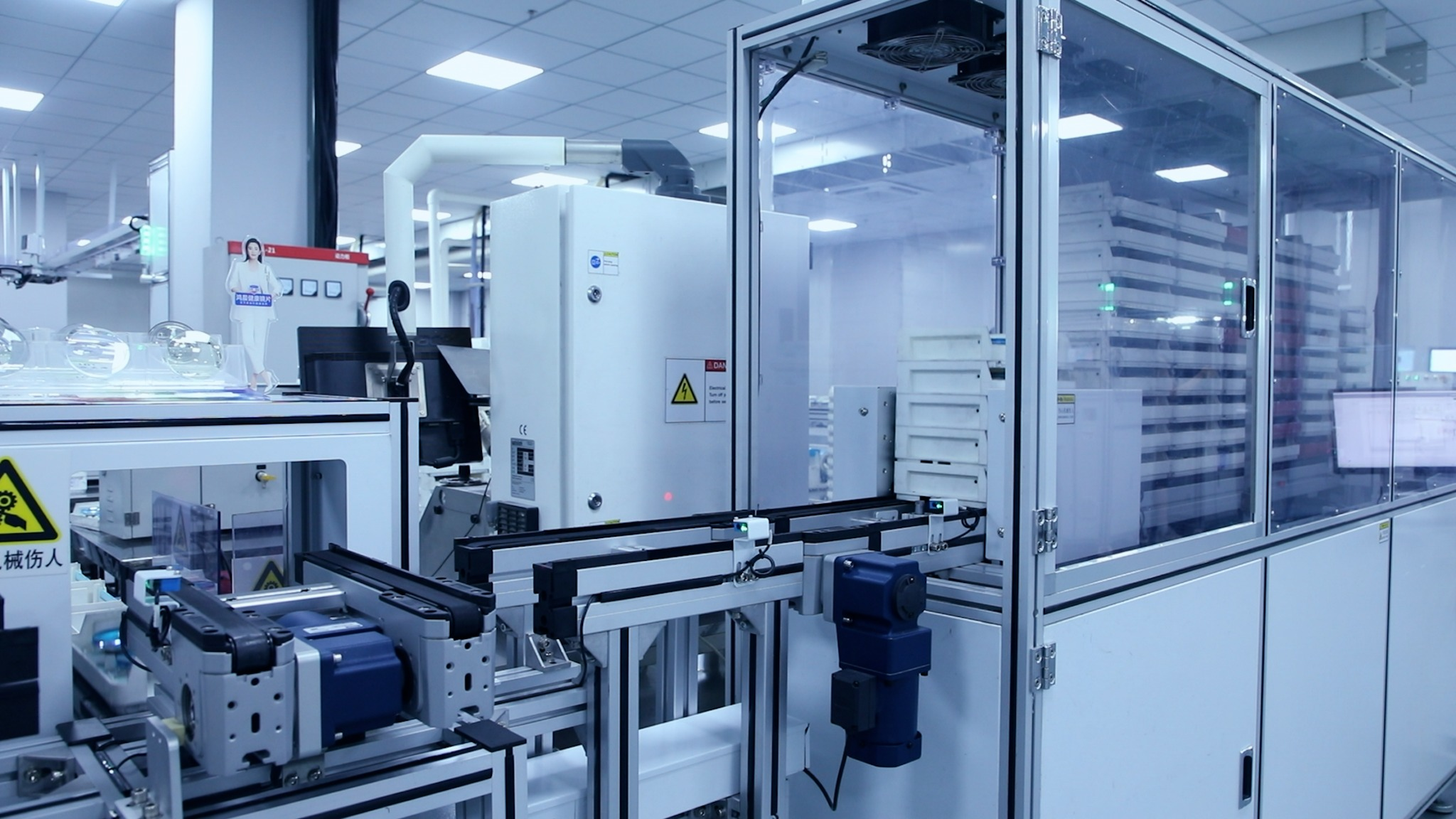
Turning raw blanks into finished prescription lenses requires a well-equipped RX lab. HONGCHEN Optical operates three Schneider HSC Modulo ONE high-speed freeform generators, alongside Satisloh VFT-orbit-2i digital generating equipment and Multi-FLEX-2 fully automated polishing systems. The HSC Modulo ONE and VFT-orbit-2i provide complementary digital generating capacity, while the Multi-FLEX-2 supports automated polishing across different RX geometries and lens diameters. Digital freeform processing calculates the posterior surface point by point and can optimize the lens surface according to prescription data and, where supported by the selected design, fitting parameters such as vertex distance, pantoscopic tilt, and frame wrap. Depending on the selected progressive design, this approach can improve the balance among distance, intermediate, and near zones.
After surfacing and polishing, lenses move through controlled hard-coating and anti-reflective coating processes according to the selected lens specification. Hydrophobic and oleophobic surface treatments can also be applied where required. Optional anti-fog treatment is available upon request as an additional paid feature rather than as a standard coating on all lenses. These coating options can help improve daily maintenance, wearer comfort, and product consistency under normal use.
Compliance and Quality Verification for Multi-Store Supply
Sourcing custom lenses across borders carries real operational risk if the manufacturing partner isn't well aligned on regulatory documentation. Large retail networks need tight verification of corridor length and power accuracy across thousands of monthly shipments — even small deviations in cylinder axis or progressive inset can cause a wearer to reject a pair, leading to costly remakes. Buyers should prioritize suppliers that maintain solid documentation and can back it up with data.
HONGCHEN Optical maintains an ISO13485 quality management system, current FDA registration, and organized CE documentation. Optical power, cylinder axis, addition, and surface quality are inspected according to established quality-control procedures using standardized optical measurement equipment. This oversight helps retail chains maintain more consistent receiving, edging, and dispensing procedures across different locations.
Private Labeling and Point-of-Sale Merchandising
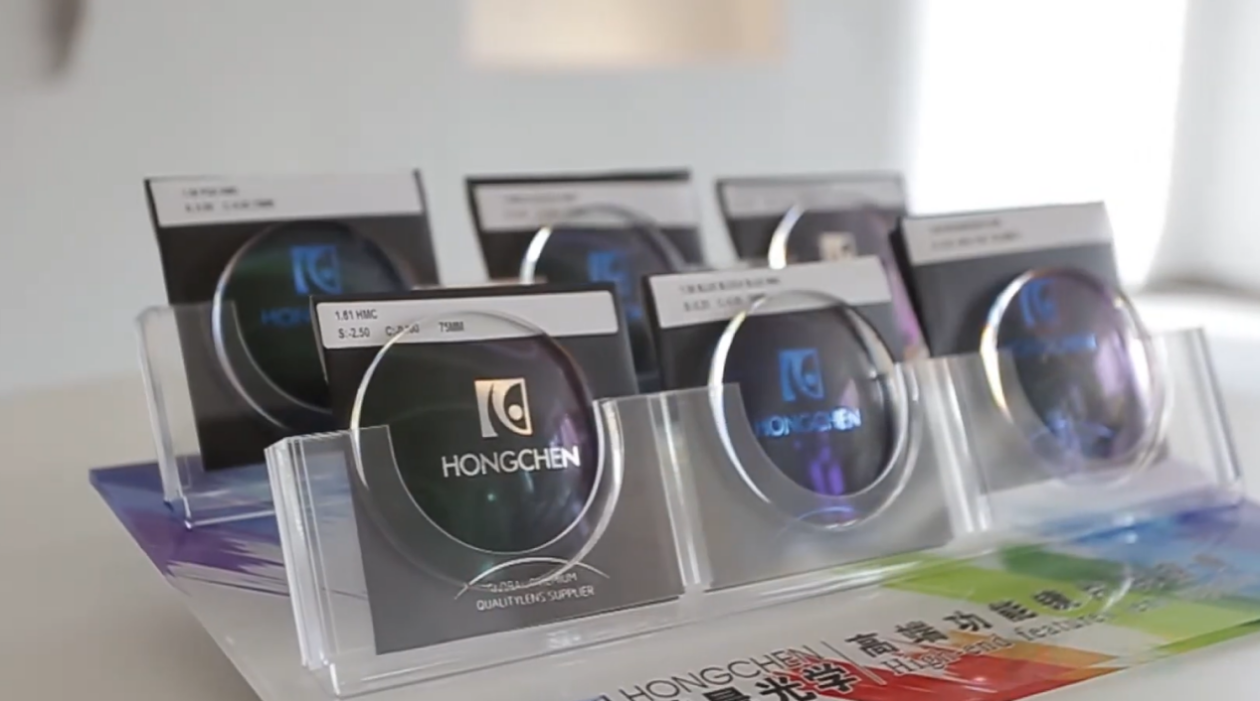
Strategic supply chain management goes beyond the lab into brand reinforcement. Multi-store operations frequently use custom private-label packaging to turn standard shipments into branded assets. HONGCHEN Optical supports this with private-label lens envelopes carrying precise technical descriptions, along with matching OEM boxes designed for efficient high-volume packaging and distribution.
At the retail counter, optional lens demonstration tools can help opticians demonstrate photochromic performance and illustrate blue-light filtering features, reinforcing the same brand story that starts with the packaging.
Retail Program Support and Channel Activities
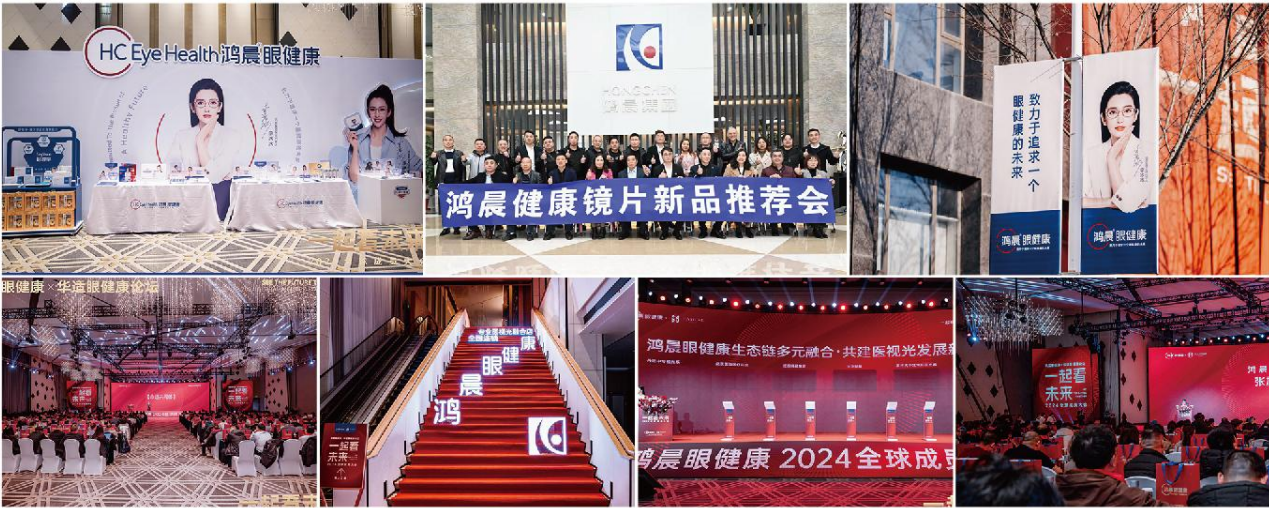
Beyond lens production and private-label packaging, HONGCHEN Optical also supports retail-oriented programs through product launch activities, merchandising support, distributor education, and brand communication materials. For multi-store retail chains, this type of support can help reinforce product positioning, support staff education, and create more consistent consumer-facing communication across different locations. The scope and format of support can be adapted to the target market, product program, and cooperation plan.
Synchronized Replenishment for Multi-Store Networks
The final piece of a capital-efficient sourcing model is a structured digital ordering and replenishment workflow between stores and the factory. Manual, paper-based ordering introduces entry errors and extends delivery timelines. Structured digital order submission to HONGCHEN Optical (JIANGSU HONGCHEN OPTICAL CO., LTD.) can reduce manual re-entry and improve prescription accuracy. Standard RX orders can be completed in as little as 48 hours, subject to lens material, coating, prescription complexity, and order confirmation.
This can help multi-store operations reduce the need to hold excessive local stock of high-power or high-index lenses while maintaining reliable fulfillment planning. To explore the full range of custom RX capabilities and supply arrangements, please visit the official corporate site : https://www.hc-optical.net/
Material Selection: Substrates for Complex Prescriptions
Building a reliable custom-lens supply chain starts with a broad, adaptable raw-material lineup. Multi-store retail operations regularly encounter prescriptions that standard finished stock cannot cover — high astigmatism, strong prescriptions, prism requirements, and significant power differences between the two eyes all call for specialized configurations. Offset-center or specially selected blanks can provide additional usable diameter and positioning flexibility for oversized frames, high prescriptions, and complex edging requirements.
Maintaining deep semi-finished blank inventory matters just as much for ongoing scalability. HONGCHEN Optical stocks semi-finished blanks across single-vision high power, bifocal, photochromic, and freeform progressive categories, and across its 1.56, 1.59 PC, 1.61 MR-8, 1.67, and 1.74 resin range, giving retail chains broader coverage for standard, high-power, and customized prescription requirements.
RX Lab Customization: Freeform Surfacing and Coating
Turning raw blanks into finished prescription lenses requires a well-equipped RX lab. HONGCHEN Optical operates three Schneider HSC Modulo ONE high-speed freeform generators, alongside Satisloh VFT-orbit-2i digital generating equipment and Multi-FLEX-2 fully automated polishing systems. The HSC Modulo ONE and VFT-orbit-2i provide complementary digital generating capacity, while the Multi-FLEX-2 supports automated polishing across different RX geometries and lens diameters. Digital freeform processing calculates the posterior surface point by point and can optimize the lens surface according to prescription data and, where supported by the selected design, fitting parameters such as vertex distance, pantoscopic tilt, and frame wrap. Depending on the selected progressive design, this approach can improve the balance among distance, intermediate, and near zones.
After surfacing and polishing, lenses move through controlled hard-coating and anti-reflective coating processes according to the selected lens specification. Hydrophobic and oleophobic surface treatments can also be applied where required. Optional anti-fog treatment is available upon request as an additional paid feature rather than as a standard coating on all lenses. These coating options can help improve daily maintenance, wearer comfort, and product consistency under normal use.
Compliance and Quality Verification for Multi-Store Supply
Sourcing custom lenses across borders carries real operational risk if the manufacturing partner isn't well aligned on regulatory documentation. Large retail networks need tight verification of corridor length and power accuracy across thousands of monthly shipments — even small deviations in cylinder axis or progressive inset can cause a wearer to reject a pair, leading to costly remakes. Buyers should prioritize suppliers that maintain solid documentation and can back it up with data.
HONGCHEN Optical maintains an ISO13485 quality management system, current FDA registration, and organized CE documentation. Optical power, cylinder axis, addition, and surface quality are inspected according to established quality-control procedures using standardized optical measurement equipment. This oversight helps retail chains maintain more consistent receiving, edging, and dispensing procedures across different locations.
Private Labeling and Point-of-Sale Merchandising
Strategic supply chain management goes beyond the lab into brand reinforcement. Multi-store operations frequently use custom private-label packaging to turn standard shipments into branded assets. HONGCHEN Optical supports this with private-label lens envelopes carrying precise technical descriptions, along with matching OEM boxes designed for efficient high-volume packaging and distribution.
At the retail counter, optional lens demonstration tools can help opticians demonstrate photochromic performance and illustrate blue-light filtering features, reinforcing the same brand story that starts with the packaging.
Retail Program Support and Channel Activities
Beyond lens production and private-label packaging, HONGCHEN Optical also supports retail-oriented programs through product launch activities, merchandising support, distributor education, and brand communication materials. For multi-store retail chains, this type of support can help reinforce product positioning, support staff education, and create more consistent consumer-facing communication across different locations. The scope and format of support can be adapted to the target market, product program, and cooperation plan.
Synchronized Replenishment for Multi-Store Networks
The final piece of a capital-efficient sourcing model is a structured digital ordering and replenishment workflow between stores and the factory. Manual, paper-based ordering introduces entry errors and extends delivery timelines. Structured digital order submission to HONGCHEN Optical (JIANGSU HONGCHEN OPTICAL CO., LTD.) can reduce manual re-entry and improve prescription accuracy. Standard RX orders can be completed in as little as 48 hours, subject to lens material, coating, prescription complexity, and order confirmation.
This can help multi-store operations reduce the need to hold excessive local stock of high-power or high-index lenses while maintaining reliable fulfillment planning. To explore the full range of custom RX capabilities and supply arrangements, please visit the official corporate site : https://www.hc-optical.net/
JIANGSU HONGCHEN OPTICAL CO.,LTD.
+ +86 511-88036668
email us here
Visit us on social media:
LinkedIn
Facebook
YouTube
Legal Disclaimer:
EIN Presswire provides this news content "as is" without warranty of any kind. We do not accept any responsibility or liability for the accuracy, content, images, videos, licenses, completeness, legality, or reliability of the information contained in this article. If you have any complaints or copyright issues related to this article, kindly contact the author above.


