


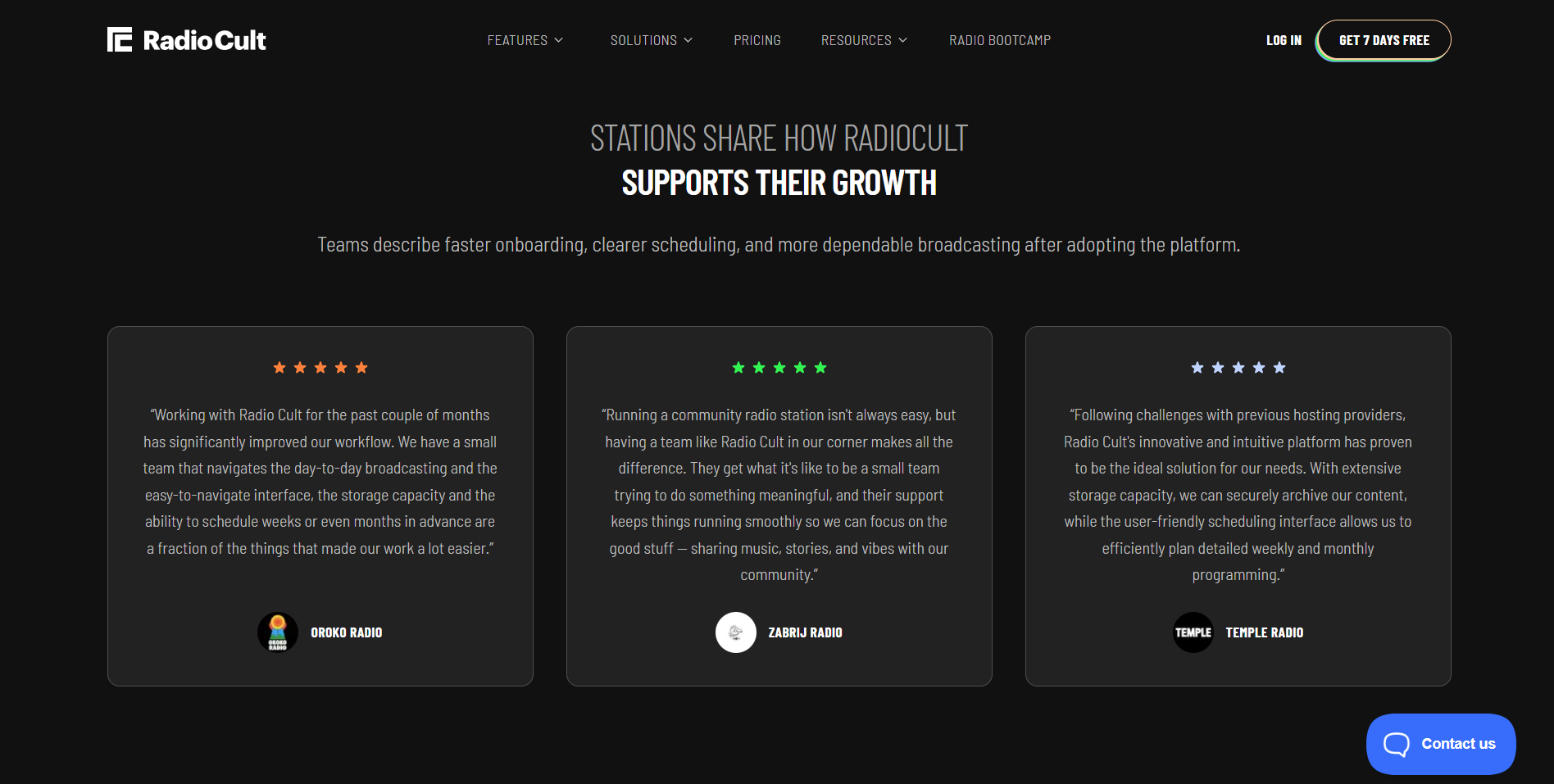
Independent and community stations, including Oroko Radio, Zabrij Radio, and Temple Radio, describe faster onboarding, clearer scheduling, and more dependable broadcasting with RadioCult.
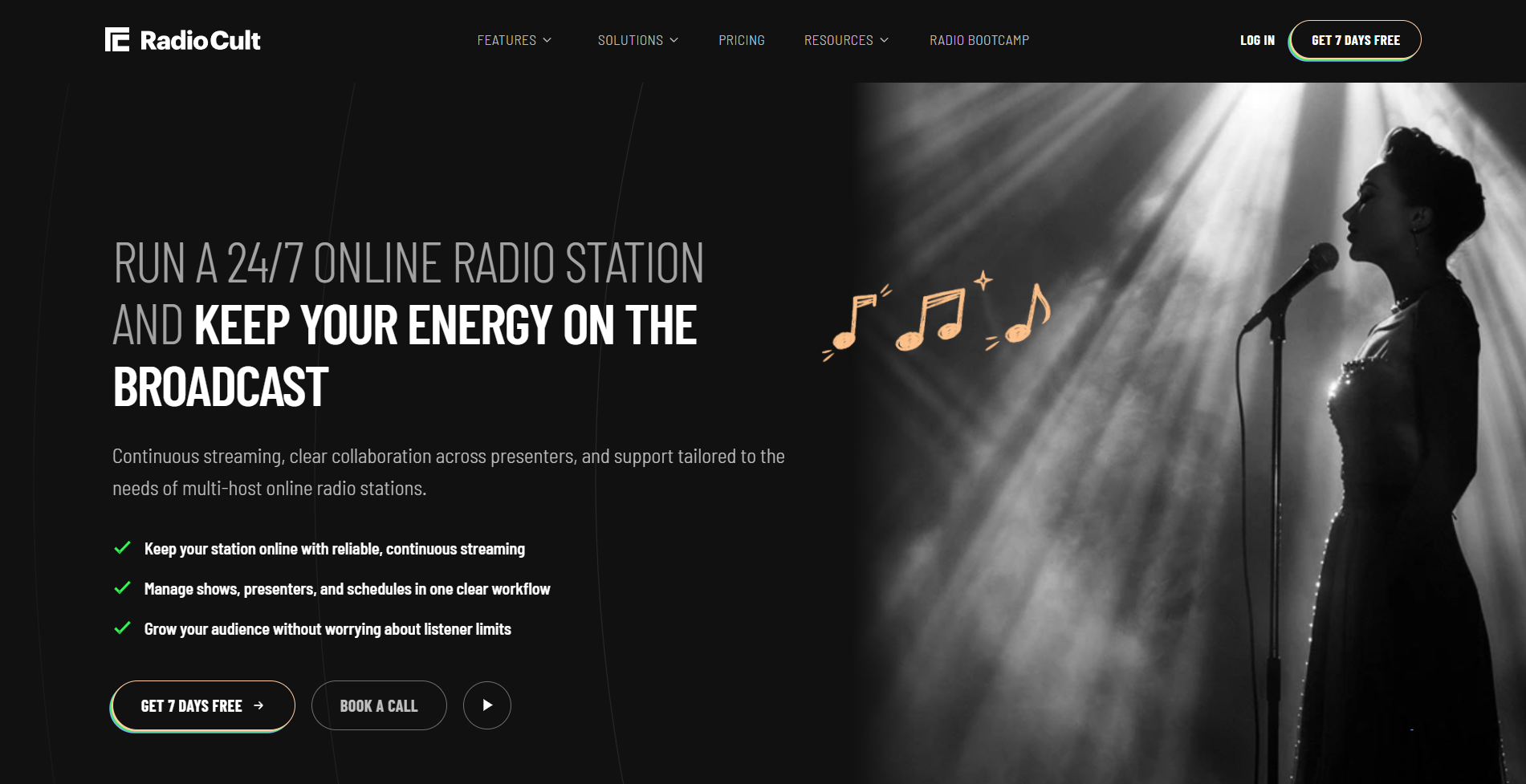
The RadioCult homepage, where broadcasters can start a 24/7 online radio station with scheduling, live and automated broadcasting, and unlimited concurrent listeners.
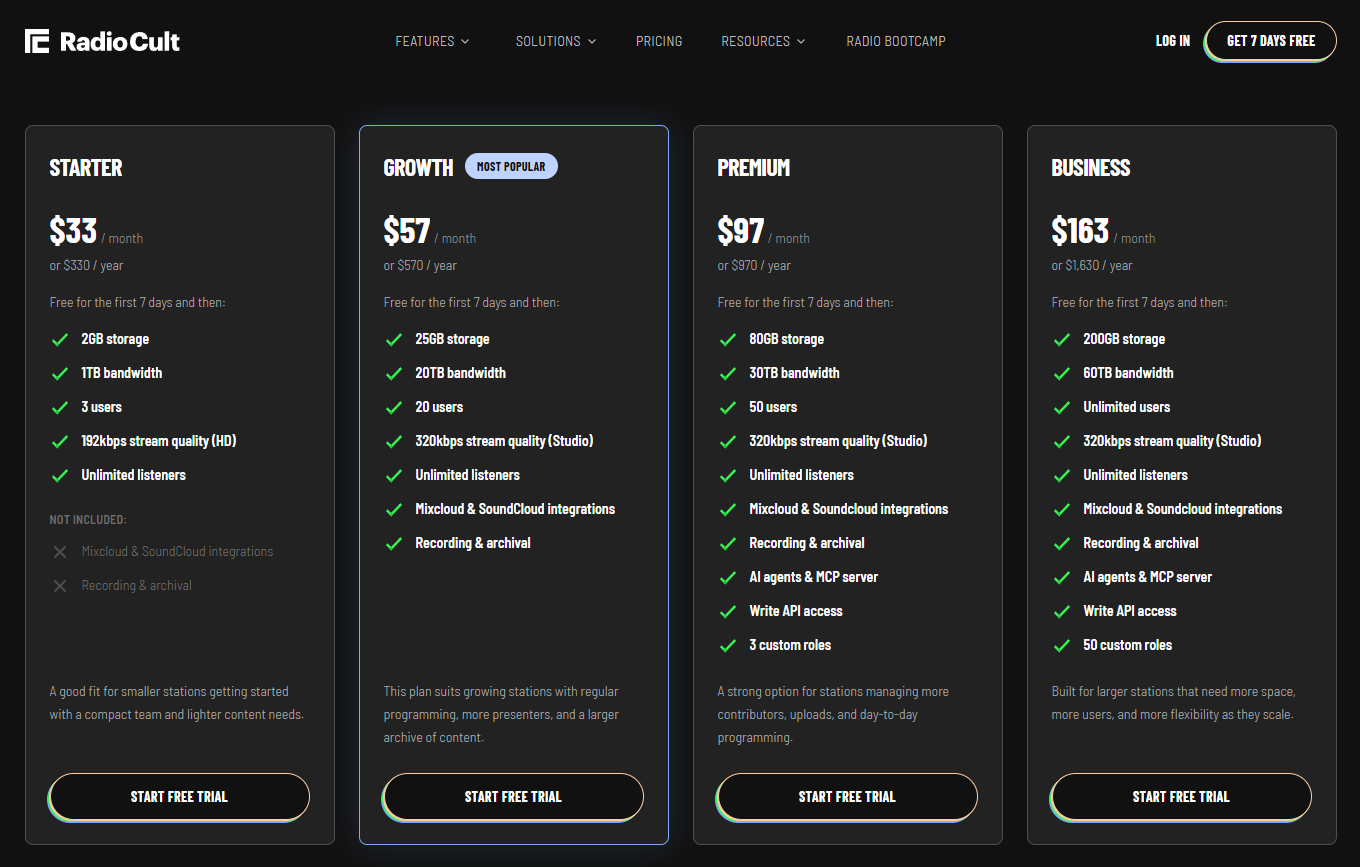
RadioCult's four hosting plans, from Starter at $33 per month to Business at $163 per month, each with unlimited concurrent listeners and a 7-day free trial.
Volunteer coordination, staying live without an engineer, funding-friendly reporting, and room to grow: what community stations should look for in a platform.
The defining feature of community radio is people. According to RadioCult's guide, the average UK community station is powered by around 87 volunteers, and US stations lean on about 125. A platform built for that reality needs per-presenter logins and roles, so volunteers can manage their own shows and upload their own content without touching station-wide settings, and a shared schedule the whole team can see and plan around.
The second thing to check is whether the station can stay on air without a dedicated engineer. Most community stations do not have one. Hosted broadcasting that runs around the clock without the station managing its own server, with AutoDJ to fill any gap so the stream never falls silent, is what keeps a volunteer-run station live between shows.
"Community radio is a people project before it is a technology project," said a RadioCult spokesperson. "The platform that fits is the one a rotating team of volunteers can actually run, that stays live when nobody is in the studio, and that a station can afford on a grant budget."
Budget is the third factor. RadioCult's guide notes that more than six in ten US community stations operate on less than $100,000 a year, with funding coming from listener donations, presenter subscriptions, sponsors, and grants. Two things matter in that context: pricing a station can sustain year to year, and analytics it can export to show sponsors and grant bodies real, credible listener numbers.
The fourth is room to grow. A platform should not penalize a station for succeeding. Unlimited concurrent listeners means a station can promote a show or ride an unexpected moment of attention without hitting a ceiling tied to its plan tier, and listing a stream where listeners already are helps a small station reach a wider audience.
These priorities point toward tools built for multi-presenter, mission-driven stations rather than solo hobbyists. RadioCult's guide to starting an online community radio station and its features for independent and community broadcasters are available on its website.
About RadioCult
RadioCult is an online radio hosting platform built for independent and community stations that broadcast 24/7 with multiple presenters. It combines live and automated broadcasting, radio-native scheduling, station and artist management, and unlimited concurrent listeners in one platform, with human support and pricing that starts at $33 per month. Learn more at https://www.radiocult.fm.
Corey Haines
Conversion Factory
email us here
Visit us on social media:
Instagram
Facebook
X
Legal Disclaimer:
EIN Presswire provides this news content "as is" without warranty of any kind. We do not accept any responsibility or liability for the accuracy, content, images, videos, licenses, completeness, legality, or reliability of the information contained in this article. If you have any complaints or copyright issues related to this article, kindly contact the author above.
