



Official company logo for Nitrogen Landscapes, a premier commercial and residential landscape development and property maintenance firm in Los Angeles.
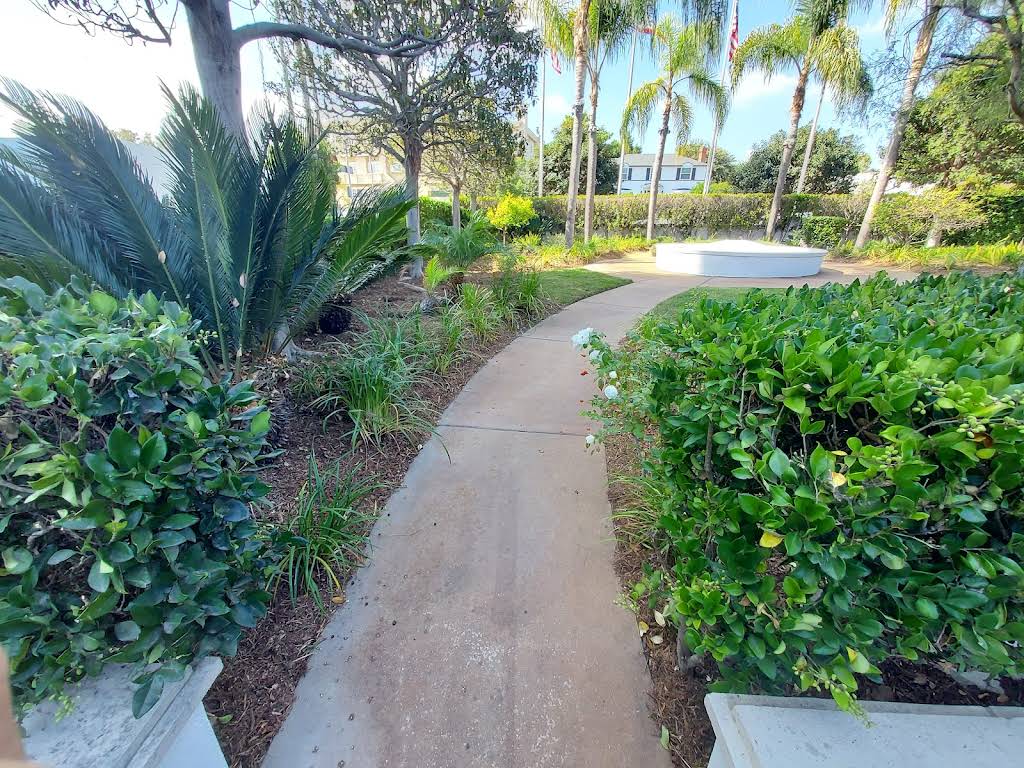
A professionally landscaped commercial walkway featuring lush green shrubs, mature palm trees, and native plants designed by Nitrogen Landscapes.
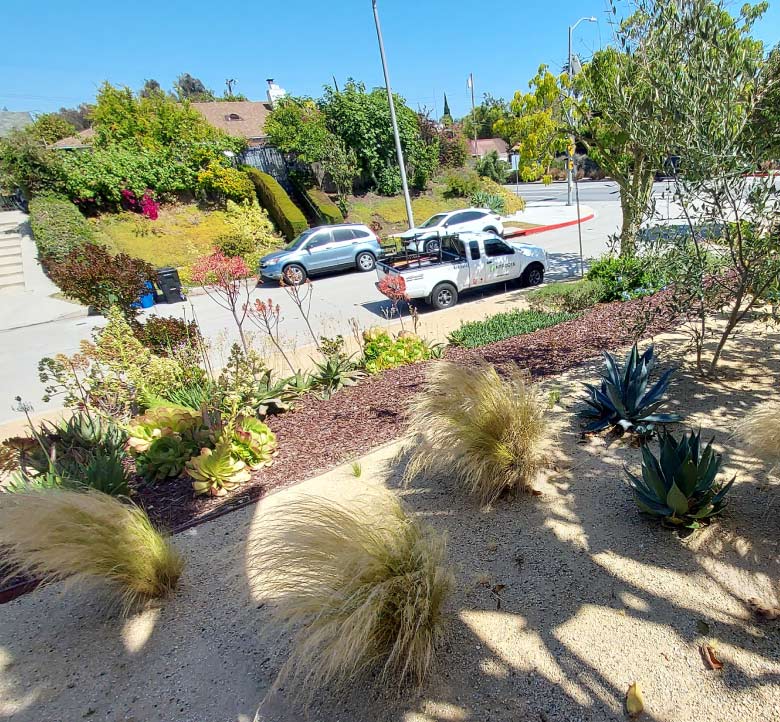
A newly retrofitted commercial landscape featuring drought-tolerant native plants, ornamental grasses, and clean mulched beds managed by Nitrogen Landscapes.
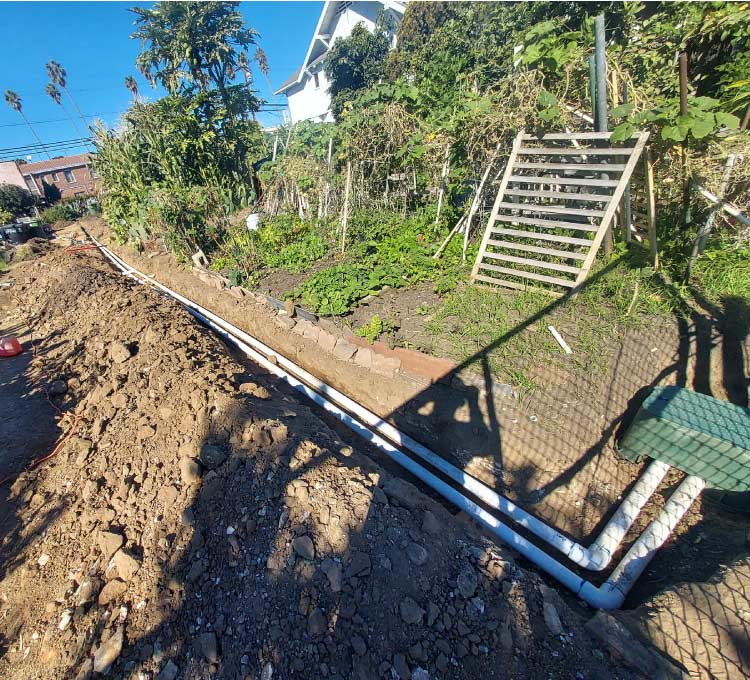
A newly installed commercial exterior side passage featuring decomposed granite walkways and gravel drainage borders to manage stormwater runoff.
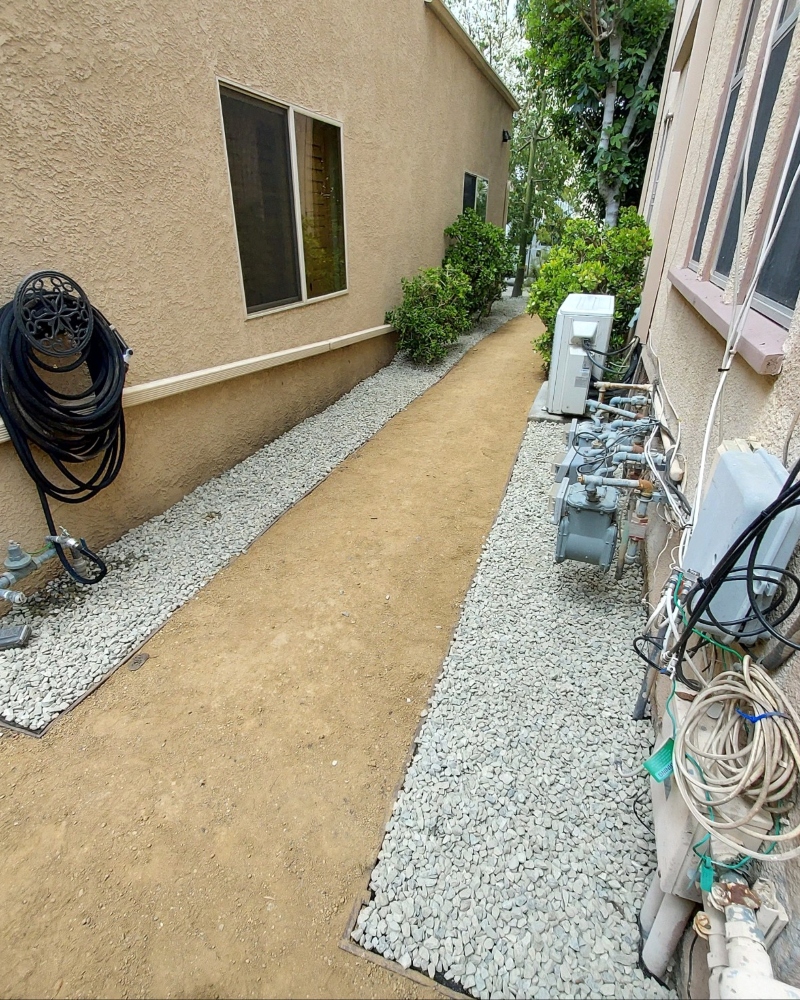
A commercial hardscape retrofit project featuring a decomposed granite walkway and gravel borders for effective drainage and erosion control.
LA commercial properties launch a $4.8B retrofit cycle, converting vacant hardscapes into biophilic outdoor workspaces to boost tenant retention.
LOS ANGELES, CA, UNITED STATES, August 20, 2026 /EINPresswire.com/ -- Facing persistent post-pandemic commercial office vacancies and evolving corporate tenant preferences, commercial property owners across Greater Los Angeles are executing a structural shift in asset utilization: transforming dormant hardscapes, unmonetized lawns, and underutilized outdoor plazas into functional, biophilic outdoor workspaces. According to regional commercial real estate analysis and landscape architectural assessments, Southern California office portfolios are currently driving an estimated $4.8 billion landscape capital retrofit cycle, leveraging exterior square footage to stabilize lease renewals and reclaim net operating income.
As overall commercial vacancy rates across Los Angeles County hover around 23.4%, institutional landlords are shifting focus away from high-cost interior capital expenditures. Instead, properties are being adapted to support return-to-office initiatives through microclimate-engineered outdoor infrastructure. Spaces that were historically treated as passive landscape architecture or pure maintenance overhead are now being re-engineered as functional, usable floor space equipped with commercial-grade power distribution, shade structures, and acoustic buffers.
Key Market Drivers & Regional Indicators:
- Square Footage Optimization: Average commercial exterior retrofit projects convert 4,500 to 12,000 square feet of unused concrete into usable tenant workspace at roughly 35% of the cost per square foot of interior structural expansion.
- Tenant Retention Premium: Class-A properties featuring active, functional outdoor amenities report up to a 14% higher lease renewal rate compared to un-retrofitted regional competitors.
- Microclimate & Thermal Mitigation: Integrated biophilic designs and tree canopies reduce localized ambient surface temperatures by 8°F to 12°F, extending usable outdoor operational hours in Southern California by over 200 days annually.
The Macroeconomic Pressures Driving the Exterior Asset Shift
The adoption of hybrid work models across Southern California's technology, entertainment, and professional services sectors has created fundamental financial implications for commercial asset management. Traditional interior upgrades—such as lobby overhauls or interior tenant improvement (TI) allowances—no longer yield historical returns on investment. Commercial landlords face growing demand from lenders and equity partners to demonstrate optimal square footage utilization without incurring excessive capital debt.
Data from regional real estate market tracking indicates that outdoor workspaces are becoming a decisive factor in corporate leasing decisions. Enterprise tenants increasingly request access to functional outdoor meeting areas, collaborative hubs, and open-air workspaces. This adjustment enables office properties to expand usable functional capacity while allowing corporate tenants to optimize their enclosed interior footprints.
Furthermore, rising regional energy costs and local municipal sustainability guidelines across Los Angeles County are accelerating hardscape retrofits. Dense, unshaded concrete plaza surfaces contribute directly to urban heat island effects, elevating building cooling loads. By replacing heat-retaining hardscapes with permeable soils, deep-root native canopies, and efficient drip irrigation systems, asset managers can simultaneously curb operational HVAC costs and enhance tenant retention.
Engineering & Technical Infrastructure Requirements
Converting commercial land from an aesthetic backdrop into an active workspace requires a combination of civil engineering, agronomy, and modern exterior design. Unlike residential landscape projects, commercial outdoor work environments must satisfy strict Americans with Disabilities Act (ADA) accessibility guidelines, municipal commercial building codes, heavy-traffic durability standards, and long-term climate resilience.
Commercial landscape developments now routinely incorporate weatherproof power access hubs, low-voltage task lighting, integrated acoustic baffling to dampen urban street noise, and durable modular seating engineered for high UV exposure. Plant selection has similarly evolved from water-intensive turf toward drought-tolerant, deep-root native flora that deliver biophilic stress-reduction benefits while supporting stormwater management and water conservation goals.
Industry Analysis: Converting Passive Land into Operational Value
Industry analysts emphasize that the financial perspective on commercial landscape development has permanently shifted. Commercial property owners and facility managers can no longer treat outdoor acreage strictly as an unmonetized visual element or a recurring line-item expense.
"Exterior square footage is no longer decorative space—it's high-yielding asset space. Converting underutilized lawns or concrete into functional outdoor work hubs directly improves tenant retention across Class-A commercial portfolios."
— Luis Navarro, Owner & Principal, Nitrogen Landscapes
"In the Southern California commercial market, property managers are evaluating every outdoor square foot through the lens of tenant satisfaction and operational efficiency. A well-executed commercial hardscape and landscape retrofit delivers clear amenity value at a fraction of the cost of interior structural overhauls."
— Commercial Development Specialist, Nitrogen Landscapes
Impact Across Greater Los Angeles Commercial Corridors
The trend toward hardscape monetization is evident across Southern California’s prime commercial business districts, including Downtown Los Angeles, Santa Monica, Century City, Torrance, Malibu, and the South Bay commercial corridors. In these submarkets, where real estate values remain high, converting unused exterior space offers an immediate path toward property differentiation.
Additionally, as Los Angeles municipal agencies place greater emphasis on water efficiency and urban greening mandates, commercial properties that proactively remove non-functional turf and hardscape in favor of sustainable, water-efficient green spaces position themselves to benefit from municipal water rebates, lowered stormwater utility fees, and improved environmental sustainability metrics.
About Nitrogen Landscapes
Nitrogen Landscapes is a premier commercial and residential landscape development, hardscaping, and property maintenance firm based in Los Angeles, California. Owned and operated by Luis Navarro, the company provides full-service landscape construction, irrigation management, hardscape retrofits, and ongoing site maintenance across Greater Los Angeles, Downtown LA, Santa Monica, Torrance, Malibu, and surrounding coastal regions. Nitrogen Landscapes partners with commercial asset managers, real estate owners, and property operators to build functional, sustainable, and high-value outdoor environments.
Luis Chavez
Chavez Web Design, LLC
+1 559-553-5000
email us here
Visit us on social media:
Other
Legal Disclaimer:
EIN Presswire provides this news content "as is" without warranty of any kind. We do not accept any responsibility or liability for the accuracy, content, images, videos, licenses, completeness, legality, or reliability of the information contained in this article. If you have any complaints or copyright issues related to this article, kindly contact the author above.
