


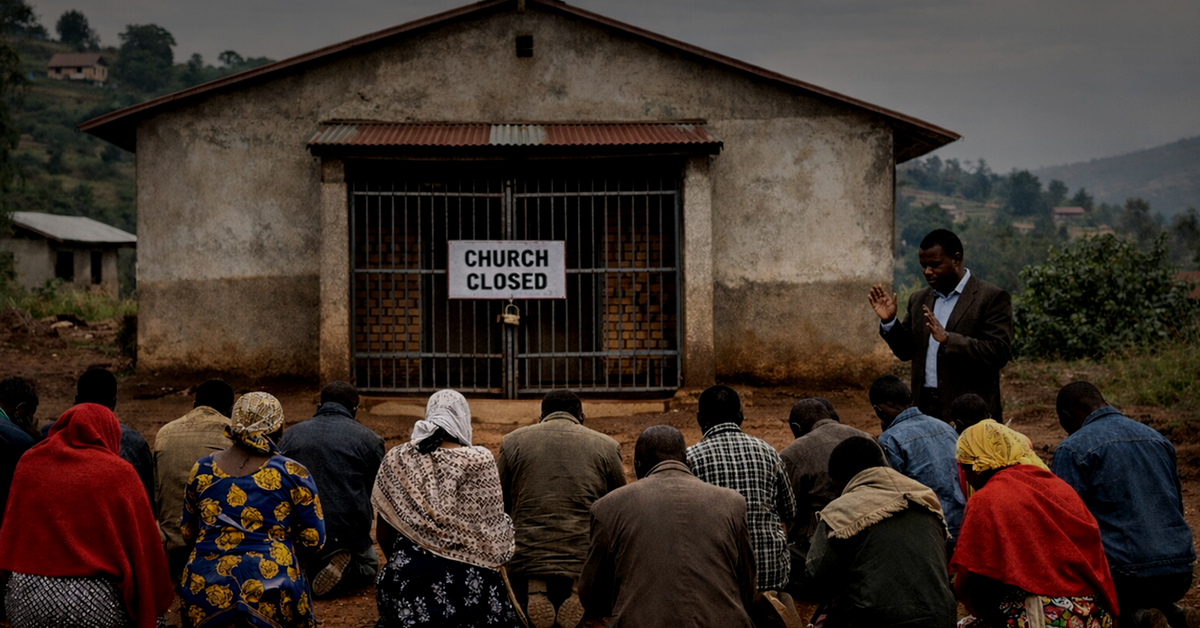
10,000+ Churches Closed in Rwanda as the Risk Grows Across Africa
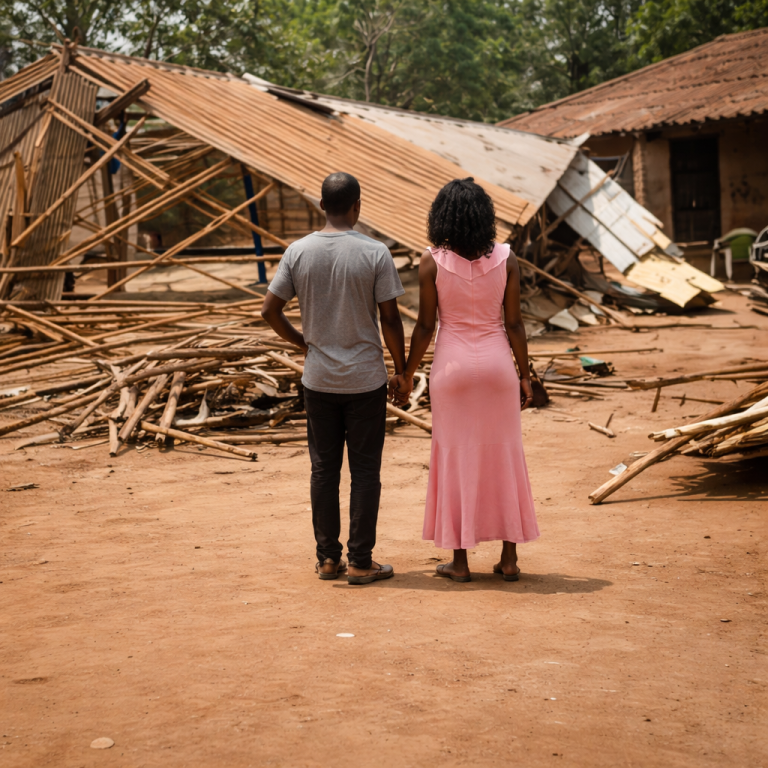
Government Bulldozes Church in Uganda
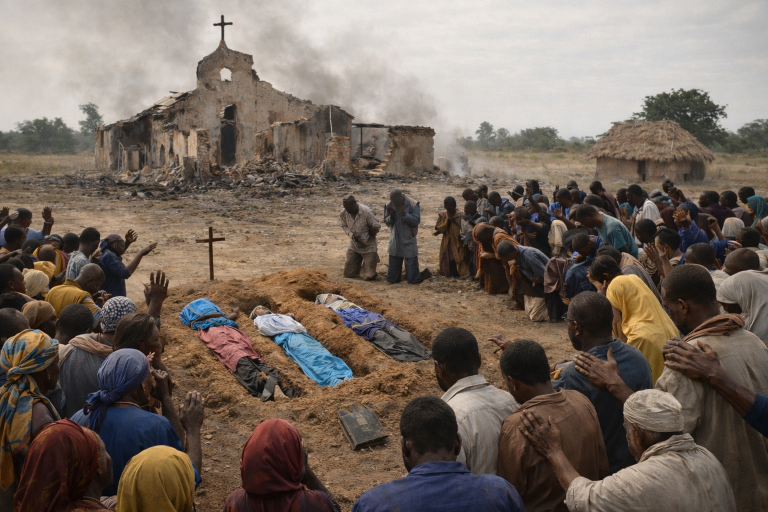
Massacre of Christians in Northern Nigeria
Open Doors U.S. CEO Ryan Brown, Medical Missionary Dr. John Hodgson & Fully Equipped Bible Institute Call for Urgent Action in At-Risk African Nations
PHOENIX, AZ, UNITED STATES, August 11, 2026 /EINPresswire.com/ -- PHOENIX, Ariz. — Fully Equipped Bible Institute (FEBI) today released a new expert panel discussion addressing the growing dangers facing Christians in Africa, including violent persecution, increasing government regulation, church closures, and the urgent shortage of biblically trained pastors.
The panel features Ryan Brown, Chief Executive Officer of Open Doors U.S., Dr. John Hodgson, interventional cardiologist and medical missionary; Dr. Stephen Isaac, Academic Vice President of Fully Equipped Bible Institute and Senior Pastor; and Dr. Vickie Isaac, President of Fully Equipped Bible Institute (FEBI). Together, the panelists provide a unique combination of expertise in global Christian persecution, church leadership, theological education, medical missions, and emerging government regulations impacting churches across Africa.
Brown documented the growing wave of violent persecution occurring throughout Sub-Saharan Africa and emphasized that persecuted Christians are asking the global Church not to leave them alone in their suffering.
“There has been a multi-year trend happening throughout Sub-Saharan Africa where persecution is taking an increased complexion of violence,” said Brown. “More and more Christians are being violently opposed for their faith.”
The panel discussion follows new international recognition of violence against Christians in Africa that the world can no longer ignore. On June 8, 2026, United Nations human rights experts warned of credible reports in Nigeria of killings, abductions, sexual violence, forced conversion, forced marriage, and acts tantamount to enforced disappearance targeting Christian and other religious minority communities, particularly women and girls. The U.S. House of Representatives has passed legislation that eliminates all funding to Nigeria until the massacre or torture of Christians is stopped. The experts described the actions taken as hopeful, as the reports are deeply troubling due to the deteriorating security situation in northern Nigeria and the Middle Belt, where armed extremist groups continue to operate amid persistent reports of impunity, institutional failures, and inadequate protection by authorities.
Brown also noted that Christians facing persecution are often not asking to be removed from hardship, but to be strengthened, equipped, and remembered in prayer. “Our brothers and sisters are not asking us to end the persecution. They are not asking us to pull them out of the persecution. They are asking that we not leave them alone in it.”
Dr. Hodgson warned that increasing government oversight of churches is creating new risks for congregations and pastors throughout Africa. He noted that approximately 750 million Christians live in Africa, with many worshiping in congregations that may be especially vulnerable to complex regulatory requirements.
“There is a trend toward greater governmental oversight of places of worship,” said Hodgson. “Many of these regulations are being justified as public safety measures, but they can disproportionately impact Christian congregations, especially small independent churches, pastors without formal training, and congregations that lack the resources necessary to comply with complex regulatory and building requirements.”
The panel also examined Rwanda’s church regulations, which have resulted in the closure of more than 10,000 churches to date, while raising concern that similar legislation is under consideration in other African nations. Dr. Stephen Isaac emphasized that the Church’s response must move beyond short-term mission projects alone and focus urgently on equipping pastors with sound biblical training. He described theological training as one of the most urgent needs of the global Church today.
“The pastoral call is to invest in the people,” said Dr. Stephen Isaac. “Only 5% of pastors globally have any form of formal biblical education. What we can do is invest in pastors who will invest in their people.”
Dr. Stephen Isaac said churches in developing nations are often lifelines for their communities, providing spiritual leadership, discipleship, care, stability, and hope in areas facing poverty, violence, persecution, and political instability. When pastors are equipped to rightly teach and apply God’s Word, he said, entire congregations and communities are strengthened.
Dr. Vickie Isaac emphasized that many pastors in Africa serve under extreme pressure while lacking access to formal biblical education and the practical ministry skills necessary to lead their congregations through crisis. As government regulations increasingly require pastors to hold recognized theological degrees, many rural and bivocational pastors face an impossible burden.
“Many of these pastors are paid in chickens, eggs, or they make $30 a month,” said Dr. Vickie Isaac. “They are called but not equipped for ministry. These regulations requiring pastors to have bachelor’s degrees in theology are coming, but they are legislating an impossibility. Churches and pastors across the continent of Africa are at risk.”
Dr. Vickie Isaac said the Fully Equipped Bible Institute was intentionally created to help remove the barriers that keep pastors in developing nations from receiving biblical higher education. Many pastors cannot leave their families, congregations, jobs, or rural communities to attend a traditional university. FEBI’s accessible online model allows pastors to continue serving while receiving theological, biblical, leadership, administration, and character-based training.
According to FEBI, pastors in developing nations need significant scholarship support, and individuals or churches can sponsor a pastor’s education for approximately $75 per month. FEBI’s current goal is to provide 80 additional scholarships for pastors in eight at-risk African nations.
“FEBI exists to step into the gap,” said Dr. Vickie Isaac. “When we invest in a pastor, we are investing in a church, a community, and potentially a nation.”
About Fully Equipped Bible Institute
Fully Equipped Bible Institute is a U.S.-based nonprofit Christian higher education institution focused on equipping pastors, ministry leaders, and serious followers of Jesus through accessible biblical and practical Christian higher education. FEBI’s mission is to remove barriers of geography, technology, and finances so pastors and Christian leaders in developing and at-risk regions can receive biblically grounded, ministry-focused education that develops both character and competency for ministry.
The full panel discussion and related media resources are available through FEBI’s Media Resources page at https://fullyequippedbibleinstitute.org/media-resources/.
Dr. Victoria Isaac
Fully Equipped Bible Institute
info@fullyequippedbibleinstitute.org
Visit us on social media:
LinkedIn
Instagram
Facebook
YouTube
Legal Disclaimer:
EIN Presswire provides this news content "as is" without warranty of any kind. We do not accept any responsibility or liability for the accuracy, content, images, videos, licenses, completeness, legality, or reliability of the information contained in this article. If you have any complaints or copyright issues related to this article, kindly contact the author above.
