


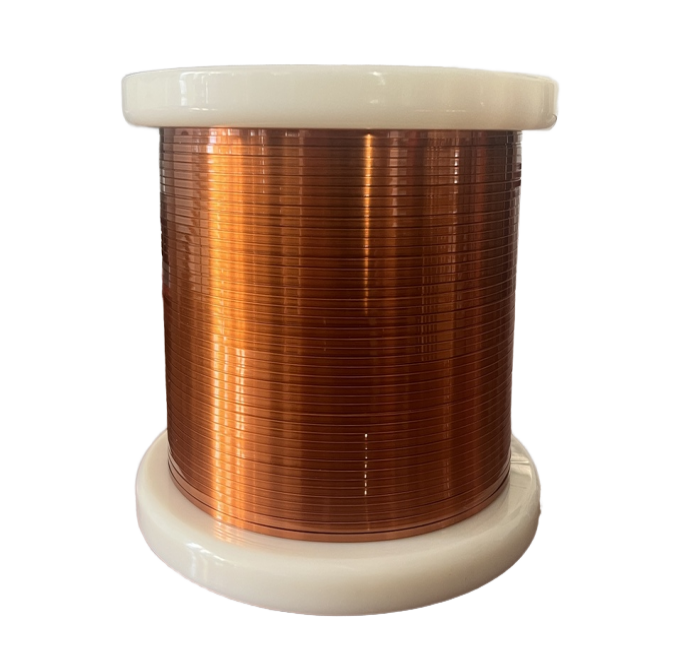
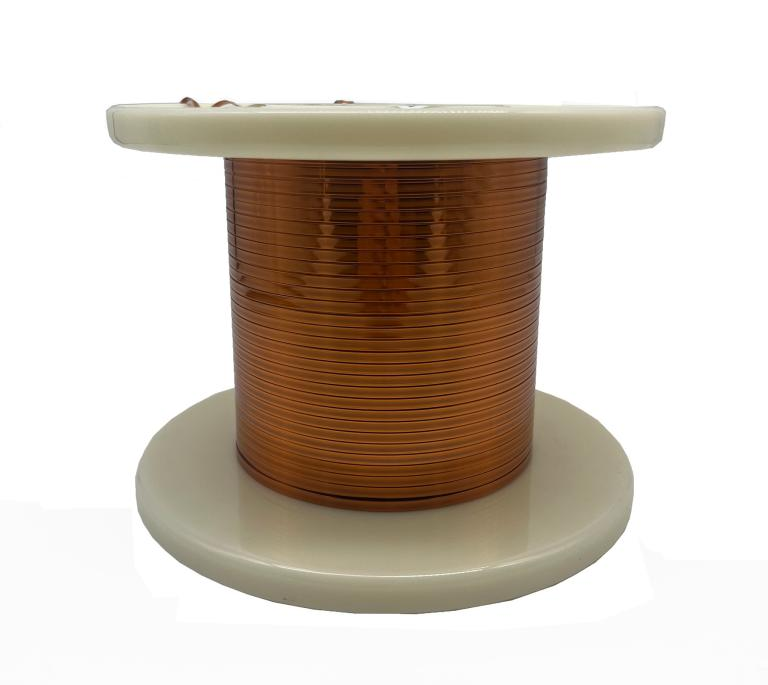
TIANJIN, CHINA, September 7, 2026 /EINPresswire.com/ -- For manufacturers exporting motor windings into Europe, a reliable flat copper wire producer in China must prove one thing before anything else: the insulation on that wire keeps four restricted phthalates below 0.1% by weight. RVYUAN (Tianjin Ruiyuan Electric Material Co., Ltd.) builds this proof into every batch of Class 220 rectangular wire it ships, backing each order with RoHS test reports and a Declaration of Conformity. That single fact decides whether a shipment clears customs or sits detained at a European port.
Chemical safety used to be a line item on a quality checklist. Now it sits at the front of the buying decision. Motor makers building new energy vehicle drives, high-frequency transformers, and specialized power supplies can no longer treat winding materials as a commodity. The insulation chemistry travels downstream into the finished device and carries the regulatory risk with it.
What Does Directive (EU) 2015/863 Actually Restrict in Magnet Wire?
The directive adds four phthalates to the RoHS restricted-substance list, and each is capped at 0.1% by weight in any homogeneous material. Those four are bis(2-ethylhexyl) phthalate, butyl benzyl phthalate, dibutyl phthalate, and diisobutyl phthalate — commonly shortened to DEHP, BBP, DBP, and DIBP.
Directive (EU) 2015/863 amends Annex II of the earlier RoHS directive, pushing the restricted list to ten substances total. For magnet wire, the risk sits almost entirely in the enamel coating rather than the copper conductor itself.
Here is why that matters in practice. Phthalates are classic plasticizers. Coating suppliers once added them to soften enamel film so it would bend without cracking during high-speed winding. A low-tier polyamide-imide formulation can slip over the 0.1% limit without anyone noticing until a lab test flags it. When that happens, the failure lands on the OEM's finished product, not just the wire.
DEHP, BBP, DBP, DIBP — the four added phthalates
0.1% by weight — the cap for each, measured per homogeneous material
Enamel coating — where the risk concentrates in magnet wire
The finished device — where the legal liability ultimately lands
Why Do European Buyers Screen Suppliers on Phthalate Content First?
Because a detained shipment costs far more than a compliance test. When market surveillance authorities pull a transformer or motor for inspection, they trace the non-compliant chemistry back through the bill of materials to the winding wire. A missing or weak Declaration of Conformity stalls the whole project.
Procurement teams working on high-end electrical infrastructure have learned to check environmental compliance before they check mechanical tolerances. A wire can meet every dimensional spec and still be commercially useless if it cannot legally enter the EU.
This is where the choice of supplier becomes strategic. RVYUAN designs its electromagnetic wire range — from ultra-fine magnet wire down to rectangular winding profiles — around these substance thresholds from the resin selection stage onward. The goal is simple: keep the buyer's downstream product clean so it never becomes the reason a container gets held.
How Does RVYUAN Engineer Class 220 Flat Wire Without Restricted Plasticizers?
RVYUAN uses halogen-free, phthalate-free polyamide-imide resins that hold a continuous thermal index of 220°C while keeping phthalate content well under the legal threshold. The formulation delivers film flexibility through polymer chemistry rather than through added plasticizers.
Class 220 wire faces a demanding job. It has to survive continuous high-temperature operation in compact motor slots and still bend cleanly during forming. Older coatings leaned on plasticizers to get that flexibility, which is exactly where the phthalate risk crept in.
For ultra-thin flat wires — down to 0.04mm in some specifications — the coating has to spread evenly without any additive to modify how the compound flows. RVYUAN handles this by optimizing the polymerization of the resin itself, so the film stays uniform across the full rectangular cross-section.
Contamination control starts before the enamel ever touches the copper:
Raw copper strips run through a multi-stage surface cleaning and annealing step
This removes residual rolling oils and drawing lubricants that can carry heavy metals or trace phthalates
Online monitoring tracks film thickness across the rectangular profile in real time
The protective layer stays free of non-compliant stabilizers and processing aids
That combination — clean conductor plus clean coating chemistry — is what lets the wire pass full-spectrum testing rather than squeaking under the limit by chance.
How Does Batch-Level Traceability Support a Reliable Flat Copper Wire Producer?
Every batch of Class 220 rectangular wire gets full-spectrum chemical testing, and the resulting RoHS report plus Declaration of Conformity travels with the shipment. The documents state directly that DEHP, BBP, DBP, and DIBP stay under 0.1% in the insulation enamel.
Traceability runs from raw copper input all the way to finished-product distribution. Instead of testing a single sample and applying the result across the whole product line, RVYUAN documents each production batch on its own.
This matters when a buyer faces a technical documentation audit. A European OEM under inspection needs to hand the authority a paper trail that connects the specific wire in the product to a specific test result. Batch-level records make that connection direct, which is what turns a stressful audit into a routine one.
The practical payoff is fewer surprises at the port. When the compliance evidence arrives with the goods, customs and market surveillance bodies have less reason to hold a shipment — protecting delivery timelines on contract engineering projects that cannot absorb delays.
What Product Range and Standards Back RVYUAN's Compliance Claims?
RVYUAN produces six major product categories and more than twenty specialized varieties, covering enameled round copper wire, flat magnet wire, triple-insulated wire, and natural silk-covered litz wire. The company reaches ultra-fine diameters down to 0.012 mm for its finest variants.
Compliance claims mean more when they sit on top of real manufacturing depth. The range spans from those ultra-fine magnet wires up through rectangular winding profiles used in heavier power applications.
Production runs under a strict quality management system, and most products carry UL and RoHS certifications while meeting benchmarks set by the International Electrotechnical Commission and Japanese Industrial Standards. The company supplies 38 export markets and works with more than 300 clients worldwide.
For a buyer comparing suppliers, that mix of certifications and diameter range signals a producer that has already solved compliance across many wire types — not one improvising for a single order.
Choosing a Supplier: Getting Specs and Documentation Aligned
Before committing to a winding wire, match three things at once: thermal class, conductor dimensions, and the compliance documentation your market demands. A Class 220 flat wire that fits your slot geometry but arrives without a batch-specific Declaration of Conformity leaves a gap your audit will find.
If you are specifying magnet wire for NEV motors, high-frequency transformers, or power supplies bound for the EU, RVYUAN can pair the technical profile — flat or round, thermal index, film build — with the RoHS reports and conformity declarations tied to your production batch. Full specifications and the product catalog are available at the corporate portal: https://www.rvyuan.com/
Chemical safety used to be a line item on a quality checklist. Now it sits at the front of the buying decision. Motor makers building new energy vehicle drives, high-frequency transformers, and specialized power supplies can no longer treat winding materials as a commodity. The insulation chemistry travels downstream into the finished device and carries the regulatory risk with it.
What Does Directive (EU) 2015/863 Actually Restrict in Magnet Wire?
The directive adds four phthalates to the RoHS restricted-substance list, and each is capped at 0.1% by weight in any homogeneous material. Those four are bis(2-ethylhexyl) phthalate, butyl benzyl phthalate, dibutyl phthalate, and diisobutyl phthalate — commonly shortened to DEHP, BBP, DBP, and DIBP.
Directive (EU) 2015/863 amends Annex II of the earlier RoHS directive, pushing the restricted list to ten substances total. For magnet wire, the risk sits almost entirely in the enamel coating rather than the copper conductor itself.
Here is why that matters in practice. Phthalates are classic plasticizers. Coating suppliers once added them to soften enamel film so it would bend without cracking during high-speed winding. A low-tier polyamide-imide formulation can slip over the 0.1% limit without anyone noticing until a lab test flags it. When that happens, the failure lands on the OEM's finished product, not just the wire.
DEHP, BBP, DBP, DIBP — the four added phthalates
0.1% by weight — the cap for each, measured per homogeneous material
Enamel coating — where the risk concentrates in magnet wire
The finished device — where the legal liability ultimately lands
Why Do European Buyers Screen Suppliers on Phthalate Content First?
Because a detained shipment costs far more than a compliance test. When market surveillance authorities pull a transformer or motor for inspection, they trace the non-compliant chemistry back through the bill of materials to the winding wire. A missing or weak Declaration of Conformity stalls the whole project.
Procurement teams working on high-end electrical infrastructure have learned to check environmental compliance before they check mechanical tolerances. A wire can meet every dimensional spec and still be commercially useless if it cannot legally enter the EU.
This is where the choice of supplier becomes strategic. RVYUAN designs its electromagnetic wire range — from ultra-fine magnet wire down to rectangular winding profiles — around these substance thresholds from the resin selection stage onward. The goal is simple: keep the buyer's downstream product clean so it never becomes the reason a container gets held.
How Does RVYUAN Engineer Class 220 Flat Wire Without Restricted Plasticizers?
RVYUAN uses halogen-free, phthalate-free polyamide-imide resins that hold a continuous thermal index of 220°C while keeping phthalate content well under the legal threshold. The formulation delivers film flexibility through polymer chemistry rather than through added plasticizers.
Class 220 wire faces a demanding job. It has to survive continuous high-temperature operation in compact motor slots and still bend cleanly during forming. Older coatings leaned on plasticizers to get that flexibility, which is exactly where the phthalate risk crept in.
For ultra-thin flat wires — down to 0.04mm in some specifications — the coating has to spread evenly without any additive to modify how the compound flows. RVYUAN handles this by optimizing the polymerization of the resin itself, so the film stays uniform across the full rectangular cross-section.
Contamination control starts before the enamel ever touches the copper:
Raw copper strips run through a multi-stage surface cleaning and annealing step
This removes residual rolling oils and drawing lubricants that can carry heavy metals or trace phthalates
Online monitoring tracks film thickness across the rectangular profile in real time
The protective layer stays free of non-compliant stabilizers and processing aids
That combination — clean conductor plus clean coating chemistry — is what lets the wire pass full-spectrum testing rather than squeaking under the limit by chance.
How Does Batch-Level Traceability Support a Reliable Flat Copper Wire Producer?
Every batch of Class 220 rectangular wire gets full-spectrum chemical testing, and the resulting RoHS report plus Declaration of Conformity travels with the shipment. The documents state directly that DEHP, BBP, DBP, and DIBP stay under 0.1% in the insulation enamel.
Traceability runs from raw copper input all the way to finished-product distribution. Instead of testing a single sample and applying the result across the whole product line, RVYUAN documents each production batch on its own.
This matters when a buyer faces a technical documentation audit. A European OEM under inspection needs to hand the authority a paper trail that connects the specific wire in the product to a specific test result. Batch-level records make that connection direct, which is what turns a stressful audit into a routine one.
The practical payoff is fewer surprises at the port. When the compliance evidence arrives with the goods, customs and market surveillance bodies have less reason to hold a shipment — protecting delivery timelines on contract engineering projects that cannot absorb delays.
What Product Range and Standards Back RVYUAN's Compliance Claims?
RVYUAN produces six major product categories and more than twenty specialized varieties, covering enameled round copper wire, flat magnet wire, triple-insulated wire, and natural silk-covered litz wire. The company reaches ultra-fine diameters down to 0.012 mm for its finest variants.
Compliance claims mean more when they sit on top of real manufacturing depth. The range spans from those ultra-fine magnet wires up through rectangular winding profiles used in heavier power applications.
Production runs under a strict quality management system, and most products carry UL and RoHS certifications while meeting benchmarks set by the International Electrotechnical Commission and Japanese Industrial Standards. The company supplies 38 export markets and works with more than 300 clients worldwide.
For a buyer comparing suppliers, that mix of certifications and diameter range signals a producer that has already solved compliance across many wire types — not one improvising for a single order.
Choosing a Supplier: Getting Specs and Documentation Aligned
Before committing to a winding wire, match three things at once: thermal class, conductor dimensions, and the compliance documentation your market demands. A Class 220 flat wire that fits your slot geometry but arrives without a batch-specific Declaration of Conformity leaves a gap your audit will find.
If you are specifying magnet wire for NEV motors, high-frequency transformers, or power supplies bound for the EU, RVYUAN can pair the technical profile — flat or round, thermal index, film build — with the RoHS reports and conformity declarations tied to your production batch. Full specifications and the product catalog are available at the corporate portal: https://www.rvyuan.com/
Tianjin Ruiyuan Electric Material Co.Ltd
+86 228-833-3337
email us here
Legal Disclaimer:
EIN Presswire provides this news content "as is" without warranty of any kind. We do not accept any responsibility or liability for the accuracy, content, images, videos, licenses, completeness, legality, or reliability of the information contained in this article. If you have any complaints or copyright issues related to this article, kindly contact the author above.


