


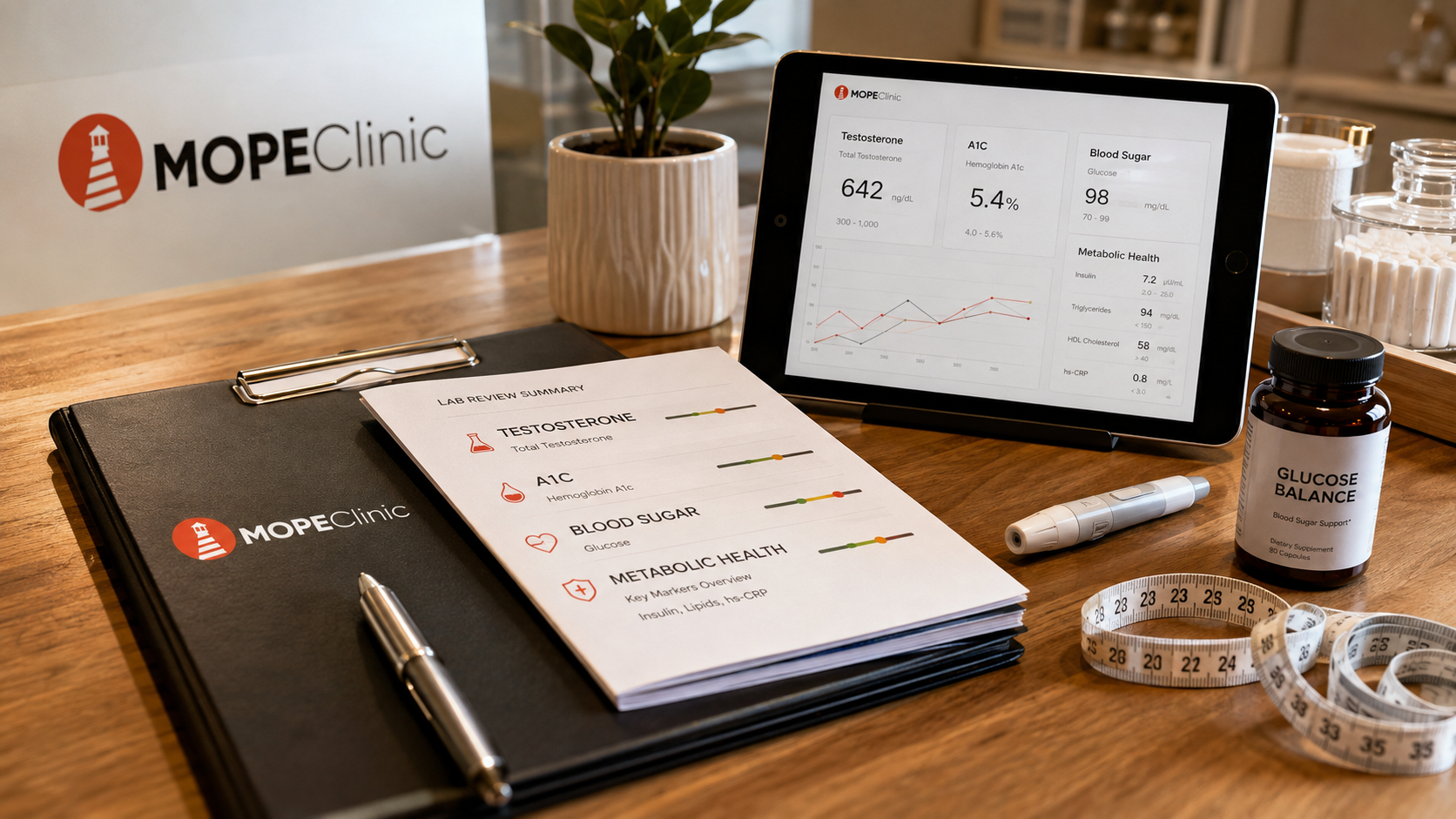
MOPE Clinic in Metairie emphasizes laboratory testing when testosterone concerns and metabolic warning signs overlap.
Metairie clinic explains how prediabetes, A1C, belly fat, fatigue and testosterone concerns can overlap—and why proper lab testing matters.
METAIRIE, LA, UNITED STATES, August 24, 2026 /EINPresswire.com/ -- MOPE Clinic, a LegitScript-certified medical clinic in Metairie, Louisiana, is expanding patient education around the relationship between testosterone concerns, prediabetes and broader metabolic health as updated 2026 guidance continues to emphasize accurate diagnosis before testosterone therapy is considered.
The issue is relevant for men who experience fatigue, increasing abdominal fat, reduced strength, poor sleep, lower libido or changes in overall energy. Although these symptoms are commonly associated with low testosterone, they are not specific to hormone deficiency.
In July 2026, the Endocrine Society issued a statement reinforcing that symptoms alone do not establish a diagnosis of hypogonadism, the medical term for testosterone deficiency. According to the Society, diagnosis requires symptoms consistent with low testosterone together with consistently low and accurately measured blood testosterone levels.
The organization also noted that potentially reversible contributors, including obesity and certain medications, should be considered during evaluation.
This approach is important because hormone symptoms can overlap with metabolic conditions that may require a different type of medical evaluation.
Prediabetes Often Develops Without Clear Symptoms
Prediabetes occurs when blood glucose levels are higher than normal but have not reached the range used to diagnose diabetes. However, prediabetes can be difficult to recognize without testing because noticeable symptoms may be absent.
The National Institute of Diabetes and Digestive and Kidney Diseases, or NIDDK, identifies three laboratory methods commonly used to detect prediabetes.
An A1C result between 5.7% and 6.4% falls within the prediabetes range.
A fasting plasma glucose level from 100 to 125 mg/dL is also considered within the prediabetes range.
A two-hour oral glucose tolerance test result from 140 to 199 mg/dL may also indicate prediabetes.
These tests do not always identify the same individuals. As a result, laboratory findings should be interpreted as part of a broader clinical evaluation rather than viewed as isolated numbers.
Why Testosterone and Prediabetes May Appear in the Same Patient
Low testosterone and prediabetes are separate medical issues, but some of the factors associated with them may overlap. Excess abdominal fat is one example. Body fat located around the abdomen can be associated with insulin resistance and other metabolic changes. A growing waistline may occur alongside changes in blood glucose, triglycerides, blood pressure, liver health and sleep quality. At the same time, some men with clinically low testosterone may report increased body fat, reduced muscle mass, fatigue, lower libido or reduced strength. The overlapping symptoms can make self-diagnosis difficult.
For example, a man experiencing fatigue and weight gain may assume testosterone is low. However, similar symptoms may also occur with sleep apnea, thyroid disorders, insulin resistance, medication effects, depression, obesity or other health conditions. Likewise, an elevated A1C does not establish that testosterone is low. Each concern requires appropriate evaluation.
“Fatigue, belly fat, low energy and changes in strength can have several possible causes,” said Chris Rue, APRN, FNP-C. “The goal is to understand what the laboratory data, symptoms and medical history actually show before treatment decisions are made.”
A1C Provides One View of Metabolic Health
The A1C test estimates average blood glucose over approximately the previous three months. Unlike a fasting glucose test, A1C generally does not require fasting. However, NIDDK notes that certain medical conditions can affect the reliability of A1C results. Therefore, interpretation may require consideration of medical history and, in some cases, other laboratory tests. Prediabetes does not automatically mean that type 2 diabetes will develop. Instead, it identifies a period when metabolic risk is elevated and lifestyle or medical interventions may be appropriate.
Why Waist Size Can Matter Even When Body Weight Changes Slowly
Body weight alone does not show how much of a person’s weight comes from fat, muscle or other tissue. For that reason, a scale may remain relatively stable while body composition changes. A person may lose muscle and gain abdominal fat without experiencing a dramatic change in total weight. Waist circumference can therefore provide another useful piece of information. Increasing waist size may signal changes in body composition that deserve attention, particularly when combined with other risk factors such as elevated blood glucose, high triglycerides, reduced physical activity or a family history of type 2 diabetes. Waist measurements should not be used to diagnose a disease. However, they can provide useful information when tracked over time.
Sleep Should Be Part of the Metabolic Conversation
Poor sleep can also complicate the picture. Obstructive sleep apnea is associated with metabolic concerns and can contribute to symptoms such as daytime fatigue, poor concentration and low energy. These symptoms can overlap with complaints sometimes attributed to low testosterone. Signs that may warrant evaluation for sleep apnea include loud snoring, witnessed pauses in breathing during sleep, waking with headaches, unrefreshing sleep and significant daytime sleepiness. For that reason, medical evaluation of fatigue may involve more than hormone testing alone.
Testosterone Testing Requires More Than One Symptom
The Endocrine Society’s 2026 statement emphasizes that accurate diagnosis matters before testosterone therapy begins. The Society states that hypogonadism should be diagnosed when compatible symptoms occur together with consistently low testosterone levels. It also notes that standardized testing methods improve accuracy and recommends at least two early-morning fasting testosterone tests when evaluating suspected hypogonadism. The Society further recommends that clinicians consider reversible contributors before assigning symptoms to testosterone deficiency. This matters because common symptoms such as low energy, reduced libido and mood changes may have more than one explanation. Laboratory testing before treatment helps reduce the risk of treating the wrong problem.
Practical Tips for Supporting Metabolic Health
Lifestyle measures cannot replace medical evaluation when abnormal laboratory results or persistent symptoms are present. However, several practical habits may support metabolic health.
Track More Than Body Weight
A bathroom scale offers only one measurement. Tracking waist circumference periodically may reveal changes in abdominal fat that are not obvious from body weight alone. Measurements should be taken under similar conditions each time to make comparisons more meaningful.
Add Movement After Meals
Daily activity does not have to involve an intense workout. Short walks after meals can increase overall movement and may be easier to maintain than a complicated exercise routine. For individuals who have been inactive, gradual increases in activity may be more realistic than making large changes all at once.
Include Resistance Exercise
Strength training can help maintain or build muscle. Depending on an individual’s health and fitness level, resistance exercise may include weight machines, free weights, resistance bands or body-weight movements. People with medical limitations should discuss appropriate exercise with a qualified healthcare professional.
Build Meals Around Basic Foods
Rather than focusing only on restriction, meals can be structured around protein, vegetables, fiber-rich foods and reasonable portions. Examples may include eggs, fish, chicken, beans, vegetables, fruit, Greek yogurt and minimally processed carbohydrate sources. No single food determines metabolic health. Overall eating patterns and consistency matter more.
Pay Attention to Liquid Calories
Sugary beverages can add significant calories and carbohydrates without providing much satiety. Soft drinks, sweet tea, specialty coffee drinks, sports drinks and some alcoholic beverages may contribute more calories than expected. Replacing even one high-calorie beverage with water or another low-calorie option may be a manageable change.
Treat Sleep as a Health Issue
Persistent poor sleep should not automatically be dismissed as stress or aging. Heavy snoring, pauses in breathing and daytime sleepiness may deserve evaluation. Improving sleep habits may also support energy, recovery and general health.
South Louisiana Creates Unique Lifestyle Challenges
Metabolic health recommendations have to work within the realities of daily life. In Metairie, New Orleans and surrounding South Louisiana communities, extreme summer heat and humidity can make outdoor activity difficult for part of the year. Indoor walking, home-based exercise, fitness centers or scheduling activity earlier in the morning or later in the evening may provide alternatives during periods of dangerous heat.
Food culture is another practical consideration.
South Louisiana is known for festivals, restaurant meals, crawfish boils, football gatherings and family celebrations. A sustainable eating pattern does not necessarily require avoiding cultural foods entirely. Instead, portion awareness, meal planning and consistent habits may be easier to maintain than rigid short-term diets. The goal of practical lifestyle change is not perfection. It is developing routines that can continue over time.
Why Laboratory Testing Matters Before Treatment
MOPE Clinic requires laboratory testing and medical evaluation before treatment decisions are made. This process is designed to provide more context than symptoms alone. Depending on an individual’s concerns and medical history, a clinician may consider hormone levels, blood glucose, A1C, lipid levels, liver markers, thyroid function, medications, sleep concerns, blood pressure and other health information. Not every patient requires the same laboratory panel. Similarly, not every patient with fatigue, abdominal weight gain or low libido has the same underlying cause. A personalized treatment plan begins with identifying which findings are actually present. MOPE Clinic operates as a physical medical clinic in Metairie and is not a virtual-only prescription provider.
Frequently Asked Questions
Can prediabetes and low testosterone occur at the same time?
Yes. Both conditions can occur in the same person. However, the presence of one does not prove that it caused the other. Appropriate laboratory testing is needed to evaluate each concern.
Does prediabetes cause low testosterone?
The relationship is complex. Prediabetes, insulin resistance, obesity and low testosterone can share some risk factors and may occur together. A diagnosis should not be based on an assumed cause-and-effect relationship.
Does a high A1C mean testosterone is low?
No. A1C reflects average blood glucose over time. It does not measure testosterone. Testosterone levels require separate laboratory testing.
What A1C level is considered prediabetes?
According to NIDDK, an A1C between 5.7% and 6.4% falls within the prediabetes range.
What fasting glucose level indicates prediabetes?
NIDDK identifies fasting plasma glucose from 100 to 125 mg/dL as within the prediabetes range.
Can someone have prediabetes without knowing it?
Yes. Prediabetes may occur without obvious symptoms. Blood testing is often how the condition is identified.
Does fatigue mean testosterone is low?
Not necessarily. Fatigue can have many causes, including poor sleep, sleep apnea, thyroid disorders, medication effects, metabolic problems, stress and other conditions.
Does belly fat automatically mean insulin resistance?
No. Abdominal fat can be associated with metabolic risk, but waist size alone cannot diagnose insulin resistance or prediabetes.
Can body composition change without significant weight gain?
Yes. Muscle mass and body fat can change even when total body weight remains relatively stable.
Should testosterone be checked more than once?
Current Endocrine Society guidance emphasizes consistently low testosterone measurements when diagnosing hypogonadism and recommends at least two early-morning fasting tests as part of appropriate evaluation.
Does TRT treat prediabetes?
Testosterone replacement therapy should not be started simply as a treatment for prediabetes. TRT is considered for appropriately evaluated patients who meet criteria for testosterone deficiency and for whom treatment is medically appropriate.
Can lifestyle changes improve prediabetes?
Lifestyle changes involving physical activity, healthy eating and weight management can play an important role in reducing metabolic risk. Individual recommendations should take medical history and current health into account.
Is walking enough to make a difference?
Walking can be a useful part of an overall activity plan. Consistency and total daily movement matter, while resistance exercise may provide additional benefits for muscle health.
Does poor sleep affect metabolic health?
Yes. Poor sleep and sleep disorders can overlap with metabolic concerns. Persistent symptoms such as heavy snoring or significant daytime sleepiness should be discussed with a healthcare professional.
Do all men with low testosterone need TRT?
No. Treatment depends on symptoms, laboratory findings, medical history, underlying causes, risks and individual circumstances.
Why are labs required before treatment at MOPE Clinic?
Symptoms can overlap across many medical conditions. Laboratory testing helps provide objective information so treatment decisions can be based on actual findings rather than assumptions.
A Broader View of Men’s Metabolic Health
Testosterone, blood glucose, body composition, sleep and cardiovascular risk do not exist in isolation. For men experiencing fatigue, changing waist size, poor sleep or reduced strength, the most useful first step is often determining which health concerns are actually present. The same symptom can have very different causes in different people. That is why current medical guidance continues to emphasize accurate diagnosis, appropriate laboratory testing and clinical judgment before testosterone treatment is initiated.
MOPE Clinic’s educational article on testosterone and prediabetes is available at:
https://mopeclinic.com/testosterone-and-prediabetes/
About MOPE Clinic
MOPE Clinic is a LegitScript-certified medical clinic located in Metairie, Louisiana. The clinic provides individualized hormone and wellness care based on laboratory testing, medical evaluation and ongoing clinical oversight. MOPE Clinic serves patients from Metairie, New Orleans, Kenner, Covington, Mandeville, Slidell, Houma and surrounding South Louisiana communities. Laboratory testing is required before treatment, and treatment plans are personalized according to clinical findings and individual health needs.
Gwen M.
Designs For You
email us here
Visit us on social media:
Facebook
Legal Disclaimer:
EIN Presswire provides this news content "as is" without warranty of any kind. We do not accept any responsibility or liability for the accuracy, content, images, videos, licenses, completeness, legality, or reliability of the information contained in this article. If you have any complaints or copyright issues related to this article, kindly contact the author above.
