

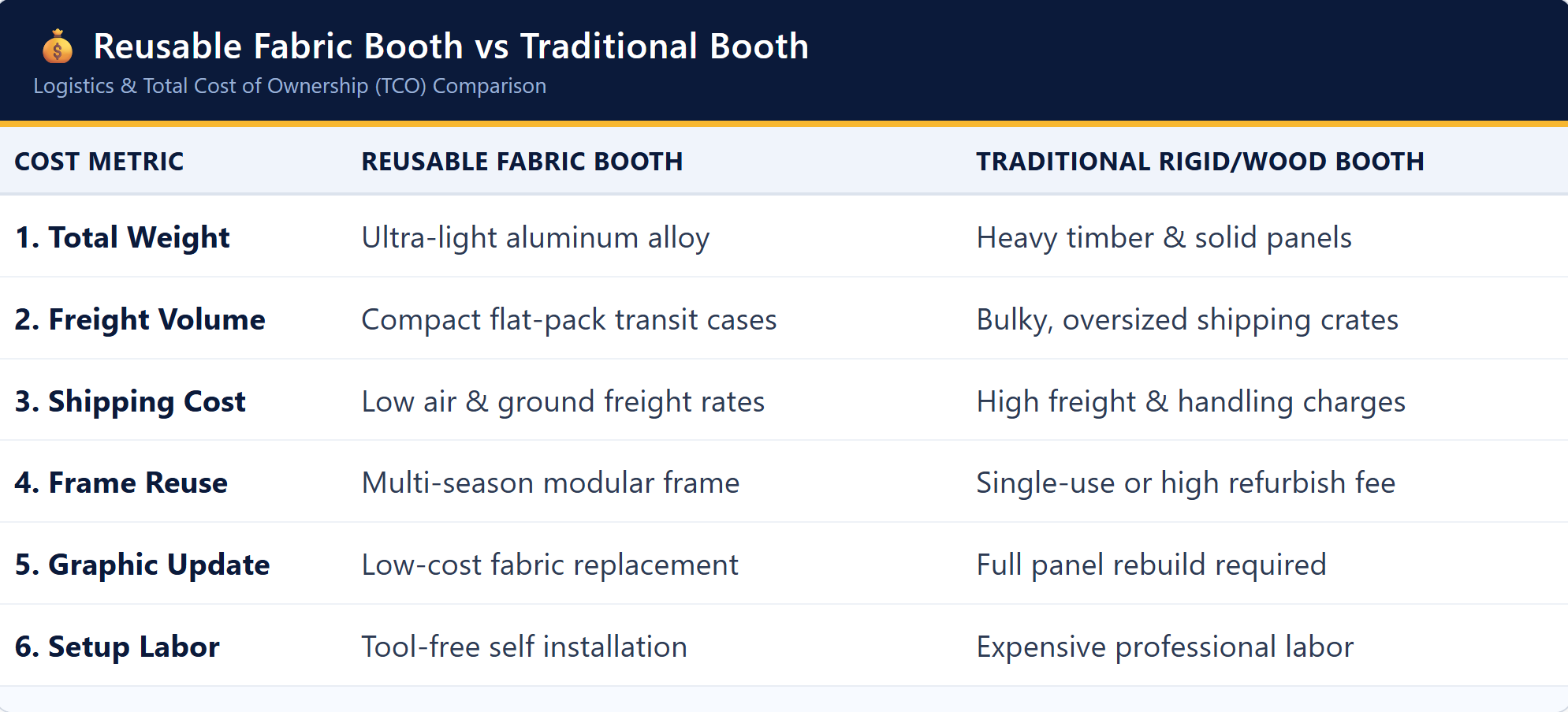
Lightweight Aluminum Frames:Engineered aluminum profiles are generally lighter than equivalent timber structures, helping reduce freight charges calculated on dimensional and actual weight.
Compact, Rollable Graphics: Vibrant dye-sublimation fabric graphics roll into compact bundles rather than requiring heavy, bulky crates, helping reduce total shipping volume.
Modular & Reconfigurable Design: Standardized frame components pack flat and adapt effortlessly across varying booth layouts—allowing a single structural investment to serve multiple show seasons without needing fresh materials for every event.
Designed specifically for brand teams transporting displays from city to city, QuicklyShow's tension fabric product line spans from compact 10x10 inline setups to larger customized exhibition spaces—all engineered and produced under one roof at our Shenzhen facility with complete in-house dye-sublimation printing.
Weight: Lower Freight Cost per Shipment
The weight of a trade show booth determines the shipping method and cost for each event. Aluminum alloy frames used in tension fabric systems are lighter than equivalent wood-frame structures, which affects both air freight charges (based on dimensional weight) and ground freight rates. Lighter frames also reduce handling requirements at each stage of transport—warehouse loading, exhibition venue move-in, and post-show packing. For exhibitors who ship their booth to each event, the weight difference per shipment accumulates across multiple shows over a year. The flat-pack crate design further reduces shipping costs by minimizing the dimensional weight that freight carriers use to calculate charges for lightweight but bulky packages.
Packaging Volume: Flat-Pack Design for Efficient Transport
Shipping volume directly affects freight cost. Tension fabric booth components are designed to pack flat—aluminum frame sections stack in layers, tension fabric panels roll into compact bundles, and accessories nest within the frame crate. The resulting crate is rectangular and stackable, which improves container utilization for ocean freight and keeps dimensional weight within reasonable limits for air freight. A tension fabric booth packs into fewer crates than an equivalent rigid-panel display, which means fewer shipping units to track and lower total freight volume per show. The packaging itself is designed for repeated use across multiple events, reducing the cost of replacement crating between shows.
Reuse: Structural Investment Across Multiple Events
The frame structure of a tension fabric booth is designed for repeated assembly and disassembly cycles. Aluminum frame sections connect through interlocking joints that withstand regular setup and takedown without replacement. The same frame system can serve across multiple exhibition seasons, with only the fabric graphics replaced when branding or messaging changes. For exhibitors who attend multiple shows per year with different floor space allocations, the modular frame can be reconfigured for different booth sizes by adding or removing frame sections—new structural components may not be required when the existing frame system is compatible with the new layout. This means the initial frame investment serves across multiple events, reducing the per-show capital cost compared to displays that require new structural materials for each exhibition.
Graphic Replacement Cost: Reusable Fabric Graphics & Independent Updates
When brand graphics need to be updated, only the fabric panel needs to be replaced—the primary frame, hardware, and lighting components remain in service. Dye-sublimation printed fabric panels are designed to maintain strong visual quality across repeated exhibition cycles, while the durable aluminum frame system is engineered for multi-year reuse.
To illustrate how this reusable system adapts to different booth layouts and budgets, QuicklyShow presents two representative solutions:
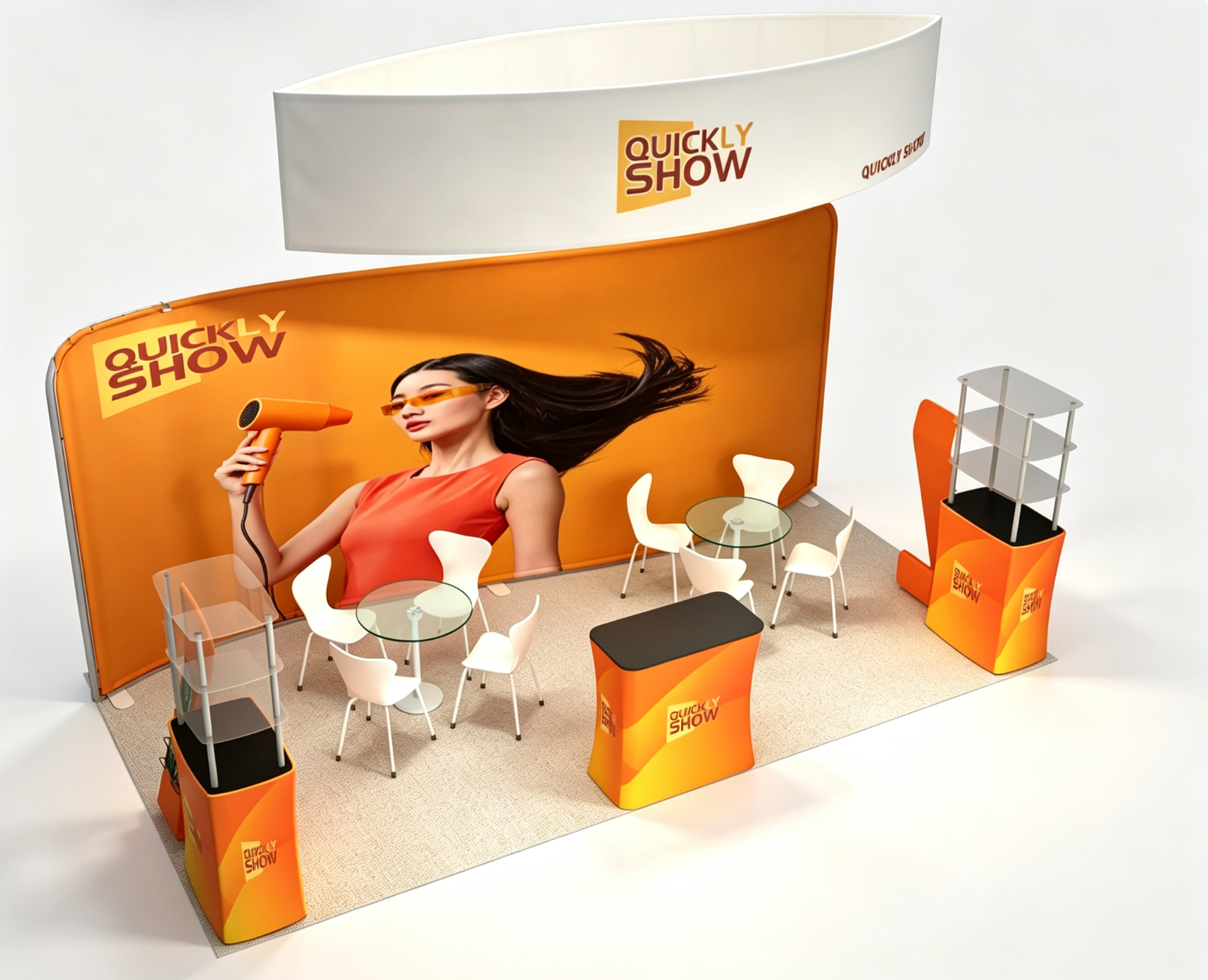
10x20 Portable Tension Fabric Booth Design: Suitable for exhibitors seeking a full-sized display with defined functional zones. This system utilizes an S-shaped tension fabric backdrop to create visual depth and a sense of enclosure, complemented by dual display towers and brochure stands for product showcasing and attendee interaction.
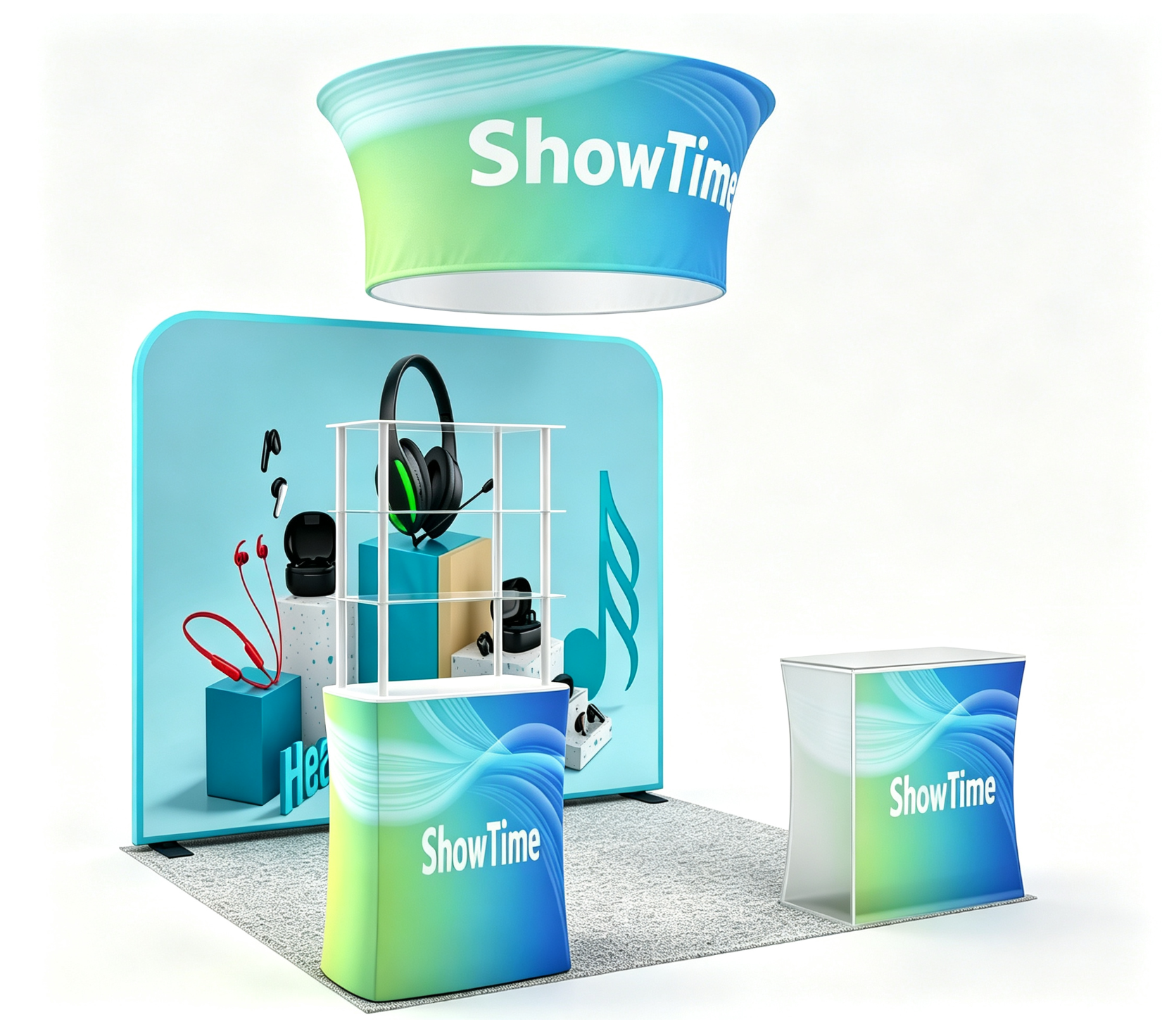
10x10 Portable Tension Fabric Booth with Hanging Banner: Optimized for compact spaces or focused budgets. This setup combines a straight backdrop and a high-visibility hanging banner with a single display tower and counter, maintaining a strong brand focal point while helping keep shipment weight lower for compact booth requirements.
Both configurations share the same tool-free aluminum frame engineering, in-house dye-sublimation fabric printing, and independent graphic update capabilities—delivering long-term logistics savings across multiple trade show events.
Cost Scenario: How Frequent Exhibitors Save on Logistics
When making a procurement decision, professional brand teams evaluate displays based on the Total Cost of Ownership (TCO) across a multi-show calendar. The true exhibition expense extends far beyond the initial hardware purchase price—it directly accounts for recurring freight charges, setup labor fees, long-term storage expenses, and future graphic update costs over multiple events.
Consider an exhibitor participating in multiple shows per year across different cities. With a traditional wood or rigid-panel display, every single event involves heavy freight crates, bulky shipping volumes, and required professional installation labor at both ends. Across several exhibitions, these recurring logistics expenses stack up rapidly, often exceeding the original purchase price of the display itself.
By contrast, a tension fabric booth system optimizes every cost driver in the procurement model:
It can reduce per-shipment freight charges through lightweight design and compact packing volume. The durable aluminum frame and reusable transit crates lower storage and packaging costs, reducing the need to repurchase structural materials or replace crates between events. Furthermore, for teams managing their own setup, the tool-free assembly can reduce reliance on dedicated installation labor at each venue.
These cumulative savings can reduce the total logistics cost per event, making tension fabric displays a far more cost-effective choice for active exhibitors.
Frequently Asked Questions (FAQ)
How does a reusable tension fabric booth reduce logistics costs?
It minimizes dimensional weight and shipping volume through lightweight aluminum frames and compact flat-pack transit cases, helping lower air and ground freight charges across multiple shows.
Can the same booth frame be reused for different trade shows?
Yes. The aluminum frame sections feature a modular, interlocking design that can be reconfigured or resized for different floor space allocations across multiple exhibition seasons.
What parts need to be replaced when branding changes?
Only the dye-sublimation fabric graphics need to be replaced. The primary aluminum frame, lighting components, and hardware can remain in service for multi-year reuse.
Is a lightweight fabric booth suitable for frequent exhibitors?
Yes. It is specifically engineered for brand teams transporting displays from city to city, offering lightweight portability, tool-free setup, and long-term durability to withstand regular assembly and disassembly cycles.
Procurement Summary & Next Steps
Weight reduction for lower freight cost per shipment, flat-pack packaging for efficient transport volume, structural reuse across multiple exhibition seasons, and independent fabric graphic replacement for lower update costs are the key logistics-saving factors that define QuicklyShow's reusable tension fabric booth solutions. With in-house dye-sublimation fabric printing and a product range spanning from compact 10x10 setups to larger customized configurations, the company provides a logistics-efficient option for exhibitors who transport their booth to multiple shows each year.
Ultimately, QuicklyShow's core advantage is not just offering a low one-time purchase price, but helping buyers reduce total event costs driven by long-term reuse, lightweight transport, and rapid tool-free installation.
More information regarding QuicklyShow’s product configurations, custom printing capabilities, and specifications is available on our Reusable Tension Fabric Booth Solutions category page at https://www.quicklyshow.com/. To find out which tension fabric booth setup best fits your show schedule and logistics requirements, please reach out to our sales team directly through the website.
Shenzhen Quicklyshow Exhibition Display Co.ltd
Shenzhen Quicklyshow Exhibition Display Co.ltd
+ +86 15220114725
email us here
Visit us on social media:
Facebook
YouTube
TikTok
Legal Disclaimer:
EIN Presswire provides this news content "as is" without warranty of any kind. We do not accept any responsibility or liability for the accuracy, content, images, videos, licenses, completeness, legality, or reliability of the information contained in this article. If you have any complaints or copyright issues related to this article, kindly contact the author above.
